Home / Reptiles / Lizards / Ackie (spiny-tailed) monitor
Some federal rules apply In-depth sheetAckie (spiny-tailed) monitor
Varanus acanthurus
Reptiles › Lizards (Lacertilia) › Varanidae (Monitor lizards)
Ackie (ridge-tailed) monitors are small, active monitors. Clint Laidlaw of Clint's Reptiles calls them one of the greatest pet lizards; availability lowers his score to 3.6/5.
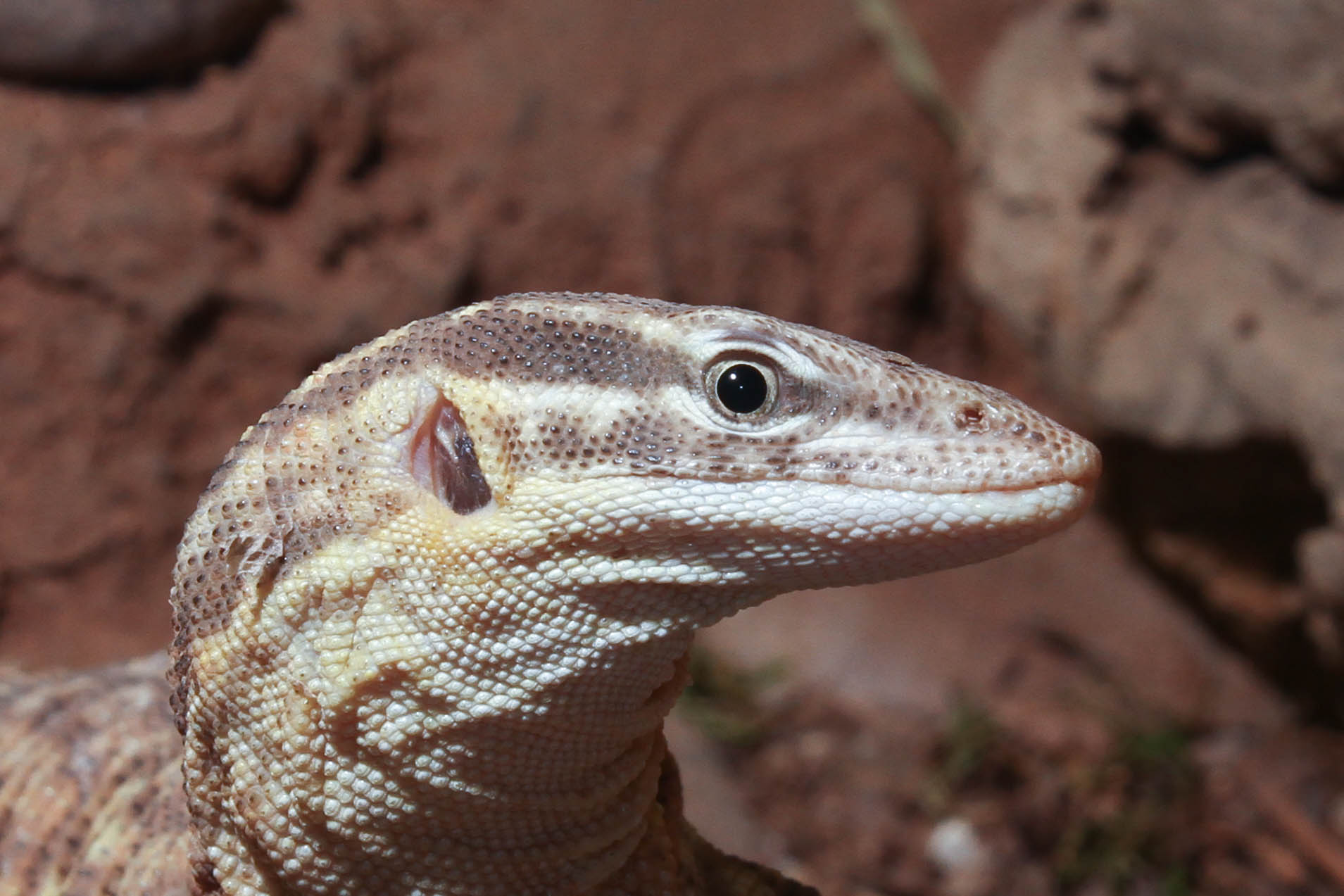
Care at a glance
Species-specific values
Values researched for this exact species. Where they differ from the group guide below, follow these. Air, surface and water temperatures are listed separately, and each source is kept as published rather than averaged.
| Basking surface temperature | 158–172 °F 2021 RF PDF recommendation; not ambient air. | 242 |
| Warm air temperature | 84–100 °F 2021 RF PDF. | 242 |
| Cool temperature | 75–82 °F 2021 PDF does not expressly specify measurement type. | 242 |
| Relative humidity | 20–50 % Ambient, 2021 PDF. | 242 |
| Burrow relative humidity | at least: 80 % Humid underground refuge, 2021 PDF. | 242 |
| Substrate depth | at least 12 in Male minimum in 2021 PDF; females need deeper substrate for egg cycling. | 242 |
Care guide
Care
- Need deep substrate to dig, hot basking spots and UVB.
- Food-motivated; handling is easy apart from a possible bite.
Sources 100
Show the group care guide for dwarf monitors
Dwarf monitors
Applies to most species in this group. Habitat: Australian rocky outcrops and scrub. Individual species can differ, so compare with the species numbers above and the linked sources.
Housing & setup
- At least 4×2×2 ft for one adult ackie; bigger is better. Deep (12 in+) diggable substrate and a stacked rock basking area.
- Extremely hot basking spot with strong UVB.
Climate & lighting
Starting point only: Separates very hot ackie surfaces from cooler air and humid burrows; no genus-wide monitor recipe. Check the species-specific values for this animal where shown.
| Basking spot | 130–150°F |
| Warm side / daytime | 90–95°F |
| Cool side | 75–80°F |
| Humidity | 40–60% |
- UVB: Required (strong).
Diet
- Insects as a staple, with occasional small whole prey.
Health watch
- Dehydration and egg binding in females without deep nesting substrate.
Understanding the animal
In the wild
In the wild
Researched for this exact species, not its family. Good care copies these conditions.1234
| Where it lives | Rocky arid and semiarid habitats in northern Western Australia, the Northern Territory and northwestern Queensland. It shelters beneath boulders, in rock crevices and sometimes in spinifex grass. |
| Ground it lives on | Rocky ground with soil beneath boulders, narrow crevices and spinifex cover. |
| Climate | Arid to semiarid regional conditions; exact wild refuge temperature and relative-humidity ranges were not established in the sources used. |
| Active | Diurnal; dietary sampling indicates feeding throughout the year, without a universal annual inactive period across its range. |
| Wild diet | Predominantly arthropods, especially grasshoppers, beetles and cockroaches; also small lizards, spiders, caterpillars, isopods and occasional other prey. |
| Behavior to plan for | An active opportunistic forager that searches widely. It depends on close-fitting rocky refuges and concealed spaces beneath boulders. |
What this means for care
- Provide anchored rock-like crevices and substrate beneath secure cover.
- Base feeding chiefly on varied insects rather than routine rodent meals.
- Provide ample search space and dispersed food enrichment.
- Do not assume obligatory winter brumation across all localities.
Native climate (measured)
Native climate (measured)
| Warm-season highs | about 100°F (up to 103°F in the hottest sampled areas) |
| Cool-season lows | about 53°F (down to 41°F in the coldest sampled areas) |
| Average temperature | 70–81°F across sampled records |
| Relative humidity | 35–49% on average (driest month about 29%) |
| Rainfall | about 438 mm a year, with strong wet and dry seasons |
Measured at 112 wild occurrence records sampled against WorldClim 2.1 climate data (1970–2000 averages). Air conditions in the range are ecological context, not enclosure settings: microhabitats such as burrows, leaf litter or basking rocks can be cooler, warmer or more humid.
Profile
Profile
Researched for this exact species. Sources are listed under In the wild above.
History
Varanus acanthurus belongs to the Australian and Indonesian radiation of dwarf monitors in the subgenus Odatria. Varanus primordius was formerly treated as a subspecies of V. acanthurus but was later elevated to full species status.
Keeper tips
- Provide substantial rocky structure because the species is associated with rocky ranges and outcrops.
- Allow enough enclosure space for an animal reaching about 27 inches total length.
- Account for the long, strongly spinose tail when designing usable enclosure space and structures.
Unique adaptations
- It is described as arid-adapted.
- The tail is round in cross-section and covered with very spinose scales.
- Its coloration is dark brown with bright yellowish to cream spots.
Remarkable facts
- The spiny-tailed monitor is a relatively small monitor lizard that can reach about 70 cm (27 inches) total length.
- The tail is about 1.3 to 2.3 times as long as the head and body combined.
- There are 70 to 115 scales around the middle of the body.
- It can be distinguished from Varanus baritji and Varanus primordius by pale longitudinal stripes on the neck.
- Three subspecies are recognized: V. a. acanthurus, V. a. brachyurus and V. a. insulanicus.
From the sources
From the sources
Quoted from the matching sections of reputable sources for this exact species. Specialist databases are used first; Wikipedia (community-edited, CC BY-SA 4.0) only fills gaps. Other sources are short credited quotes.
| Overview | The spiny-tailed monitor (Varanus acanthurus), also known as the Australian spiny-tailed monitor, the ridge-tailed monitor the Ackie dwarf monitor, and colloquially simply ackie monitor, is an Australian species of lizard belonging to the genus of monitor lizards (Varanus). — Wikipedia (community-edited) |
| Where it lives | This arid-adapted lizard is found in northern Western Australia, in the Northern Territory and in the western and north-western parts of Queensland. The spiny-tailed monitor is associated with arid rocky ranges and outcrops. V. a. acanthurus is native to northern Australia, from Broome on the west coast, through the Kimberley and the Top End, to the Gulf of Carpentaria. — Wikipedia (community-edited) |
| Wild diet | They prey mainly on arthropods, such as grasshoppers, beetles, cockroaches, spiders, isopods, caterpillars, cicadas, snails, stick insects, centipedes, crickets, and ticks.Approximately 70% of its water requirement comes from food. — Wikipedia (community-edited) |
| Reproduction | There are a number of methods of sexing ackie monitors, although the hemipenal transillumination technique is generally considered to be the easiest and most accurate. Sex can also be guessed using visual markers, but it is typically not nearly as accurate. Male ackie monitors are generally larger, have blockier heads, and have grippy scales on the underside of their tail. — Wikipedia (community-edited) |
| Appearance and size | The spiny-tailed monitor, a somewhat small monitor lizard, can attain a total length of up to 70 cm (27 in), although there are unconfirmed reports of wild individuals growing up to 34 inches. The tail is about 1.3-2.3 times as long as the head and body combined. The upper side is a rich, dark brown and painted with bright-yellowish to cream spots, which often enclose a few dark scales. — Wikipedia (community-edited) |
| History and naming | The spiny-tailed monitor is part of an Indonesian and Australian radiation of dwarf monitor lizards, the subgenus Odatria. — Wikipedia (community-edited) |
Data and studies
The numbers
The numbers
Each bar is what one source reports. Where several sources weigh in, the dashed gold band marks their average.
Maximum recorded lifespan
Longest recorded lifespan reported by each database; typical lifespans are usually shorter.
Typical adult weight
Average adult body mass in each database (FishBase gives the maximum recorded weight).
Incubation
Sources for this sheet
- Clint's Reptiles (YouTube): Ackie Monitor, The Best Pet Lizard? Expert educator & keeperClint Laidlaw, PhD in Biology Education and MS in Evolutionary Ecology; owner of Clint's Reptile Room and a longtime keeper. Rates each species on handleability, care, hardiness, availability and upfront cost.
- Myhrvold et al. (2015). An amniote life-history database. Ecology 96: 3109 Peer-reviewed researchPeer-reviewed compilation of life-history data for over 21,000 birds, mammals and reptiles.
- Species+ (UNEP-WCMC and the CITES Secretariat) Zoo, university or veterinaryThe official database of species listed under CITES.
- USFWS International Affairs: CITES Zoo, university or veterinaryFederal agency that issues CITES permits.
- Merck Veterinary Manual: Management and husbandry of reptiles Zoo, university or veterinaryThe Merck Veterinary Manual: a standard veterinary reference written and reviewed by veterinary specialists.
- Merck Veterinary Manual: Nutritional, metabolic and endocrine diseases of reptiles Zoo, university or veterinaryThe Merck Veterinary Manual: a standard veterinary reference written and reviewed by veterinary specialists.
- ReptiFiles: Ackie monitor care sheet, archived 2021 PDF Zoo, university or veterinaryAdded in the 2026 source-checked care-guide review.
- Clint's Reptiles (YouTube): Ackie Monitor, The Best Pet Lizard? Expert educator & keeperClint Laidlaw, PhD in Biology Education and MS in Evolutionary Ecology; owner of Clint's Reptile Room and a longtime keeper. His "Best Pet?" series reviews each species' care in depth.
- The Reptile Database Peer-reviewed researchScientist-curated catalog of every reptile species, with taxonomy and literature.
- GBIF Backbone Taxonomy (Global Biodiversity Information Facility) Peer-reviewed researchInternational scientific taxonomy used here for classification.
- Wikipedia (species article) Community referenceFree encyclopedia; useful overviews with their own citations. Intro text is quoted under CC BY-SA 4.0.
- iNaturalist (captive observations) Community referenceCommunity observation platform run by the California Academy of Sciences and National Geographic; observations marked captive show animals living in homes, zoos and aquariums.
More monitor lizards
 In-depth
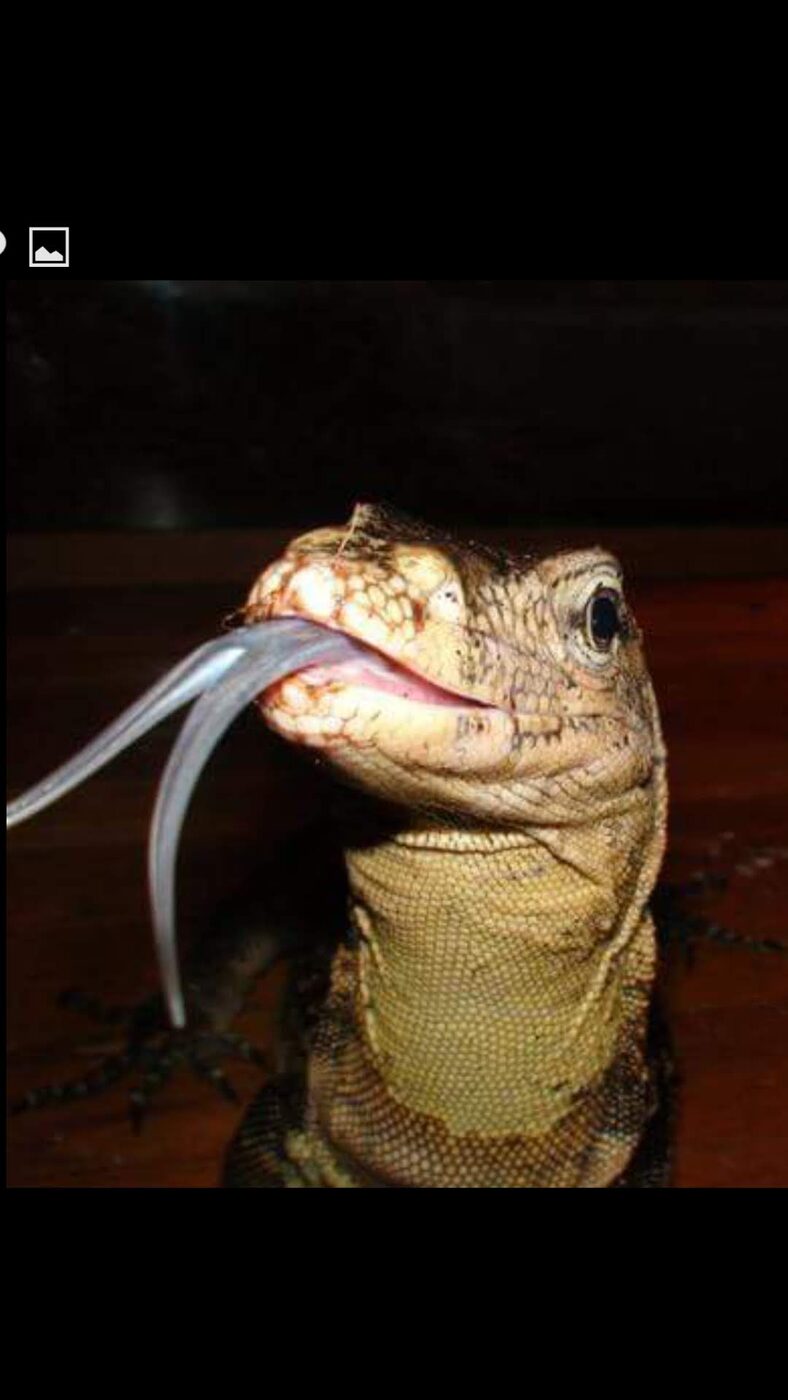
Asian water monitor
Varanus salvator
An intelligent, swimming giant: the "gentle giant" of monitors.
Pet trade
 In-depth
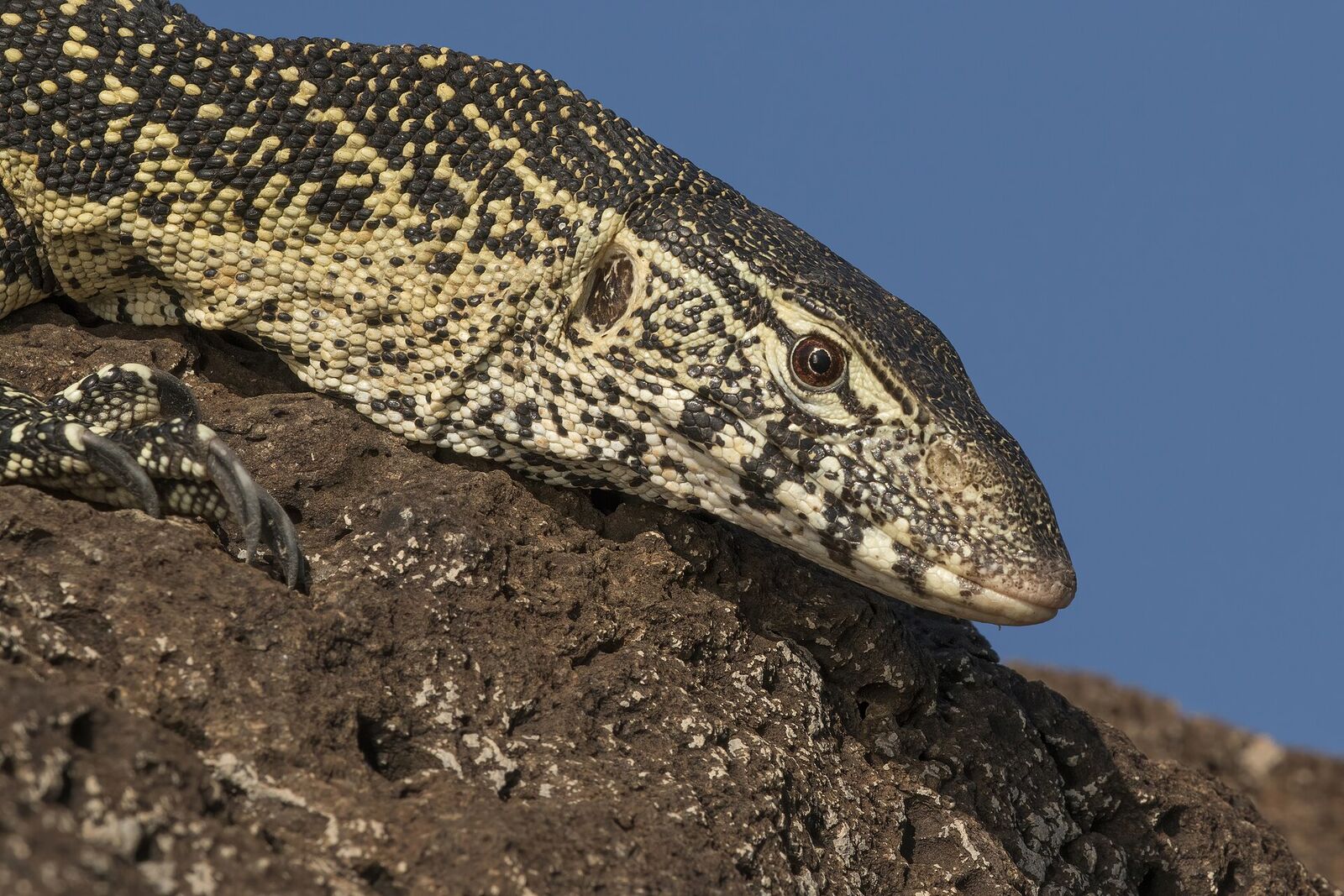
Nile monitor
Varanus niloticus
Africa's longest lizard, fast, bold and powerful.
Pet trade

Crocodile monitor
Varanus salvadorii
Pet trade