Home / Reptiles / Lizards / Nile monitor
Some federal rules apply In-depth sheetNile monitor
Varanus niloticus
Reptiles › Lizards (Lacertilia) › Varanidae (Monitor lizards)
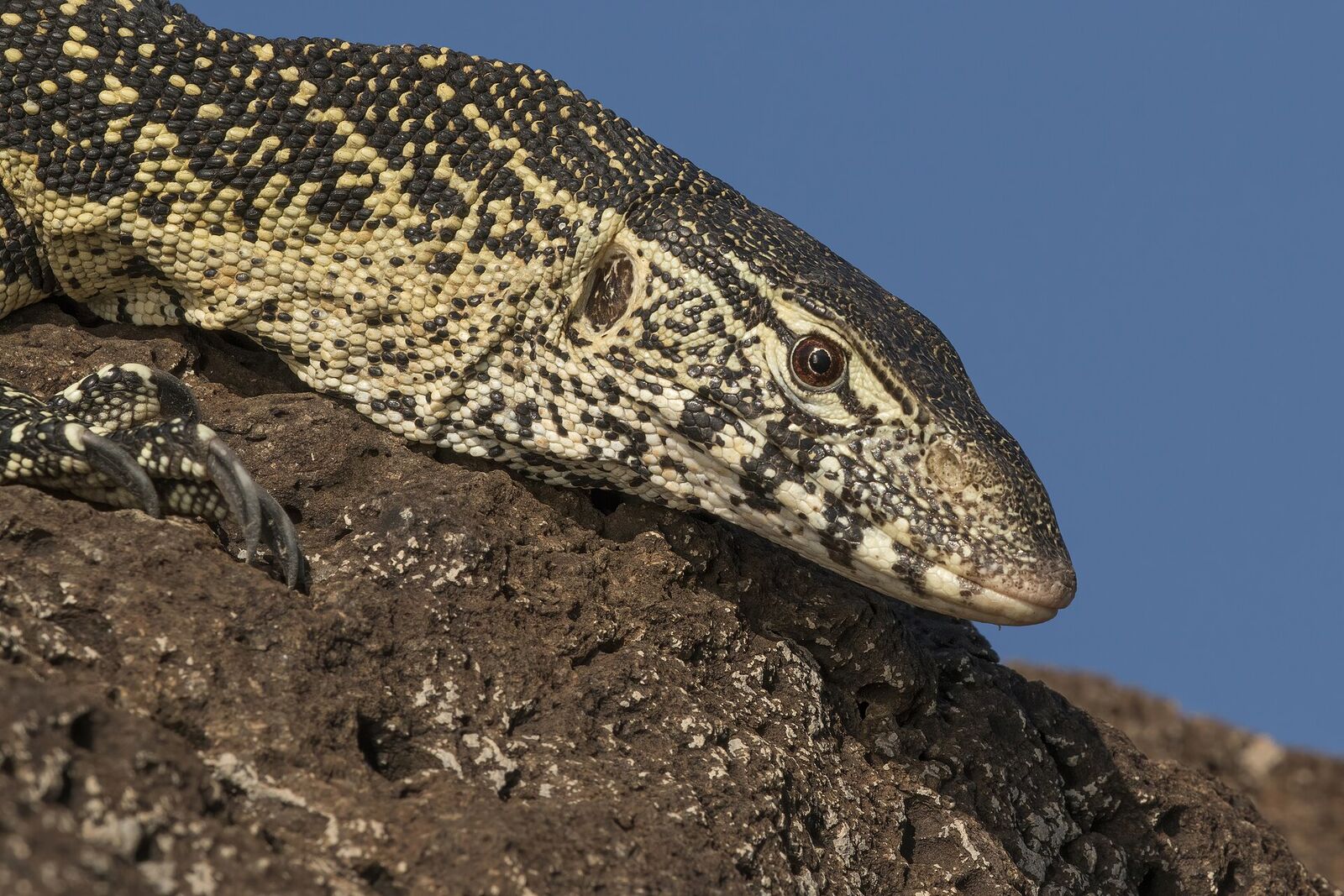
Nile monitors are large, very active semi-aquatic lizards. They're hardy when kept well, but known for a feisty temperament, a strong bite and a lashing tail, so they're a species for experienced keepers with room for custom housing.
Care guide
Enclosure
- Juveniles start in at least a 20-gallon vivarium; adults need custom-built quarters.
- Rocks, driftwood, hollow logs and a water feature large enough to soak in.
Lighting
- Natural sunlight is best; otherwise full-spectrum UV reptile lighting.
Sources 23
Diet
- Insects, rodents and fish, with occasional cooked egg.
- Vitamin supplement weekly and calcium twice weekly.
Sources 24
Handling & safety
- Expect defensive behavior: strong bite, sharp claws, whipping tail. Build trust slowly.
Sources 24
Health
- Have new animals checked for internal parasites. Clean the water daily; they often defecate in it.
Show the group care guide for large monitors
Large monitors
Applies to most species in this group. Habitat: Savanna, rainforest and riverbanks. Individual species can differ, so compare with the species numbers above and the linked sources.
Housing & setup
- Room-sized enclosures with a large pool for semi-aquatic species; heavy-duty construction.
- Basking surfaces well over 120 °F with a broad gradient.
Climate & lighting
| Basking spot | 120–140°F |
| Warm side / daytime | 85–95°F |
| Cool side | 75–80°F |
| Humidity | 50–80% |
- UVB: Required.
Diet
- Whole prey (rodents, poultry, fish) and insects; avoid fatty meats and dog food.
Health watch
- Obesity, gout and injuries; strong bites, sharp claws and tail whips.
Understanding the animal
In the wild
In the wild
Researched for this exact species, not its family. Good care copies these conditions.12
| Where it lives | River, lake and seasonal-pool margins across sub-Saharan Africa and north along the Nile. It uses savanna, woodland, wetland vegetation and open basking sites near water, retreating into burrows or rock crevices. |
| Ground it lives on | Soft sandy bank soil suitable for burrows, plus rocks, logs and waterside vegetation. |
| Water it lives in | Mostly freshwater rivers, lakes and seasonal pools, both still and flowing; mangrove habitats are also reported. Numeric water chemistry and temperature ranges were not established. |
| Climate | Ranges from tropical wetlands to cooler southern African areas, where winter dormancy occurs. Numeric species-wide wild temperature and humidity ranges were not established. |
| Active | Diurnal; winter brumation occurs in colder parts of South Africa. |
| Social life | Usually solitary outside mating. |
| Wild diet | Snails and other molluscs, crabs, insects, fish, frogs, rodents, birds, reptiles, eggs and carrion; crocodile nests are raided. |
| Behavior to plan for | An active swimmer, climber and excavator. When cornered it may lash its tail, scratch, bite strongly and discharge cloacal material. |
What this means for care
- Provide a large filtered swimming area and deep diggable land.
- Include robust elevated structures and secluded retreats.
- Offer varied suitable whole-animal foods rather than a mammal-only diet.
- Design access and barriers to accommodate defensive biting and powerful digging.
Native climate (measured)
Native climate (measured)
| Warm-season highs | about 89°F (up to 92°F in the hottest sampled areas) |
| Cool-season lows | about 49°F (down to 40°F in the coldest sampled areas) |
| Average temperature | 66–76°F across sampled records |
| Relative humidity | 64–70% on average (driest month about 60%) |
| Rainfall | about 704 mm a year |
Measured at 65 wild occurrence records sampled against WorldClim 2.1 climate data (1970–2000 averages). Air conditions in the range are ecological context, not enclosure settings: microhabitats such as burrows, leaf litter or basking rocks can be cooler, warmer or more humid.
Profile
Profile
Researched for this exact species. Sources are listed under In the wild above.
History
The status of Varanus ornatus has been contentious. Böhme and Ziegler elevated it to full species status in 1997 using pigmentation, tongue coloration, genital morphology and scale-count differences, while Dowell and colleagues in 2015 synonymized it with Varanus niloticus because they found the two genetically indistinguishable and morphologically overlapping, while also identifying distinct clades within the broad V. niloticus range.
Keeper tips
- Provide a substantial water area because Nile monitors naturally use freshwater habitats and are strong swimmers.
- Include secure climbing structures because they readily climb trees and young animals commonly use branches over water.
- Provide exposed basking locations.
- Offer deep, softer sandy substrate that allows burrow construction.
- Design the enclosure for a very large, powerful lizard; adults may reach about 2.4 m in length.
Behaviors reported
- Young monitors may lie on branches over rivers or pools and drop into the water when disturbed.
- When alarmed without nearby water, they can climb trees to heights of about 5 to 6 m.
- They excavate their own burrows or enlarge existing ones.
- They may escape into holes, rocky crevices or termite nests.
- They bask in exposed locations, including rooftops and streets in developed areas.
Unique adaptations
- They are superb swimmers and climbers, allowing them to use both terrestrial and aquatic environments.
- Sharp claws and strong muscular legs aid climbing.
- Their ability to use water, trees, burrows and rocky refuges contributes to adaptability across varied habitats.
Remarkable facts
- The species occurs through most of sub-Saharan Africa and reaches Egypt along the Nile.
- It has been documented from 0 to 1,600 m elevation.
- Hatchlings are about 30 cm long and weigh about 26 g.
- Adults may reach about 2.4 m in total length.
- Nile monitors may be among Africa's largest lizards.
- The taxonomic relationship between Varanus niloticus and Varanus ornatus has been disputed.
Stories
- A 2023 publication documented predation of a Nile monitor by a Central African rock python in Cameroon and discussed abandoned fishing nets as a potential threat.
From the sources
From the sources
Quoted from the matching sections of reputable sources for this exact species. Specialist databases are used first; Wikipedia (community-edited, CC BY-SA 4.0) only fills gaps. Other sources are short credited quotes.
| Overview | The Nile monitor (Varanus niloticus) is a large member of the monitor family (Varanidae) found throughout most of Sub-Saharan Africa, particularly in drier regions, and along the Nile River and its tributaries in East Africa. Additionally, there are modern, invasive populations in North America. The population found in West African forests and savannahs is sometimes recognized as a separate species, the West African Nile monitor (V. niloticus stellatus) and Ornate monitor (V. niloticus ornatus). — Wikipedia (community-edited) |
| Where it lives | Nile monitors inhabit a wide variety of habitats including woodland, dry savanna, scrub, evergreen thickets, swamps, and mangroves. — Animal Diversity Web |
| Social life and communication | Nile monitors use both visual and olfactory cues when sensing the environment. — Animal Diversity Web |
| Wild diet | Nile monitors are stealthy hunters, concluding their predatory quests by pouncing with lightning speed on their prey. — Animal Diversity Web |
| Behavior | Nile monitors are usually solitary, with only occasional intraspecies interaction outside the mating season. — Animal Diversity Web |
| Reproduction | maybe parthenogenetic (Hennessy 2010). — The Reptile Database |
| Lifespan | Estimates vary, but the expected lifespan in captivity is reported at between 10 and 20 years. — Animal Diversity Web |
| Appearance and size | Nile monitors may be Africa's largest lizards, though a former subspecies, now recognized as the species Varanus ornatus, may be as big or bigger. — Animal Diversity Web |
| History and naming | Named after Latin niloticus, from the Nile. — The Reptile Database |
Data and studies
The numbers
The numbers
Each bar is what one source reports. Where several sources weigh in, the dashed gold band marks their average.
Daytime gradient
Both sources use the same San Diego Herpetological Society care sheet.
Night temperature
Maximum recorded lifespan
Longest recorded lifespan reported by each database; typical lifespans are usually shorter. The AnAge record comes from an animal in human care.
Typical adult weight
Average adult body mass in each database (FishBase gives the maximum recorded weight).
Incubation
Veterinary & husbandry research
Veterinary & husbandry research
- Combining genetic and distributional approaches to sourcing introduced species: a case study on the Nile monitor (Varanus niloticus) in Florida Dowell SA et al., Royal Society open science 2016
- Severe fibrinonecrotic enteritis caused by Pseudomonas aeruginosa in a captive monitor lizard (Varanus niloticus) Seixas R et al., Journal of zoo and wildlife medicine: official publication of the American Association of Zoo Veterinarians 2014
Peer-reviewed papers that mention this species alongside captivity, zoos, veterinary care or aquaculture. Some cover several species or mention it only in passing, so check the abstract. 170
Sources for this sheet
- Melissa Kaplan's Herp Care Collection: Nile monitor Experienced keeper or breederLong-respected reptile educator; adapted from a San Diego Herpetological Society care sheet.
- WikiVet: Nile monitor Zoo, university or veterinaryVeterinary education wiki written for vet students.
- Clint's Reptiles (YouTube): Nile Monitor, The Best Pet Lizard? Expert educator & keeperClint Laidlaw, PhD in Biology Education and MS in Evolutionary Ecology; owner of Clint's Reptile Room and a longtime keeper. Rates each species on handleability, care, hardiness, availability and upfront cost.
- AnAge: The Animal Ageing and Longevity Database (Human Ageing Genomic Resources) Peer-reviewed researchCurated, referenced longevity and life-history records for thousands of species; maximum lifespans are often from zoo animals.
- Myhrvold et al. (2015). An amniote life-history database. Ecology 96: 3109 Peer-reviewed researchPeer-reviewed compilation of life-history data for over 21,000 birds, mammals and reptiles.
- Species+ (UNEP-WCMC and the CITES Secretariat) Zoo, university or veterinaryThe official database of species listed under CITES.
- USFWS International Affairs: CITES Zoo, university or veterinaryFederal agency that issues CITES permits.
- Merck Veterinary Manual: Management and husbandry of reptiles Zoo, university or veterinaryThe Merck Veterinary Manual: a standard veterinary reference written and reviewed by veterinary specialists.
- Merck Veterinary Manual: Nutritional, metabolic and endocrine diseases of reptiles Zoo, university or veterinaryThe Merck Veterinary Manual: a standard veterinary reference written and reviewed by veterinary specialists.
- Clint's Reptiles (YouTube): Nile Monitor, The Best Pet Lizard? Expert educator & keeperClint Laidlaw, PhD in Biology Education and MS in Evolutionary Ecology; owner of Clint's Reptile Room and a longtime keeper. His "Best Pet?" series reviews each species' care in depth.
- The Reptile Database Peer-reviewed researchScientist-curated catalog of every reptile species, with taxonomy and literature.
- GBIF Backbone Taxonomy (Global Biodiversity Information Facility) Peer-reviewed researchInternational scientific taxonomy used here for classification.
- Wikipedia (species article) Community referenceFree encyclopedia; useful overviews with their own citations. Intro text is quoted under CC BY-SA 4.0.
- PubMed (U.S. National Library of Medicine) Peer-reviewed researchIndex of peer-reviewed veterinary, zoo and husbandry research.
- iNaturalist (captive observations) Community referenceCommunity observation platform run by the California Academy of Sciences and National Geographic; observations marked captive show animals living in homes, zoos and aquariums.
More monitor lizards
 In-depth
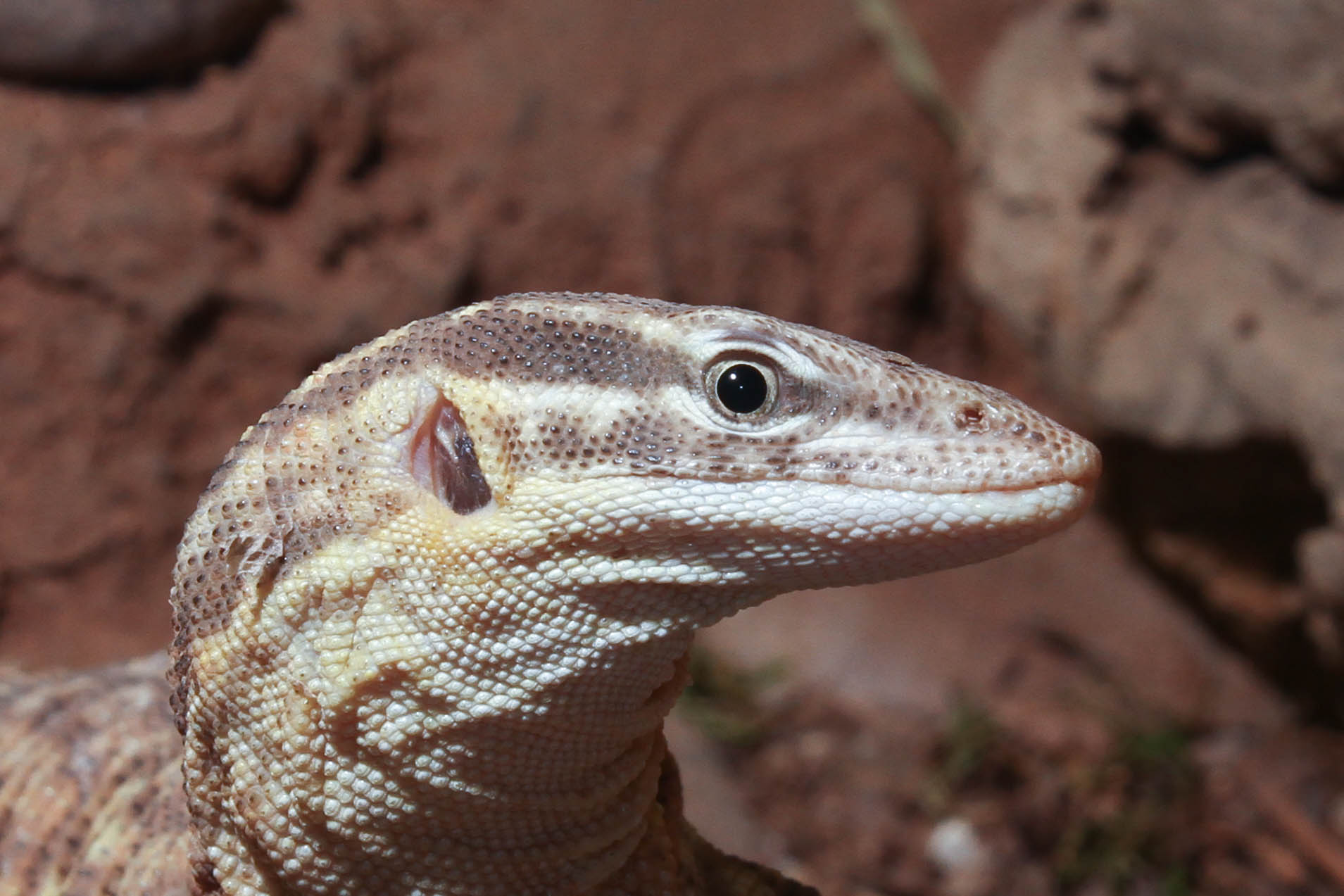
Ackie (spiny-tailed) monitor
Varanus acanthurus
A pint-sized monitor with a huge personality.
Pet trade
 In-depth
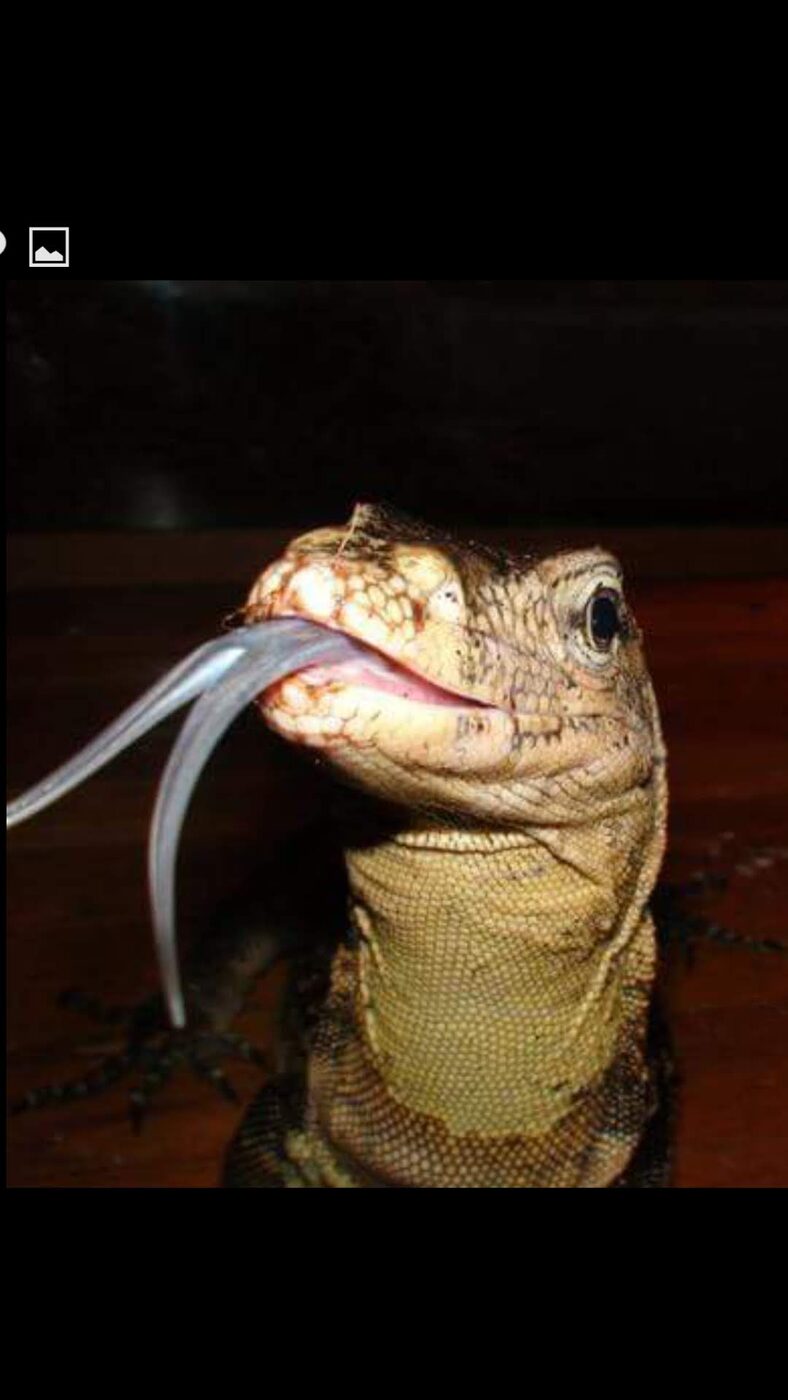
Asian water monitor
Varanus salvator
An intelligent, swimming giant: the "gentle giant" of monitors.
Pet trade

Crocodile monitor
Varanus salvadorii
Pet trade