Home / Reptiles / Lizards / Asian water monitor
Some federal rules apply In-depth sheetAsian water monitor
Varanus salvator
Reptiles › Lizards (Lacertilia) › Varanidae (Monitor lizards)
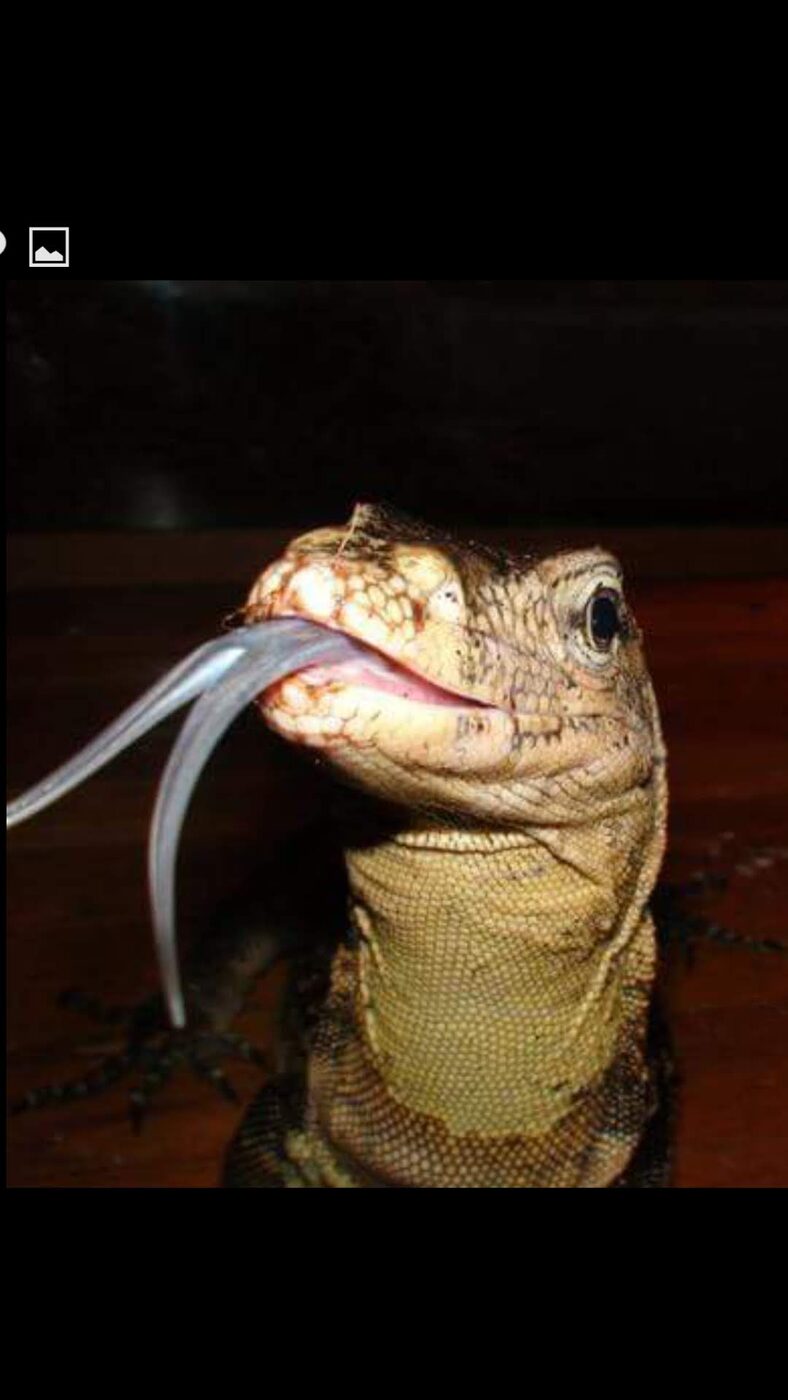
Asian water monitors are among the largest lizards in the world and strong swimmers. Many keepers describe captive-raised animals as "gentle giants" with consistent, positive interaction, but their size means room-sized enclosures and a big water feature.
Care guide
Enclosure
- Hatchlings: about 36×18×16 in; yearlings 4×4×4 ft; adults about 8×6×8 ft; breeding pairs at least 8×8×8 ft.
- A water area big enough to fully submerge, changed daily.
Sources 25
Diet
- Babies: gut-loaded crickets and roaches. Growing monitors: whole prey like rodents, fish and poultry.
- Hatchlings daily or every other day, yearlings 3–4 times a week, adults 2–3 times a week.
Sources 25
Handling
- Short, positive, consistent sessions build a calm, trusting adult.
Sources 25
Health
- Pick robust, active animals with clear eyes and no discharge from the nose or mouth.
Sources 25
Show the group care guide for large monitors
Large monitors
Applies to most species in this group. Habitat: Savanna, rainforest and riverbanks. Individual species can differ, so compare with the species numbers above and the linked sources.
Housing & setup
- Room-sized enclosures with a large pool for semi-aquatic species; heavy-duty construction.
- Basking surfaces well over 120 °F with a broad gradient.
Climate & lighting
| Basking spot | 120–140°F |
| Warm side / daytime | 85–95°F |
| Cool side | 75–80°F |
| Humidity | 50–80% |
- UVB: Required.
Diet
- Whole prey (rodents, poultry, fish) and insects; avoid fatty meats and dog food.
Health watch
- Obesity, gout and injuries; strong bites, sharp claws and tail whips.
Understanding the animal
In the wild
In the wild
Researched for this exact species, not its family. Good care copies these conditions.12345
| Where it lives | South and Southeast Asian riverbanks, swamps and other wetland edges. It excavates or occupies bank burrows and also climbs waterside trees. |
| Ground it lives on | Diggable riverbank soil and wetland-edge earth with burrows and surface cover. |
| Water it lives in | Uses freshwater rivers and swamps, both flowing and still. A general water chemistry or typical water-temperature range was not established. |
| Climate | A reported bank-burrow study found a mean refuge temperature near 79°F. This is a sheltered microhabitat value, not an annual air-temperature range; numeric wild humidity was not established. |
| Active | Usually diurnal; nocturnal and predawn scavenging are documented on Tinjil Island, Indonesia. |
| Wild diet | Fish, frogs, rats and other small mammals, birds and eggs, lizards, snakes, turtles and carrion. |
| Behavior to plan for | Actively searches for prey, swims and dives, and can escape by climbing then dropping into water. Bank burrows provide protected resting places. |
What this means for care
- Provide a large clean swimming area rather than only a drinking bowl.
- Include strong climbing structures and deep diggable land.
- Provide covered bank-like retreats and varied food-search opportunities.
Native climate (measured)
Native climate (measured)
| Warm-season highs | about 89°F (up to 95°F in the hottest sampled areas) |
| Cool-season lows | about 72°F (down to 69°F in the coldest sampled areas) |
| Average temperature | 80–83°F across sampled records |
| Relative humidity | 77–83% on average (driest month about 75%) |
| Rainfall | about 2309 mm a year, spread fairly evenly |
Measured at 122 wild occurrence records sampled against WorldClim 2.1 climate data (1970–2000 averages). Air conditions in the range are ecological context, not enclosure settings: microhabitats such as burrows, leaf litter or basking rocks can be cooler, warmer or more humid.
Profile
Profile
Researched for this exact species. Sources are listed under In the wild above.
History
Josephus Nicolaus Laurenti described the species in 1768 as Stellio salvator. Theodore Cantor placed it in the genus Varanus in 1847, and several populations once treated as subspecies have since been elevated to full species.
Keeper tips
- Provide a large water area suitable for swimming and full-body immersion.
- Use a strongly constructed enclosure sized for an animal capable of exceeding 6 ft.
- Include climbing structures as well as substantial terrestrial floor space.
- Provide an area where digging or burrow-like sheltering is possible.
- Use enrichment that allows active searching and exploration rather than maintaining the animal in a featureless enclosure.
Behaviors reported
- Uses open-pursuit hunting.
- Is an excellent swimmer and may cross large expanses of water.
- Climbs trees when threatened and may leap from a branch into water to escape.
- Excavates or occupies riverbank burrows.
- Has been documented scavenging human corpses.
Unique adaptations
- Powerful legs permit effective climbing as well as terrestrial locomotion.
- Strong swimming ability allows extensive use of rivers and other aquatic habitats.
- Its ability to use natural waterways as well as sewers, parks, and urban waterways reflects substantial ecological adaptability.
- Its water-crossing ability has contributed to its exceptionally broad geographic distribution.
Remarkable facts
- Varanus salvator is widely considered the second-largest living lizard species after the Komodo dragon.
- A commonly cited mature weight is about 43 lb.
- The species is one of the most geographically widespread monitor lizards.
- Males are larger than females.
- It is oviparous.
Stories
- Asian water monitors have been observed crossing large stretches of water, a behavior proposed to help explain their unusually broad distribution.
- Like the Komodo dragon, water monitors have been documented digging up and feeding on human corpses.
From the sources
From the sources
Quoted from the matching sections of reputable sources for this exact species. Specialist databases are used first; Wikipedia (community-edited, CC BY-SA 4.0) only fills gaps. Other sources are short credited quotes.
| Overview | The Asian water monitor (Varanus salvator) is a large varanid lizard native to South and Southeast Asia. It is widely considered to be the second-largest lizard species, after the Komodo dragon. It is distributed from eastern and northeastern India and Bangladesh, the Andaman and Nicobar Islands, Sri Lanka, through southern China and Hainan Island in the east to Mainland Southeast Asia and the islands of Sumatra, Borneo, Java, Lombok, the Riau Archipelago, and Sulawesi. It is one of the most widespread monitor lizards. — Wikipedia (community-edited) |
| Where it lives | Varanus salvator is semi-aquatic and has a wide range of habitats. — Animal Diversity Web |
| Wild diet | The Water Monitor is an extreme carnivore. — Animal Diversity Web |
| Behavior | An interesting behavior of the Water Monitor resembles a behavior of the green iguana. — Animal Diversity Web |
| Reproduction | Exhibits temperature‐dependent sex determination (TSD) fide Cornejo-Páramo et al. 2020 (and references therein). — The Reptile Database |
| Appearance and size | Varanus salvator is reported to grow to 3 meters in length, but most adults are 1.5 meters long at most. — Animal Diversity Web |
| History and naming | Uncertain, but possibly similar to the genus Salvator, which was at the time a name frequently used for Jesus Christ in hymns of the Christian Church. See Salvator merianae, the type species of Salvator. — The Reptile Database |
| Conservation | Although killed extensively for its skin, this species seems to be resilient. — Animal Diversity Web |
Data and studies
The numbers
The numbers
Each bar is what one source reports. Where several sources weigh in, the dashed gold band marks their average.
Humidity
Maximum recorded lifespan
Longest recorded lifespan reported by each database; typical lifespans are usually shorter. The AnAge record comes from an animal in human care.
Typical adult weight
Average adult body mass in each database (FishBase gives the maximum recorded weight).
Incubation
Care articles for this species
Care articles for this species
- Asian Water Monitor Breeding And Care Tips (Reptiles Magazine)
- Quick-Care Video-Asian Water Monitor (Reptiles Magazine)
Veterinary & husbandry research
Veterinary & husbandry research
- Revision of Acanthotaenia von Linstow, 1903 (Cestoda: Proteocephalidae), parasites of monitors (Varanus spp.), based on morphological and molecular data de Chambrier A et al., Parasitology research 2019
- Molecular investigation of Anaplasma spp. in domestic and wildlife animals in Peninsular Malaysia Koh FX et al., Veterinary parasitology, regional studies and reports 2018
- Quantitative and qualitative morphologic, cytochemical, and ultrastructural characteristics of blood cells in captive Asian water monitors Salakij C et al., Veterinary clinical pathology 2014
- A global assessment of reptiles in the skin trade Colston TJ et al., Scientific reports 2026
Peer-reviewed papers that mention this species alongside captivity, zoos, veterinary care or aquaculture. Some cover several species or mention it only in passing, so check the abstract. See all 8 on PubMed → 170
Sources for this sheet
- Reptiles Magazine: Asian water monitor breeding and care tips Experienced keeper or breederBreeder-written article in an established reptile publication.
- Clint's Reptiles (YouTube): Asian Water Monitor, The Best Pet Lizard? Expert educator & keeperClint Laidlaw, PhD in Biology Education and MS in Evolutionary Ecology; owner of Clint's Reptile Room and a longtime keeper. Rates each species on handleability, care, hardiness, availability and upfront cost.
- AnAge: The Animal Ageing and Longevity Database (Human Ageing Genomic Resources) Peer-reviewed researchCurated, referenced longevity and life-history records for thousands of species; maximum lifespans are often from zoo animals.
- Myhrvold et al. (2015). An amniote life-history database. Ecology 96: 3109 Peer-reviewed researchPeer-reviewed compilation of life-history data for over 21,000 birds, mammals and reptiles.
- Species+ (UNEP-WCMC and the CITES Secretariat) Zoo, university or veterinaryThe official database of species listed under CITES.
- USFWS International Affairs: CITES Zoo, university or veterinaryFederal agency that issues CITES permits.
- Merck Veterinary Manual: Management and husbandry of reptiles Zoo, university or veterinaryThe Merck Veterinary Manual: a standard veterinary reference written and reviewed by veterinary specialists.
- Merck Veterinary Manual: Nutritional, metabolic and endocrine diseases of reptiles Zoo, university or veterinaryThe Merck Veterinary Manual: a standard veterinary reference written and reviewed by veterinary specialists.
- Clint's Reptiles (YouTube): Asian Water Monitor, The Best Pet Lizard? Expert educator & keeperClint Laidlaw, PhD in Biology Education and MS in Evolutionary Ecology; owner of Clint's Reptile Room and a longtime keeper. His "Best Pet?" series reviews each species' care in depth.
- The Reptile Database Peer-reviewed researchScientist-curated catalog of every reptile species, with taxonomy and literature.
- GBIF Backbone Taxonomy (Global Biodiversity Information Facility) Peer-reviewed researchInternational scientific taxonomy used here for classification.
- Wikipedia (species article) Community referenceFree encyclopedia; useful overviews with their own citations. Intro text is quoted under CC BY-SA 4.0.
- PubMed (U.S. National Library of Medicine) Peer-reviewed researchIndex of peer-reviewed veterinary, zoo and husbandry research.
- iNaturalist (captive observations) Community referenceCommunity observation platform run by the California Academy of Sciences and National Geographic; observations marked captive show animals living in homes, zoos and aquariums.
- Reptiles Magazine (care articles) Experienced keeper or breederEstablished reptile and amphibian hobby magazine; care articles are written by breeders, keepers and veterinarians.
More monitor lizards
 In-depth
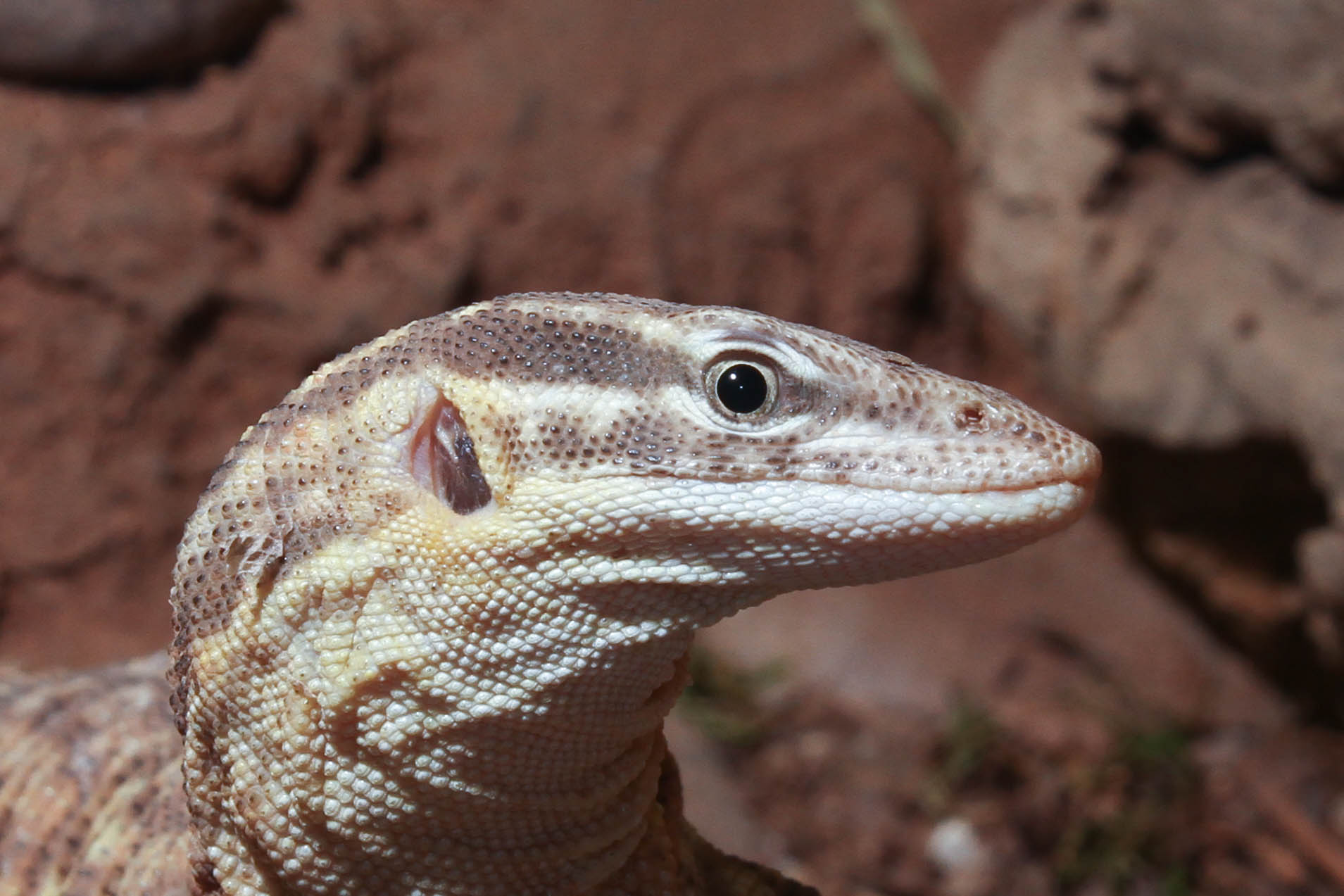
Ackie (spiny-tailed) monitor
Varanus acanthurus
A pint-sized monitor with a huge personality.
Pet trade
 In-depth
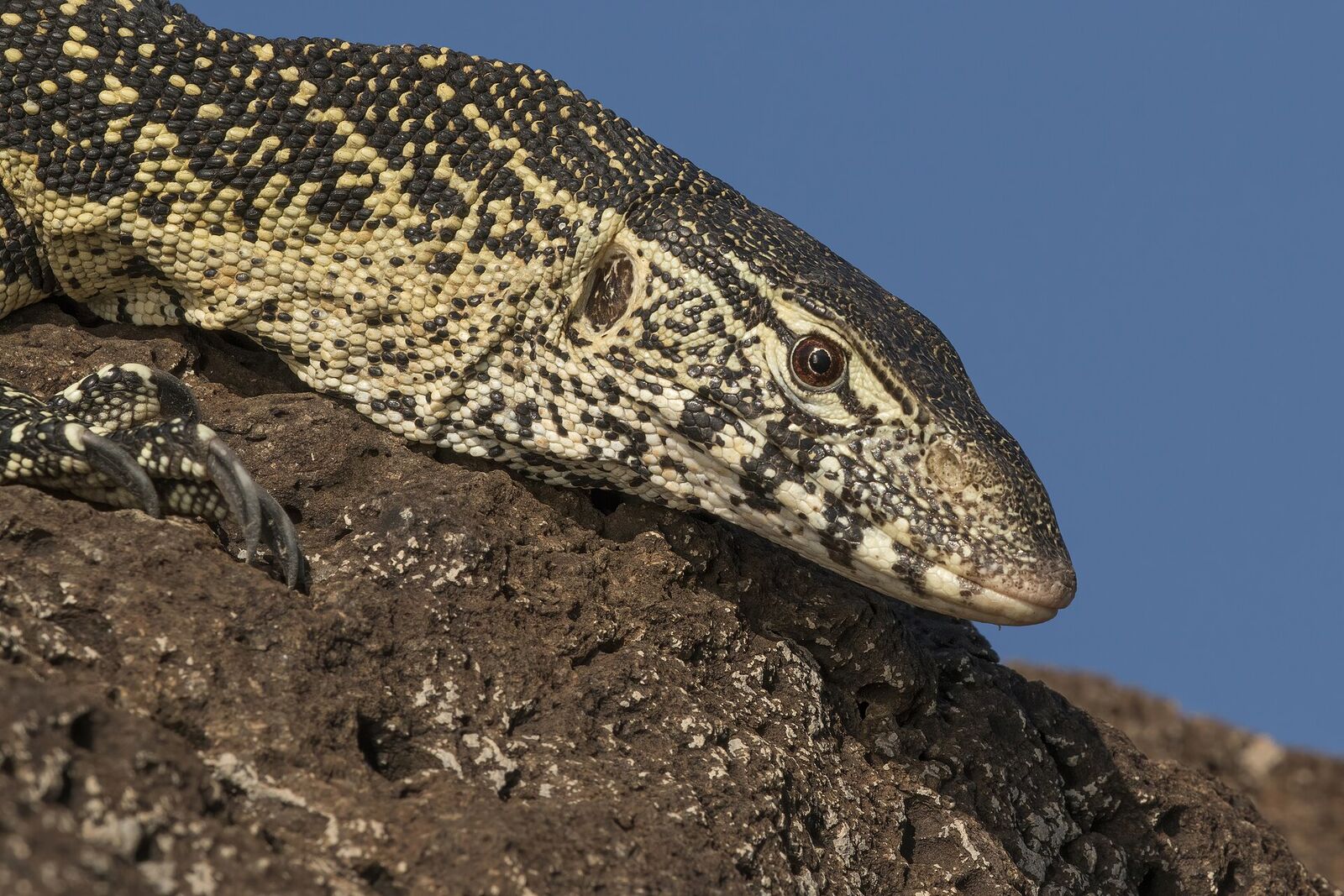
Nile monitor
Varanus niloticus
Africa's longest lizard, fast, bold and powerful.
Pet trade

Crocodile monitor
Varanus salvadorii
Pet trade