Home / Invertebrates / Spiders / Burgundy goliath birdeater
No federal permit to keepBurgundy goliath birdeater
Theraphosa stirmi
Invertebrates › Spiders (Araneae) › Theraphosidae (Tarantulas)
Theraphosa stirmi is a species of tarantula belonging to the family Theraphosidae.

Care at a glance
Species-specific values
Values researched for this exact species. Where they differ from the group guide below, follow these. Air, surface and water temperatures are listed separately, and each source is kept as published rather than averaged.
| Substrate moisture | Deep substrate with damp lower layers, water dish and cross-ventilation. Moisture-dependent terrestrial; avoid a flooded or stagnant enclosure. | 379 |
| Air temperature winter | 72–77 degF Keeper-reported winter room range, not demonstrated optimum. | 379 |
| Air temperature summer | 75–84 degF Keeper-reported summer room range; not a recommendation to heat to the upper limit. | 379 |
| Humidity method | Keeper estimates 65–75% RH but manages damp substrate and airflow rather than chasing a hygrometer number. Retains numerical RH convention alongside the keeper’s methodological qualification. | 379 |
Care guide
Tarantulas
Applies to most species in this group. Habitat: Grassland, desert and rainforest. Individual species can differ, so compare with the species numbers above and the linked sources.
Housing & setup
- Separate dry terrestrial adults from moisture-dependent species. For dry terrestrials, keep most substrate dry with a filled water dish and a locally damp corner; moisture-dependent species need deep substrate with damp lower layers, never a flooded burrow.
- Arboreal species need vertical retreats and cross-ventilation. Do not make Avicularia housing stagnant to reach a high humidity percentage; water access and airflow matter.
Climate & lighting
Starting point only: Remove universal temperature/humidity targets. RVC uses 60–65% RH for most species and 75% for some; Moran prioritizes water, ventilation and substrate moisture. These approaches disagree and species overrides should retain the distinction. Check the species-specific values for this animal where shown.
| Warm side / daytime | 72–82°F |
| Humidity | 60–75% |
Diet
- Crickets, roaches and other insects; adults may eat weekly or less and fast before molting.
Handling
- Handling is optional and risky for the spider; most keepers avoid it.
Health watch
- Never feed during a molt. Many New World species flick irritating hairs; Old World species have stronger venom and are fast and defensive.
Understanding the animal
About this animal
About this animal
It is known as the burgundy goliath bird eater.
Quoted from the Wikipedia article “Theraphosa stirmi” (CC BY-SA 4.0) 174
In the wild
In the wild
Quoted from the matching sections of reputable sources for this exact species. Specialist databases are used first; Wikipedia (community-edited, CC BY-SA 4.0) only fills gaps. Other sources are short credited quotes.
| Overview | Theraphosa stirmi is a species of tarantula belonging to the family Theraphosidae. It is known as the burgundy goliath bird eater. — Wikipedia (community-edited) |
| Where it lives | This species occurs in Guyana and Brazil, in tropical South America-making it a new world tarantula. — Wikipedia (community-edited) |
| Behavior | These tarantulas hide themselves in long tubes that they dig under the surface or use abandoned rodent burrows. It is a crepuscular and nocturnal species and it is quite defensive. When threatened this species will stridulate (hiss) to warn predators, it may also rear up and expose its fangs. — Wikipedia (community-edited) |
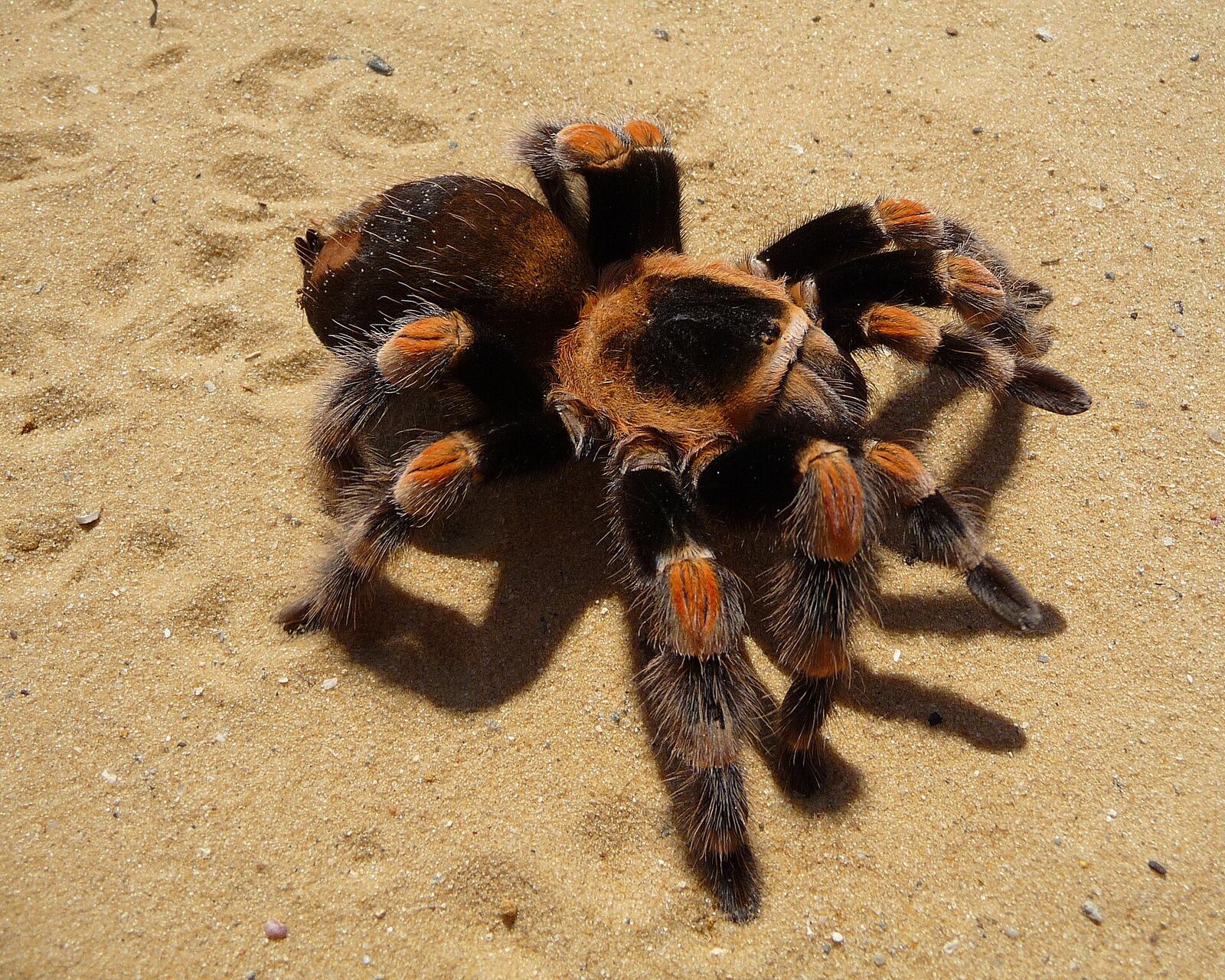
| Appearance and size | In Theraphosa stirmi the carapace can reach a length of 40 mm and a width of 37 mm. The longest leg (the fourth) in a male had a total length of 110 mm. Coloration of these heavy-bodied spiders varies from rusty brown or rich burgundy-brown to dark brown, with reddish setae on legs and abdomen and white lines on the legs. — Wikipedia (community-edited) |
Native climate (measured)
Native climate (measured)
| Warm-season highs | about 89°F (up to 90°F in the hottest sampled areas) |
| Cool-season lows | about 71°F (down to 28°F in the coldest sampled areas) |
| Average temperature | 49–80°F across sampled records |
| Relative humidity | 76–82% on average (driest month about 71%) |
| Rainfall | about 1931 mm a year |
Measured at 5 wild occurrence records sampled against WorldClim 2.1 climate data (1970–2000 averages). Air conditions in the range are ecological context, not enclosure settings: microhabitats such as burrows, leaf litter or basking rocks can be cooler, warmer or more humid.
Data and studies
Researched care notes
Researched care notes
Findings checked against veterinary, zoo, welfare, keeper and peer-reviewed sources. Air, basking-surface and water temperatures are kept separate, and where sources disagree both are shown. “Study” notes report what a paper measured, not a universal rule.
Terrestrial Tarantulas (beginner housing module)
Researched for this whole family or group; check species differences before applying.
- Use a secure terrestrial enclosure with refuge, appropriate substrate, and available water. Arboreal and deep-burrowing species require separate designs.1
- The keeper essay recommends managing substrate moisture, drinking water, and ventilation rather than chasing a generic RH number. Keeper experience; confidence LOW.2
Terrestrial Tarantulas
Researched for this whole family or group; check species differences before applying.
- A spider lying on its back may be molting; do not turn it upright or disturb the molt.1,3
- Remove loose living prey when a tarantula stops feeding before a molt, because prey insects can injure or kill the vulnerable spider.1
- Resume feeding only after the new exoskeleton has hardened; the BTS notes that newly molted adults can need more than a week.1
- Minimize fall risk and routine handling; the BTS recommends no handling because even a short fall can seriously injure a tarantula.1
- Arrange rocks and other heavy furnishings so they cannot fall onto the spider or create hazardous falls.3
Sources for this sheet
- Royal Veterinary College Exotics Service: Tarantula care Zoo, university or veterinaryVet-school exotics hospital factsheet, reviewed 2021–2024.
- Amateur Entomologists' Society: Tarantula care sheet Experienced keeper or breederAmateur Entomologists' Society (UK charity, since 1935): practical invertebrate care sheets written by experienced keepers.
- University of Kentucky: Exotic Bugs—Care and Feeding Zoo, university or veterinaryAdded in the 2026 source-checked care-guide review.
- Tom Moran: Keeping Moisture Dependent Tarantula Species Experienced keeper or breederAdded in the 2026 source-checked care-guide review.
- Tom Moran: Humidity, Temperature, and Tarantulas Experienced keeper or breederAdded in the 2026 source-checked care-guide review.
- Royal Veterinary College: Tarantula care and advice (December 2022) Zoo, university or veterinaryAdded in the 2026 source-checked care-guide review.
- GBIF Backbone Taxonomy (Global Biodiversity Information Facility) Peer-reviewed researchInternational scientific taxonomy used here for classification.
- Wikipedia (species article) Community referenceFree encyclopedia; useful overviews with their own citations. Intro text is quoted under CC BY-SA 4.0.
- iNaturalist (captive observations) Community referenceCommunity observation platform run by the California Academy of Sciences and National Geographic; observations marked captive show animals living in homes, zoos and aquariums.