Home / Invertebrates / Spiders / Chilean rose tarantula
Some federal rules applyChilean rose tarantula
Grammostola rosea
Invertebrates › Spiders (Araneae) › Theraphosidae (Tarantulas)
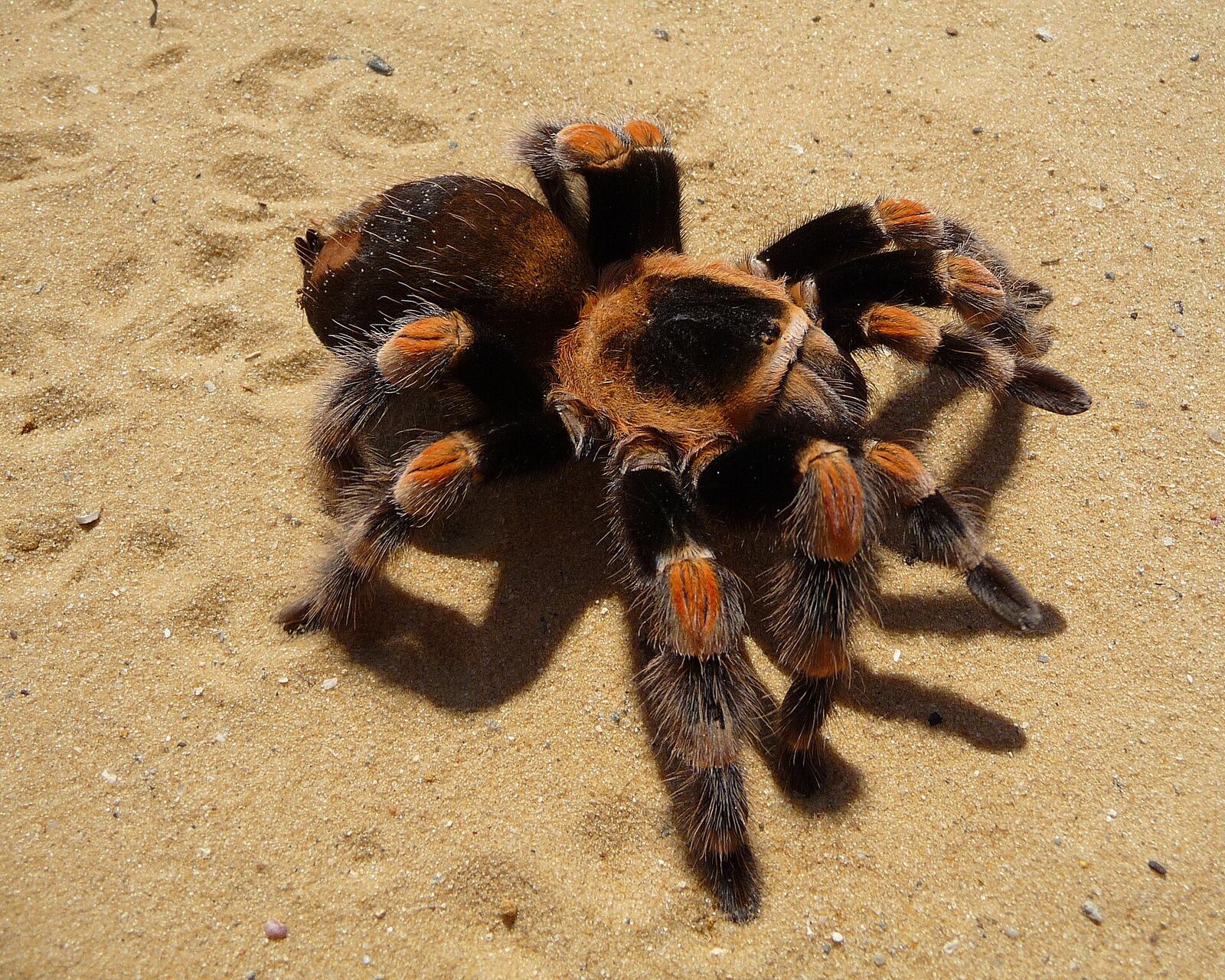
The Chilean rose tarantula (Grammostola rosea), also known as the rose hair tarantula, the Chilean fire tarantula, or the Chilean red-haired tarantula (depending on the color morph), is probably the most common species of tarantula available in…

Care at a glance
Species-specific values
Values researched for this exact species. Where they differ from the group guide below, follow these. Air, surface and water temperatures are listed separately, and each source is kept as published rather than averaged.
| Substrate moisture | Mostly dry substrate; water dish and a locally damp area. Adult terrestrial care; do not apply unchanged to tiny spiderlings. | 339 |
| Adult leg span | 4–5 in Leg span, not body length. | 339 |
| Female lifespan | 15 years or more Reported female longevity; not a median or male lifespan. | 339 |
Care guide
Tarantulas
Applies to most species in this group. Habitat: Grassland, desert and rainforest. Individual species can differ, so compare with the species numbers above and the linked sources.
Housing & setup
- Separate dry terrestrial adults from moisture-dependent species. For dry terrestrials, keep most substrate dry with a filled water dish and a locally damp corner; moisture-dependent species need deep substrate with damp lower layers, never a flooded burrow.
- Arboreal species need vertical retreats and cross-ventilation. Do not make Avicularia housing stagnant to reach a high humidity percentage; water access and airflow matter.
Climate & lighting
Starting point only: Remove universal temperature/humidity targets. RVC uses 60–65% RH for most species and 75% for some; Moran prioritizes water, ventilation and substrate moisture. These approaches disagree and species overrides should retain the distinction. Check the species-specific values for this animal where shown.
| Warm side / daytime | 72–82°F |
| Humidity | 60–75% |
Diet
- Crickets, roaches and other insects; adults may eat weekly or less and fast before molting.
Handling
- Handling is optional and risky for the spider; most keepers avoid it.
Health watch
- Never feed during a molt. Many New World species flick irritating hairs; Old World species have stronger venom and are fast and defensive.
Understanding the animal
About this animal
About this animal
The species is also known from Bolivia and Argentina. G. rosea is a common pet of tarantula hobbyists.
Quoted from the Wikipedia article “Chilean rose tarantula” (CC BY-SA 4.0) 174
In the wild
In the wild
Researched for this exact species, not its family. Good care copies these conditions.1234
| Where it lives | Chilean dry grassland and scrub, with field records in Santiago foothills at Panul Park and Huechuraba. Occupies soil burrows in vegetated and disturbed patches. |
| Ground it lives on | Soil burrows associated with vegetation or stones. |
| Climate | Seasonal Mediterranean climate documented in central Chile; measured wild burrow temperature and humidity ranges were not established. |
| Active | Females generally remain close to their burrows, leaving only short distances for food and potential mates. Males abandon their burrows and roam in search of females, typically between September and March. |
| Social life | Primarily solitary. Each burrow is occupied by only one spider, and even in areas of high population density burrows are no closer than about 1 m apart. |
| Wild diet | Insects and other arthropods; occasional small vertebrates reported. |
| Behavior to plan for | A terrestrial burrow user with venom and defensive abdominal hairs kicked toward threats. |
What this means for care
- Provide deep soil supporting a retreat.
- Prioritize floor space and low fall distances.
- Avoid handling that triggers bites or irritating hairs.
Profile
Profile
Researched for this exact species. Sources are listed under In the wild above.
History
The species became especially common in the American and European pet trade because large numbers of inexpensive wild-caught specimens were exported from Chile. Considerable taxonomic confusion existed between Grammostola rosea and Grammostola porteri until the World Spider Catalog revised G. porteri as a junior synonym of G. rosea in 2022.
Keeper tips
- House individuals singly because the species is solitary and each natural burrow as occupied by one spider.
- Provide the opportunity to create or occupy a burrow-like retreat.
- Allow for silk use around the retreat because wild burrows are lined with silk.
- Do not assume a female that remains near its burrow is unusually inactive; wild females normally travel only short distances for food and potential mates.
- Expect mature males to become more mobile during mate-searching periods.
Behaviors reported
- Digs small burrows or takes over abandoned reptile or rodent burrows.
- Lines its burrow with silk.
- Lives solitarily, with one spider occupying each burrow.
- Females remain close to the burrow while males leave to search for mates.
- Males typically search for mates between September and March.
Unique adaptations
- A burrow-dwelling lifestyle provides a persistent subterranean retreat in high-desert and scrub habitat.
- Silk is used to line and modify occupied burrows.
- Females use relatively deep burrows, reported to reach about 40 cm.
Remarkable facts
- The species occurs naturally in Chile, Bolivia, and Argentina.
- Its recorded elevational range is approximately 0 to 1,500 m.
- It is described as one of the most common tarantulas in American and European pet stores because large numbers of wild-caught animals were exported cheaply from Chile.
- Females have been known to live as long as 20 years and may live longer.
- Habitat disturbance from human activity, industrialization, and urbanization has made its exact natural distribution harder to determine.
- In 2022 the World Spider Catalog treated Grammostola porteri as a junior synonym of Grammostola rosea.
Data and studies
Researched care notes
Researched care notes
Findings checked against veterinary, zoo, welfare, keeper and peer-reviewed sources. Air, basking-surface and water temperatures are kept separate, and where sources disagree both are shown. “Study” notes report what a paper measured, not a universal rule.
Terrestrial Tarantulas (beginner housing module)
Researched for this whole family or group; check species differences before applying.
- Use a secure terrestrial enclosure with refuge, appropriate substrate, and available water. Arboreal and deep-burrowing species require separate designs.1
- The keeper essay recommends managing substrate moisture, drinking water, and ventilation rather than chasing a generic RH number. Keeper experience; confidence LOW.2
Terrestrial Tarantulas
Researched for this whole family or group; check species differences before applying.
- A spider lying on its back may be molting; do not turn it upright or disturb the molt.1,3
- Remove loose living prey when a tarantula stops feeding before a molt, because prey insects can injure or kill the vulnerable spider.1
- Resume feeding only after the new exoskeleton has hardened; the BTS notes that newly molted adults can need more than a week.1
- Minimize fall risk and routine handling; the BTS recommends no handling because even a short fall can seriously injure a tarantula.1
- Arrange rocks and other heavy furnishings so they cannot fall onto the spider or create hazardous falls.3
Veterinary & husbandry research
Veterinary & husbandry research
- Collection and characterization of semen from Chilean rose tarantulas (Grammostola rosea) Archibald KE et al., American journal of veterinary research 2014
- Hemolymph biochemistry reference ranges for wild-caught Goliath birdeater spiders (Theraphosa blondi) and Chilean rose spiders (Grammostola rosea) Zachariah TT et al., Journal of zoo and wildlife medicine: official publication of the American Association of Zoo Veterinarians 2007
- A Case Report of Delayed, Severe, Paroxysmal Muscle Cramping After Chilean Rose Tarantula (Grammostola rosea) Envenomation Gooley B et al., Clinical practice and cases in emergency medicine 2025
Peer-reviewed papers that mention this species alongside captivity, zoos, veterinary care or aquaculture. Some cover several species or mention it only in passing, so check the abstract. 170
Sources for this sheet
- Species+ (UNEP-WCMC and the CITES Secretariat) Zoo, university or veterinaryThe official database of species listed under CITES.
- USFWS International Affairs: CITES Zoo, university or veterinaryFederal agency that issues CITES permits.
- Royal Veterinary College Exotics Service: Tarantula care Zoo, university or veterinaryVet-school exotics hospital factsheet, reviewed 2021–2024.
- Amateur Entomologists' Society: Tarantula care sheet Experienced keeper or breederAmateur Entomologists' Society (UK charity, since 1935): practical invertebrate care sheets written by experienced keepers.
- University of Kentucky: Exotic Bugs—Care and Feeding Zoo, university or veterinaryAdded in the 2026 source-checked care-guide review.
- Tom Moran: Keeping Moisture Dependent Tarantula Species Experienced keeper or breederAdded in the 2026 source-checked care-guide review.
- Tom Moran: Humidity, Temperature, and Tarantulas Experienced keeper or breederAdded in the 2026 source-checked care-guide review.
- Royal Veterinary College: Tarantula care and advice (December 2022) Zoo, university or veterinaryAdded in the 2026 source-checked care-guide review.
- Clint's Reptiles (YouTube): Rose Hair Tarantula, The Best Pet Spider? Expert educator & keeperClint Laidlaw, PhD in Biology Education and MS in Evolutionary Ecology; owner of Clint's Reptile Room and a longtime keeper. His "Best Pet?" series reviews each species' care in depth.
- GBIF Backbone Taxonomy (Global Biodiversity Information Facility) Peer-reviewed researchInternational scientific taxonomy used here for classification.
- Wikipedia (species article) Community referenceFree encyclopedia; useful overviews with their own citations. Intro text is quoted under CC BY-SA 4.0.
- PubMed (U.S. National Library of Medicine) Peer-reviewed researchIndex of peer-reviewed veterinary, zoo and husbandry research.
- iNaturalist (captive observations) Community referenceCommunity observation platform run by the California Academy of Sciences and National Geographic; observations marked captive show animals living in homes, zoos and aquariums.