Home / Mammals / Rodents / Roborovski dwarf hamster
No federal permit to keepRoborovski dwarf hamster
Phodopus roborovskii
Mammals › Rodents (Rodentia) › Cricetidae (Hamsters, voles, American mice)
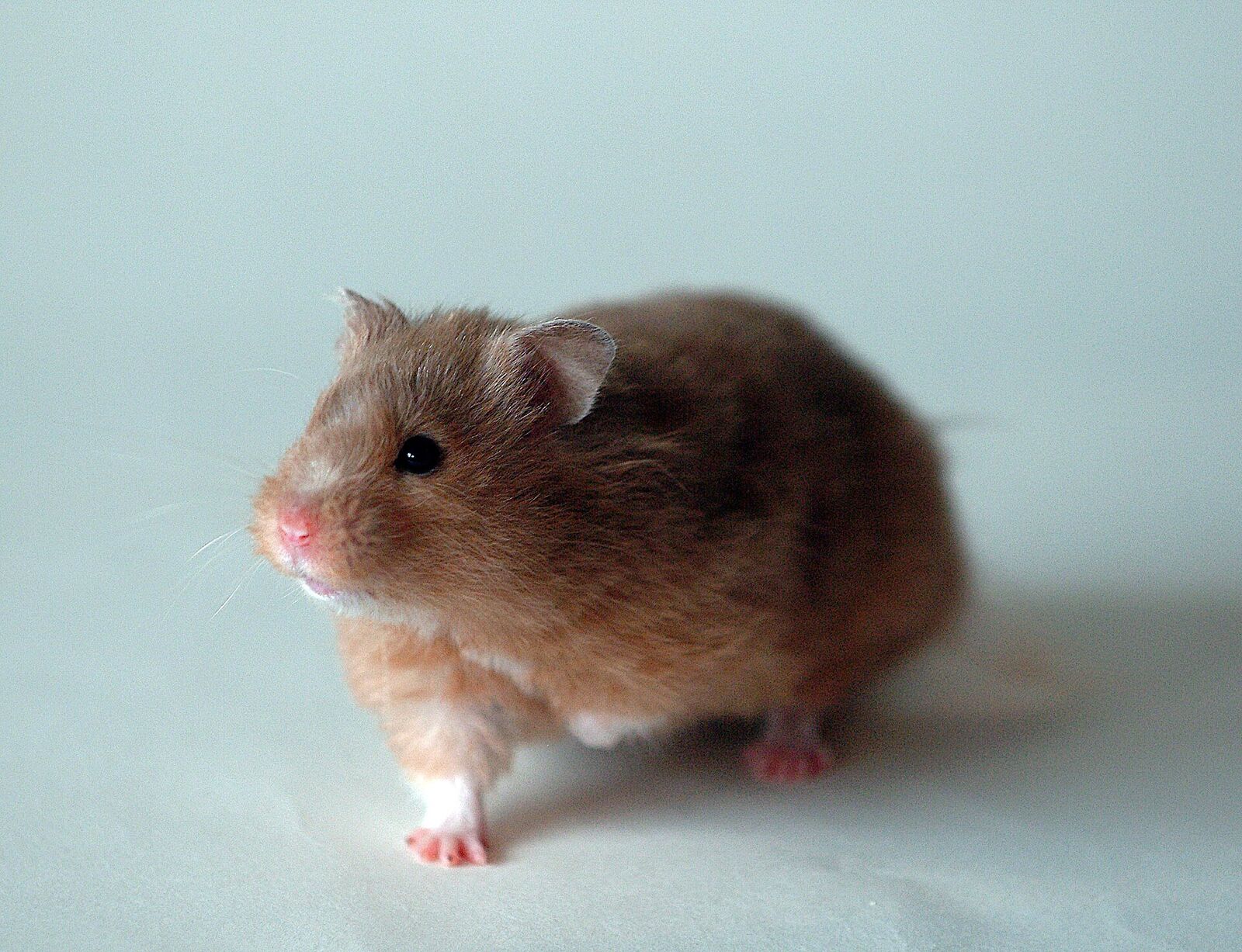
The Roborovski hamster (Phodopus roborovskii), also known as the desert hamster, Robo dwarf hamster or simply dwarf hamster is the smallest of three species of hamster in the genus Phodopus, and is native to the deserts of Central Asia.

Care at a glance
Species-specific values
Values researched for this exact species. Where they differ from the group guide below, follow these. Air, surface and water temperatures are listed separately, and each source is kept as published rather than averaged.
| Enclosure minimum | length: 100 cm; width: 50 cm; height: 50 cm Blue Cross pet-hamster recommendation | 292 |
| Substrate depth minimum | 20 cm | 292 |
| Social | Individual housing recommended. | 292 |
Care guide
Hamsters, voles and New World mice
Applies to most species in this group. Habitat: Steppe, grassland and fields. Individual species can differ, so compare with the species numbers above and the linked sources.
Housing & setup
- For common pet hamsters, Blue Cross recommends 100×50×50 cm or larger, with at least 20 cm of burrowing bedding and a solid wheel.
Diet
- Hamster pellets or mix plus vegetables; occasional protein.
Social life
- House common pet hamsters individually; other voles and New World mice need their own species guidance.
Health watch
- For pet hamsters, Blue Cross recommends individual housing, including dwarf hamsters; companionship is not worth a fighting risk.
- Wet tail (diarrhea) in young hamsters is an emergency.
Understanding the animal
About this animal
About this animal
They average 1.6 cm (0.6 in) in length at birth and grow to be 6.3 cm (2.5 in) in length and 16 g (0.56 oz) in weight in adulthood. Distinguishing characteristics of the Roborovskis are eyebrow-like white spots and the lack of any dorsal stripe (found on the other members of the genus Phodopus).
Quoted from the Wikipedia article “Roborovski dwarf hamster” (CC BY-SA 4.0) 174
In the wild
In the wild
Quoted from the matching sections of reputable sources for this exact species. Specialist databases are used first; Wikipedia (community-edited, CC BY-SA 4.0) only fills gaps. Other sources are short credited quotes.
| Overview | The Roborovski hamster (Phodopus roborovskii), also known as the desert hamster, Robo dwarf hamster or simply dwarf hamster is the smallest of three species of hamster in the genus Phodopus, and is native to the deserts of Central Asia. They average 1.6 cm in length at birth and grow to be 6.3 cm in length and 16 g in weight in adulthood. Distinguishing characteristics of the Roborovskis are eyebrow-like white spots and the lack of any dorsal stripe (found on the other members of the genus Phodopus). — Wikipedia (community-edited) |
| Where it lives | Roborovski's desert hamsters are found in habitats with loose soil that facilitates their habit of digging burrows into the sides of sand dunes. — Animal Diversity Web |
| Wild diet | They are omnivorous; they primarily eat grains, vegetables, fruit, and plants, but they will also eat meat and insects when present. Roborovski hamsters remain underground in winter and survive in that season by stockpiling some food in warmer weather and storing it in special food chambers within their burrow system. In the Chinese province of Shaanxi it is known for foraging millet seeds. — Wikipedia (community-edited) |
| Reproduction | The sex of a Roborovski is determined visually; female openings are very close together and may even look like a single opening, while male openings are further apart. Males usually have a visible scent gland near the navel above the two openings, appearing as a yellow stain in older animals. The breeding season for the Roborovski hamster is between April and September. — Wikipedia (community-edited) |
| Appearance and size | Roborovski's desert hamsters are the smallest of all hamster species (Subfamily Cricetinae ). — Animal Diversity Web |
| History and naming | Vsevolod Roborovski first made note of these hamsters, discovering them on an expedition in July 1894, though they were not studied scientifically for the best part of another decade, until Konstantin A. Satunin made observations in 1903. — Wikipedia (community-edited) |
Native climate (measured)
Native climate (measured)
| Warm-season highs | about 88°F (up to 88°F in the hottest sampled areas) |
| Cool-season lows | about -1°F (down to -14°F in the coldest sampled areas) |
| Average temperature | 35–45°F across sampled records |
| Relative humidity | 37–42% on average (driest month about 24%) |
| Rainfall | about 84 mm a year, with strong wet and dry seasons |
| Winters | Cool to cold winters (lows around -1°F) in much of its native range. Seasonal slowdown may be relevant, but species-specific biology determines whether brumation or hibernation occurs. |
Measured at 91 wild occurrence records sampled against WorldClim 2.1 climate data (1970–2000 averages). Air conditions in the range are ecological context, not enclosure settings: microhabitats such as burrows, leaf litter or basking rocks can be cooler, warmer or more humid.
Profile
Profile
Researched for this exact species. Sources are listed under In the wild above.
History
Vsevolod Roborovski first made note of these hamsters, discovering them on an expedition in July 1894, though they were not studied scientifically for the best part of another decade, until Konstantin A. Satunin made observations in 1903.
Data and studies
Researched care notes
Researched care notes
Findings checked against veterinary, zoo, welfare, keeper and peer-reviewed sources. Air, basking-surface and water temperatures are kept separate, and where sources disagree both are shown. “Study” notes report what a paper measured, not a universal rule.
Dwarf Hamsters
Researched for this genus; applies to its species unless a species note says otherwise.
- Social-housing disagreement: RSPCA permits some established young Campbell's, winter-white and Roborovski groups, whereas Blue Cross advises solitary hamster housing; do not treat pairing as a requirement.1,2
- RSPCA warns that dwarf-hamster groups can become aggressive later; monitor compatibility and have separate housing available rather than assuming littermates remain compatible.1
Syrian And Dwarf Hamsters (Shared housing additions)
Researched for this genus; applies to its species unless a species note says otherwise.
- Provide a solid-floor enclosure with deep digging bedding and a dark nest box, rather than a wire-mesh floor.3
- Avoid cotton wool and other nesting materials that separate into fine strands, because they can entangle limbs or obstruct the gut.3
- Keep a predictable daily light-dark cycle and place the enclosure away from direct sunlight, damp and draughts.3
- During cage cleaning, retain some clean used nesting material to preserve familiar scent, and avoid disturbing a sleeping hamster.3
Syrian And Dwarf Hamsters (Shared feeding additions)
Researched for this genus; applies to its species unless a species note says otherwise.
- Use a nutritionally balanced hamster-formulated ration with appropriate variety; an arbitrary seed selection is not equivalent to a formulated complete diet.4
- Scatter or hide part of the normal ration to encourage foraging, while checking stored food for spoilage.4
- Check drinking-water delivery daily for leaks or blockage, including whether a young, elderly or ill hamster can operate its bottle.4
The numbers
The numbers
Each bar is what one source reports. Where several sources weigh in, the dashed gold band marks their average.
Maximum recorded lifespan
Longest recorded lifespan reported by each database; typical lifespans are usually shorter. The AnAge record comes from an animal in human care.
Typical adult weight
Average adult body mass in each database (FishBase gives the maximum recorded weight).
Veterinary & husbandry research
Veterinary & husbandry research
- [Cryptosporidia and other endoparasites in heifers imported into the Czech Republic] Pavlásek I et al., Veterinarni medicina 1995
- [The first finding of a spontaneous gastric cryptosporidiosis infection in hamsters (Phodopus roborovskii Satunin, 1903)] Pavlásek I et al., Veterinarni medicina 1995
- Torpor expression and patterns in 3 sympatric rodents from Inner Mongolia Chi QS et al., Current zoology 2025
- Helminths collected from imported pet murids, with special reference to concomitant infection of the golden hamsters with three pinworm species of the genus Syphacia (Nematoda: oxyuridae) Hasegawa H et al., The Journal of parasitology 2008
Peer-reviewed papers that mention this species alongside captivity, zoos, veterinary care or aquaculture. Some cover several species or mention it only in passing, so check the abstract. See all 5 on PubMed → 170
Sources for this sheet
- AnAge: The Animal Ageing and Longevity Database (Human Ageing Genomic Resources) Peer-reviewed researchCurated, referenced longevity and life-history records for thousands of species; maximum lifespans are often from zoo animals.
- Myhrvold et al. (2015). An amniote life-history database. Ecology 96: 3109 Peer-reviewed researchPeer-reviewed compilation of life-history data for over 21,000 birds, mammals and reptiles.
- 9 CFR 2.1: Animal Welfare Act licensing (USDA) Zoo, university or veterinaryWho needs a USDA license to breed, sell or exhibit animals.
- Merck Veterinary Manual: Hamsters Zoo, university or veterinaryThe Merck Veterinary Manual: a standard veterinary reference written and reviewed by veterinary specialists.
- Royal Veterinary College Exotics Service: Hamster care Zoo, university or veterinaryVet-school exotics hospital factsheet, reviewed 2021–2024.
- Blue Cross: Choosing the Right Small Pet Experienced keeper or breederAdded in the 2026 source-checked care-guide review.
- GBIF Backbone Taxonomy (Global Biodiversity Information Facility) Peer-reviewed researchInternational scientific taxonomy used here for classification.
- Wikipedia (species article) Community referenceFree encyclopedia; useful overviews with their own citations. Intro text is quoted under CC BY-SA 4.0.
- PubMed (U.S. National Library of Medicine) Peer-reviewed researchIndex of peer-reviewed veterinary, zoo and husbandry research.
- iNaturalist (captive observations) Community referenceCommunity observation platform run by the California Academy of Sciences and National Geographic; observations marked captive show animals living in homes, zoos and aquariums.
More hamsters, voles, american mice
 In-depth
Golden (Syrian) hamster
Mesocricetus auratus
Small, nocturnal and fiercely independent.
Pet trade

Campbell's dwarf hamster
Phodopus campbelli
Pet trade

Chinese hamster
Cricetulus griseus
Pet trade

Winter white dwarf hamster
Phodopus sungorus
Pet trade