Home / Mammals / Cats, dogs and other carnivores / Red fox
Some federal rules apply In-depth sheetRed fox
Vulpes vulpes
Mammals › Cats, dogs and other carnivores (Carnivora) › Canidae (Dogs, wolves and foxes)
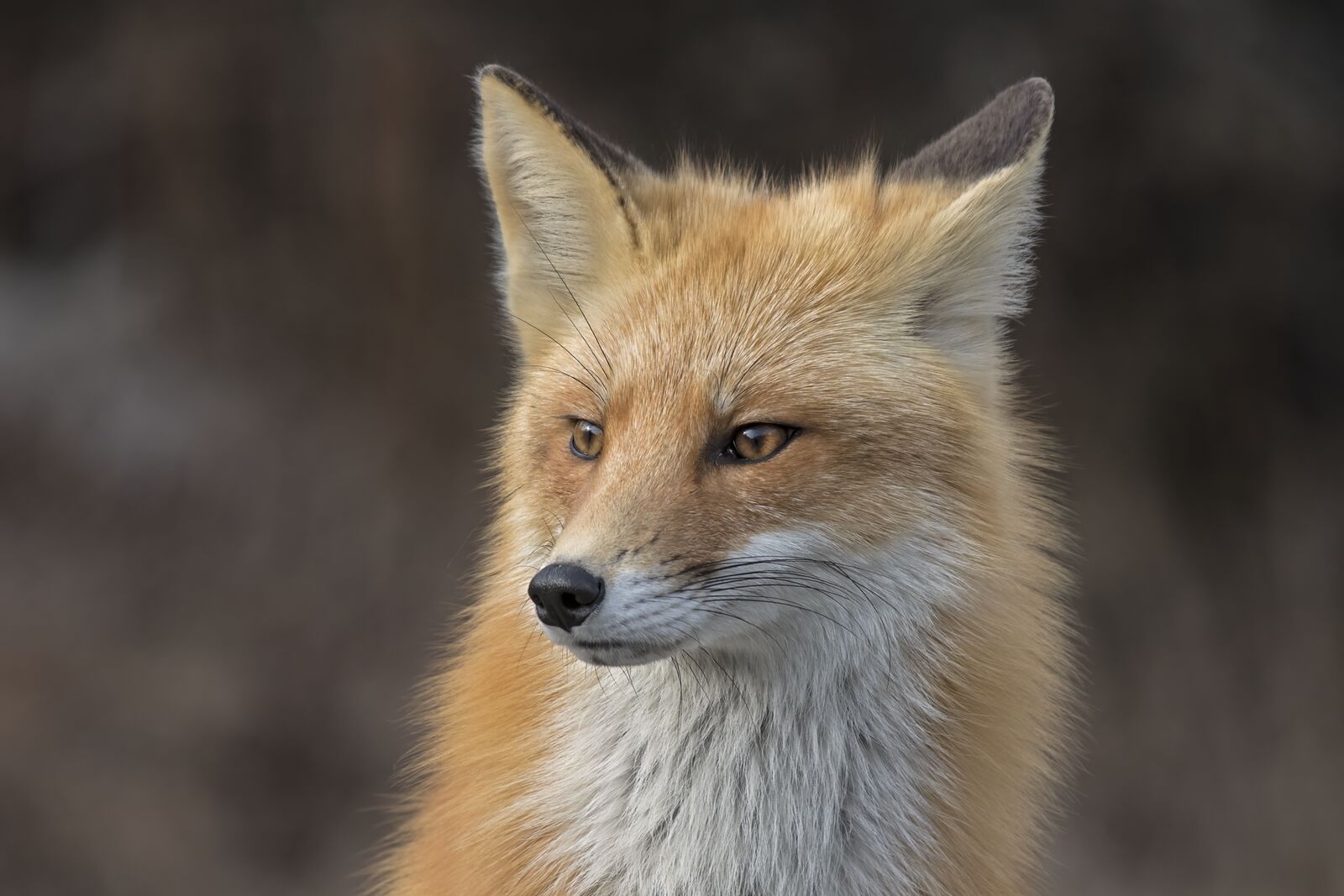
Red foxes are adaptable, mostly nocturnal canids that mark territory heavily with urine and scent glands, so expect a strong smell.
Care guide
Behavior
- Heavy scent marking with urine and glands; cache food; use multiple dens.
Sources 68
Diet
- Omnivores: rodents, rabbits, insects, fruit; about 0.5–1 kg of food a day in the wild.
Sources 68
Show the group care guide for foxes
Foxes
Applies to most species in this group. Habitat: Desert, forest and tundra. Individual species can differ, so compare with the species numbers above and the linked sources.
Housing & setup
- Secure, dig-proof outdoor enclosures with roofs; fennecs can live indoors with escape-proofing.
- Daily exercise and enrichment.
Diet
- Balanced canid diet with insects, whole prey and some produce.
Health watch
- Strong musky scent (red foxes); escape artists.
Understanding the animal
In the wild
In the wild
Researched for this exact species, not its family. Good care copies these conditions.12
| Where it lives | Across much of the Northern Hemisphere in woodland edges, grasslands, farmland, tundra and towns. Uses earthen dens and habitual paths between resting and hunting sites. |
| Ground it lives on | earth, grass and woodland litter; excavates soil dens |
| Active | Usually nocturnal or crepuscular. |
| Social life | Generally hunts alone; territories may contain a breeding pair, additional females and young. |
| Wild diet | Rodents, rabbits, birds, insects, fruit and carrion; proportions shift with season and locality. |
| Behavior to plan for | Pounces to catch concealed rodents, digs dens and caches surplus food. Can clear high obstacles and marks its range with scent. |
What this means for care
- Secure against digging and climbing/jumping.
- Provide digging ground, secluded dens and food-search enrichment.
- Assess compatibility individually rather than treating foxes as pack-living dogs.
Native climate (measured)
Native climate (measured)
| Warm-season highs | about 77°F (up to 93°F in the hottest sampled areas) |
| Cool-season lows | about 20°F (down to -5°F in the coldest sampled areas) |
| Average temperature | 33–65°F across sampled records |
| Relative humidity | 66–78% on average (driest month about 63%) |
| Rainfall | about 633 mm a year, spread fairly evenly |
| Winters | Cool to cold winters (lows around 20°F) in much of its native range. Seasonal slowdown may be relevant, but species-specific biology determines whether brumation or hibernation occurs. |
Measured at 2060 wild occurrence records sampled against WorldClim 2.1 climate data (1970–2000 averages). Air conditions in the range are ecological context, not enclosure settings: microhabitats such as burrows, leaf litter or basking rocks can be cooler, warmer or more humid.
Profile
Profile
Researched for this exact species. Sources are listed under In the wild above.
History
Red foxes originated in Eurasia during the Middle Pleistocene at least 400,000 years ago and reached North America sometime before 130,000 years ago. Humans have hunted them for centuries as pests and furbearers, and the species has also been introduced to places including Australia.
Keeper tips
- Provide a complex terrestrial environment with cover and structural variety reflecting the mixed and edge habitats the species commonly uses.
- Account for the species' broad natural diet, which includes small vertebrates, invertebrates, fruit, and vegetables.
- When considering social housing, note that wild red foxes usually occur in pairs or small family groups.
Behaviors reported
- Older young may remain with their parents and help care for new kits.
- The species readily adapts to human-modified environments, including farmland, suburbs, and cities.
- Red foxes may kill smaller predators, including other fox species.
Unique adaptations
- The species is distinguished by an ability to adapt quickly to new environments.
- It tolerates an unusually broad range of habitats, from tundra and mountains to deserts and cities.
- Its diet is flexible, incorporating numerous animal prey types as well as fruit and vegetables.
Remarkable facts
- The red fox is the largest of the true foxes.
- It has the widest distribution of any canid.
- Its natural and introduced distribution spans much of the Northern Hemisphere as well as Australia and the Falkland Islands.
- Coloration can include ordinary red, cross, silver, leucistic, and melanistic forms.
- Forty-five subspecies are recognized in the supplied Wikipedia source.
- The species is listed as Least Concern but is also included among the world's 100 worst invasive species because of impacts on native animals.
From the sources
From the sources
Quoted from the matching sections of reputable sources for this exact species. Specialist databases are used first; Wikipedia (community-edited, CC BY-SA 4.0) only fills gaps. Other sources are short credited quotes.
| Overview | The red fox (Vulpes vulpes) is the largest of the true foxes, and the most widely distributed member of the order Carnivora. It is present across the entire Northern Hemisphere, including most of North America, Europe and Asia, as well as parts of North Africa. Its range has expanded alongside human settlement, with the species having been introduced to Australia, where it preys on native small and medium-sized rodents and marsupials. The red fox is listed as of least concern on the IUCN Red List. — Wikipedia (community-edited) |
| Where it lives | Red foxes utilize a wide range of habitats including forest, tundra, prairie, desert, mountains, farmlands, and urban areas. — Animal Diversity Web |
| Behavior | Red foxes are solitary animals and do not form packs like wolves. — Animal Diversity Web |
| Reproduction | Red fox mating behavior varies substantially. — Animal Diversity Web |
| Lifespan | Red foxes have been known to live 10 to 12 years in captivity but live on average 3 years in the wild. — Animal Diversity Web |
| Appearance and size | Coloration of red foxes ranges from pale yellowish red to deep reddish brown on the upper parts and white, ashy or slaty on the underside. — Animal Diversity Web |
| History and naming | The word "fox" comes from Old English, which in turn derived from Proto-Germanic *fuhsaz. Compare with West Frisian foks, Dutch vos, and German Fuchs. This, in turn, derives from Proto-Indo-European *puḱ- 'thick-haired; tail'. — Wikipedia (community-edited) |
Data and studies
The numbers
The numbers
Each bar is what one source reports. Where several sources weigh in, the dashed gold band marks their average.
Lifespan in care
Maximum recorded lifespan
Longest recorded lifespan reported by each database; typical lifespans are usually shorter. The AnAge record comes from an animal in human care.
Typical adult weight
Average adult body mass in each database (FishBase gives the maximum recorded weight).
Veterinary & husbandry research
Veterinary & husbandry research
- Relaxed predation theory: size, sex and brains matter Edwards MC et al., Biological reviews of the Cambridge Philosophical Society 2021
- Veterinary aspects of alveolar echinococcosis--a zoonosis of public health significance Deplazes P et al., Veterinary parasitology 2001
- Fox (Vulpes vulpes) involvement identified in a series of cat carcass mutilations Hull KD et al., Veterinary pathology 2022
- Molecular Survey on Vector-Borne Pathogens in Alpine Wild Carnivorans Battisti E et al., Frontiers in veterinary science 2020
Peer-reviewed papers that mention this species alongside captivity, zoos, veterinary care or aquaculture. Some cover several species or mention it only in passing, so check the abstract. See all 139 on PubMed → 170
Sources for this sheet
- Animal Diversity Web (University of Michigan): Vulpes vulpes Zoo, university or veterinaryUniversity-hosted species account, mostly wild biology.
- AnAge: The Animal Ageing and Longevity Database (Human Ageing Genomic Resources) Peer-reviewed researchCurated, referenced longevity and life-history records for thousands of species; maximum lifespans are often from zoo animals.
- Myhrvold et al. (2015). An amniote life-history database. Ecology 96: 3109 Peer-reviewed researchPeer-reviewed compilation of life-history data for over 21,000 birds, mammals and reptiles.
- 50 CFR 17.11: Endangered and threatened wildlife Zoo, university or veterinaryCurrent federal Endangered Species Act list.
- Species+ (UNEP-WCMC and the CITES Secretariat) Zoo, university or veterinaryThe official database of species listed under CITES.
- USFWS International Affairs: CITES Zoo, university or veterinaryFederal agency that issues CITES permits.
- 9 CFR 2.1: Animal Welfare Act licensing (USDA) Zoo, university or veterinaryWho needs a USDA license to breed, sell or exhibit animals.
- Animal Diversity Web (University of Michigan): Vulpes zerda Zoo, university or veterinaryUniversity-hosted species account, mostly wild biology.
- GBIF Backbone Taxonomy (Global Biodiversity Information Facility) Peer-reviewed researchInternational scientific taxonomy used here for classification.
- Wikipedia (species article) Community referenceFree encyclopedia; useful overviews with their own citations. Intro text is quoted under CC BY-SA 4.0.
- PubMed (U.S. National Library of Medicine) Peer-reviewed researchIndex of peer-reviewed veterinary, zoo and husbandry research.
- iNaturalist (captive observations) Community referenceCommunity observation platform run by the California Academy of Sciences and National Geographic; observations marked captive show animals living in homes, zoos and aquariums.