Home / Reptiles / Turtles and tortoises / Red-footed tortoise
Some federal rules apply In-depth sheetRed-footed tortoise
Chelonoidis carbonarius
Reptiles › Turtles and tortoises (Testudines) › Testudinidae (Tortoises)
Red-footed tortoises come from South American forests and need more humidity and fruit than desert tortoises.
Care at a glance
Species-specific values
Values researched for this exact species. Where they differ from the group guide below, follow these. Air, surface and water temperatures are listed separately, and each source is kept as published rather than averaged.
| Preferred air temperature zone | 77–86 °F (25–30 °C) Veterinary POTZ; not water or basking surface. | 218 |
| Relative humidity | 50–90 % Veterinary table; corn snake, leopard gecko, bearded dragon and savannah monitor require more humidity during shedding. | 218 |
| Minimum enclosure dimensions | length multiplier: 8 adult shell length; width multiplier: 4 adult shell length; height multiplier: 2 adult shell length RF scaling formula; an 18-inch adult implies 12 x 6 x 3 ft. | 224 |
| Basking surface temperature | 90–95 °F Probe on basking surface. | 224 |
| Ambient air temperature | 75–85 °F | 224 |
| Night air temperature | 68–75 °F | 224 |
| Relative humidity | 70–90 % Humid retreats; occasional higher peaks allowed by source. | 224 |
| Adult length | 12–18 in Typical shell length; source also reports exceptional 24-inch animals. | 224 |
| Lifespan | possible at least: 50 years Care-sheet estimate. | 224 |
Care guide
Diet
- Fruits, salads and vegetables can make up about 50% of the diet.
Sources 54
Show the group care guide for forest tortoises
Forest tortoises
Applies to most species in this group. Habitat: Tropical forest floor. Individual species can differ, so compare with the species numbers above and the linked sources.
Housing & setup
- Larger, humid enclosures with deep moisture-holding substrate, hides and a shallow soaking dish.
- Lower basking temperatures than grassland tortoises.
Climate & lighting
| Basking spot | 88–92°F |
| Warm side / daytime | 80–85°F |
| Cool side | 72–76°F |
| Humidity | 70–85% |
- UVB: Required.
Diet
- More varied diet: greens, fruit, mushrooms and some animal protein for red-foots and hingebacks.
Health watch
- Dehydration and shell problems if too dry; respiratory problems if cold and wet.
Understanding the animal
In the wild
In the wild
Researched for this exact species, not its family. Good care copies these conditions.1234
| Where it lives | South American forest and savanna mosaics, including the Guianas, Brazil, Bolivia and Paraguay. Uses covered, humid terrestrial habitats rather than open water. |
| Ground it lives on | soil and leaf litter beneath vegetation; avoids persistently muddy areas |
| Climate | Tropical habitats with wet and dry seasons; feeding changes seasonally. Reliable numerical wild temperature and relative-humidity ranges were not established. |
| Active | Diurnal. |
| Wild diet | Seasonally available fruit and flowers, living and dead foliage, stems, fungi and occasional carrion. |
| Behavior to plan for | Forages on the ground and females excavate nests approximately 8 inches deep. Its documented diet is broader than that of a strictly grass-eating tortoise. |
What this means for care
- Provide humid covered retreats on well-drained substrate.
- Use a balanced red-footed diet incorporating leafy foods and appropriate fruit rather than grass alone.
- Provide females with diggable nesting ground.
Native climate (measured)
Native climate (measured)
| Warm-season highs | about 88°F (up to 95°F in the hottest sampled areas) |
| Cool-season lows | about 71°F (down to 65°F in the coldest sampled areas) |
| Average temperature | 74–81°F across sampled records |
| Relative humidity | 76–81% on average (driest month about 73%) |
| Rainfall | about 2384 mm a year |
Measured at 95 wild occurrence records sampled against WorldClim 2.1 climate data (1970–2000 averages). Air conditions in the range are ecological context, not enclosure settings: microhabitats such as burrows, leaf litter or basking rocks can be cooler, warmer or more humid.
Profile
Profile
Researched for this exact species. Sources are listed under In the wild above.
History
The Reptile Database notes changes in synonymy and nomenclature and reports historical hybridization records involving Geochelone radiata and G. carbonaria. In the United States, red-footed tortoises are bred on a large scale, while animals have also been imported from the wild or farm-bred in South America, especially from Suriname and Guyana.
Keeper tips
- Plan enclosure space around an adult length of 12-18 inches, while allowing for individuals that may reach 24 inches.
- Treat acquisition as a long-term commitment because lifespan may exceed 50 years.
- Where climate permits, account for the species' suitability for primarily outdoor housing.
- Have appropriate indoor accommodation available for periods when outdoor weather is unsuitable.
Behaviors reported
- Described as curious.
- Reported to adapt to various captive climates and habitats.
Unique adaptations
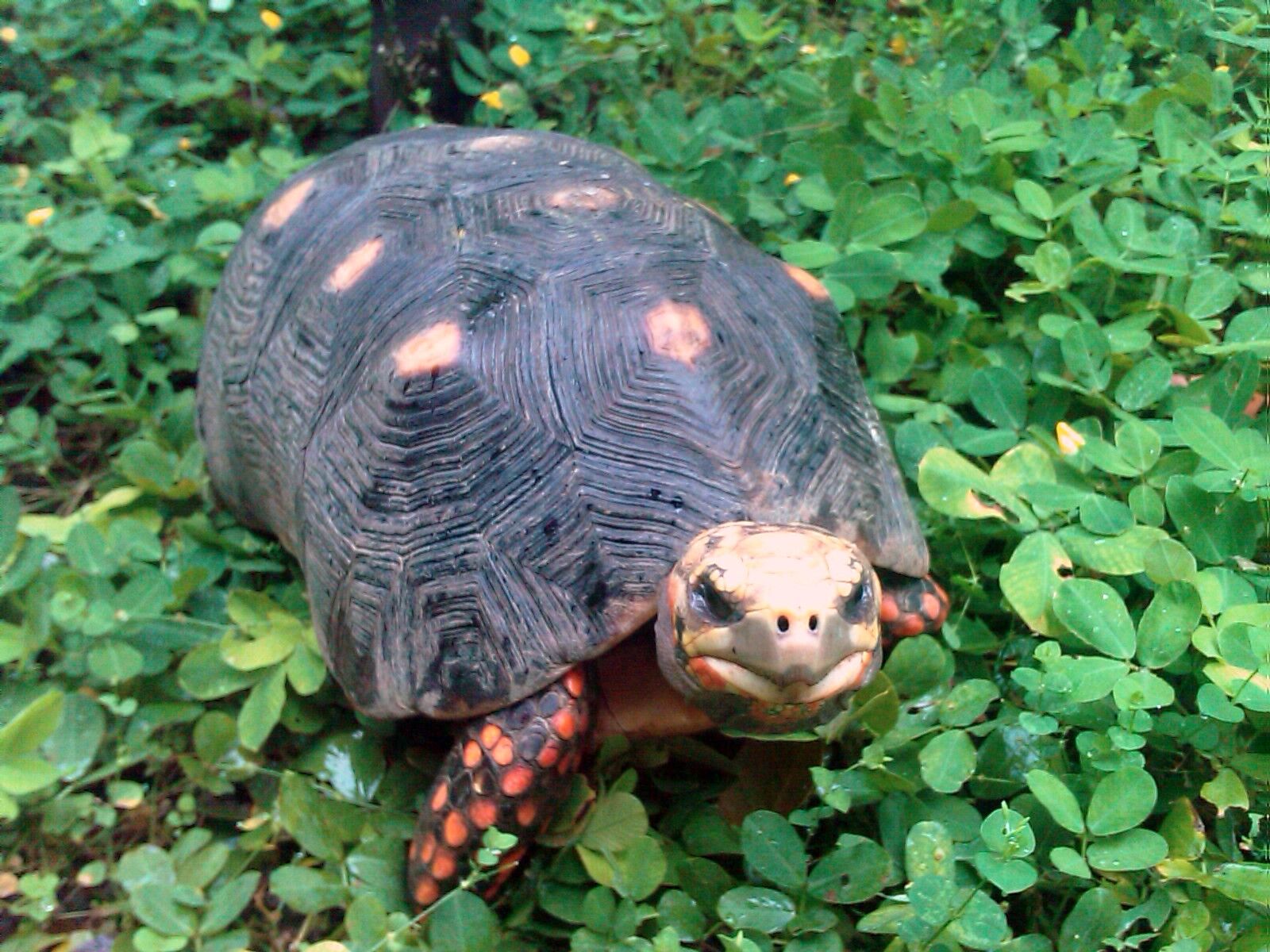
- Has a highly domed shell.
- Has enlarged scales on the legs and tail.
- Shows temperature-dependent sex determination, with females reported as being produced at or above 29°C (84.2°F).
Remarkable facts
- Adults generally grow 12-18 inches long, although individuals up to 24 inches are possible.
- The limbs and head generally have orange to red scales, although yellow is also possible.
- The shell and skin may be dark brown, gray, or nearly black, with a pale to yellow spot on each scute.
- The species is oviparous.
- Well-cared-for individuals may live 50 years or longer.
- Hatchlings are approximately 1.5-2 inches in carapace length when they emerge from the egg.
From the sources
From the sources
Quoted from the matching sections of reputable sources for this exact species. Specialist databases are used first; Wikipedia (community-edited, CC BY-SA 4.0) only fills gaps. Other sources are short credited quotes.
| Overview | The red-footed tortoise (Chelonoidis carbonarius) is a species of tortoise from northern South America. These medium-sized tortoises generally average 30 cm as adults, but can reach over 40 cm. They have dark-colored (nearly black), “loaf”-shaped carapaces (top shell) with a lighter patch in the middle of each scute (shell segment), and a somewhat lighter-colored plastron (underbelly). They also have dark limbs dotted with brightly-colored scales, from which they get their name, that range from pale yellow to vivid or dark red. — Wikipedia (community-edited) |
| Reproduction | Temperature-dependent sex determination (TSD)mechanism with females produced at, or above, 29°C. — The Reptile Database |
| Appearance and size | Red-footed tortoises show sex, regional, and individual variations in color, shell shape, and minor anatomical characteristics. Adult carapaces are generally an elongated oval with sides that are nearly parallel, although the sides of males may curve inwards. — Wikipedia (community-edited) |
| History and naming | Named after Latin carbonarius, a, um, ‘relating to coal’. — The Reptile Database |
Data and studies
Researched care notes
Researched care notes
Findings checked against veterinary, zoo, welfare, keeper and peer-reviewed sources. Air, basking-surface and water temperatures are kept separate, and where sources disagree both are shown. “Study” notes report what a paper measured, not a universal rule.
Red-Footed Tortoise
- Provide a shallow drinking-and-soaking dish the tortoise can enter and leave unaided, and clean it promptly after fecal contamination.1
- Supply moisture-retaining digging substrate and leaf litter, together with a humid retreat on the cooler side.1
- Red-footed tortoises are omnivorous; suitable husbandry includes varied plant foods and a modest animal-food component rather than copying a strictly herbivorous tortoise ration.1
- ReptiFiles' example diet percentages are keeper guidance, not a demonstrated universal formulation; portioning and nutrient balance still require review.1
- Offer food on a plate or tray to reduce accidental ingestion of substrate.1
The numbers
The numbers
Each bar is what one source reports. Where several sources weigh in, the dashed gold band marks their average.
Basking
Cool end about 77°F; nights 70–77°F.
Humidity
Maximum recorded lifespan
Longest recorded lifespan reported by each database; typical lifespans are usually shorter.
Typical adult weight
Average adult body mass in each database (FishBase gives the maximum recorded weight).
Incubation
Female maturity
Cool side
Species-specific values from keeper care sheets. Basking figures are often surface readings taken with an infrared thermometer, which run hotter than air.
Night temperature
Species-specific values from keeper care sheets. Basking figures are often surface readings taken with an infrared thermometer, which run hotter than air.
Care articles for this species
Care articles for this species
- Red-Footed Tortoise Care Sheet (ReptiFiles)
- Red-Footed Tortoise Care Sheet (Reptiles Magazine)
- Red-Footed Tortoise Care And Breeding Information (Reptiles Magazine)
- Keeping And Breeding Red-Footed Tortoises (Reptiles Magazine)
- Yellow-Footed Tortoise Versus Red-Footed Tortoise Care (Reptiles Magazine)
- Breeding Red-Footed Tortoises References (Reptiles Magazine)
Veterinary & husbandry research
Veterinary & husbandry research
- Venous blood gases and electrolyte values of captive red foot tortoise (Chelonoidis carbonarius) Silva La Rocca de Freitas S et al., PloS one 2024
- Investigations on the prevalence of tortoise picorna-virus in captive tortoises in Germany Paries S et al., Tierarztliche Praxis. Ausgabe K, Kleintiere/Heimtiere 2018
- Cytochemical characteristics of blood cells from Brazilian tortoises (Testudines: Testudinidae) Martins GS et al., Genetics and molecular research: GMR 2016
- Detection of parasitic forms in feces of Chelonoidis carbonarius (Linnaeus, 1766) from Brazilian Cerrado da Silva LF et al., Veterinary research communications 2024
Peer-reviewed papers that mention this species alongside captivity, zoos, veterinary care or aquaculture. Some cover several species or mention it only in passing, so check the abstract. See all 9 on PubMed → 170
Sources for this sheet
- Royal Veterinary College Exotics Service: Red-foot tortoise care Zoo, university or veterinaryVet-school exotics hospital factsheet, reviewed 2021–2024.
- Myhrvold et al. (2015). An amniote life-history database. Ecology 96: 3109 Peer-reviewed researchPeer-reviewed compilation of life-history data for over 21,000 birds, mammals and reptiles.
- ReptiFiles (care guides) Experienced keeper or breederWell-researched reptile care guides that cite herpetological literature and experienced keepers.
- Species+ (UNEP-WCMC and the CITES Secretariat) Zoo, university or veterinaryThe official database of species listed under CITES.
- USFWS International Affairs: CITES Zoo, university or veterinaryFederal agency that issues CITES permits.
- 21 CFR 1240.62: Turtles under 4 inches (FDA) Zoo, university or veterinaryFederal ban on selling small turtles.
- Merck Veterinary Manual: Management and husbandry of reptiles Zoo, university or veterinaryThe Merck Veterinary Manual: a standard veterinary reference written and reviewed by veterinary specialists.
- Merck Veterinary Manual: Nutritional, metabolic and endocrine diseases of reptiles Zoo, university or veterinaryThe Merck Veterinary Manual: a standard veterinary reference written and reviewed by veterinary specialists.
- The Reptile Database Peer-reviewed researchScientist-curated catalog of every reptile species, with taxonomy and literature.
- GBIF Backbone Taxonomy (Global Biodiversity Information Facility) Peer-reviewed researchInternational scientific taxonomy used here for classification.
- Wikipedia (species article) Community referenceFree encyclopedia; useful overviews with their own citations. Intro text is quoted under CC BY-SA 4.0.
- PubMed (U.S. National Library of Medicine) Peer-reviewed researchIndex of peer-reviewed veterinary, zoo and husbandry research.
- iNaturalist (captive observations) Community referenceCommunity observation platform run by the California Academy of Sciences and National Geographic; observations marked captive show animals living in homes, zoos and aquariums.
- Reptiles Magazine (care articles) Experienced keeper or breederEstablished reptile and amphibian hobby magazine; care articles are written by breeders, keepers and veterinarians.
More tortoises
 In-depth
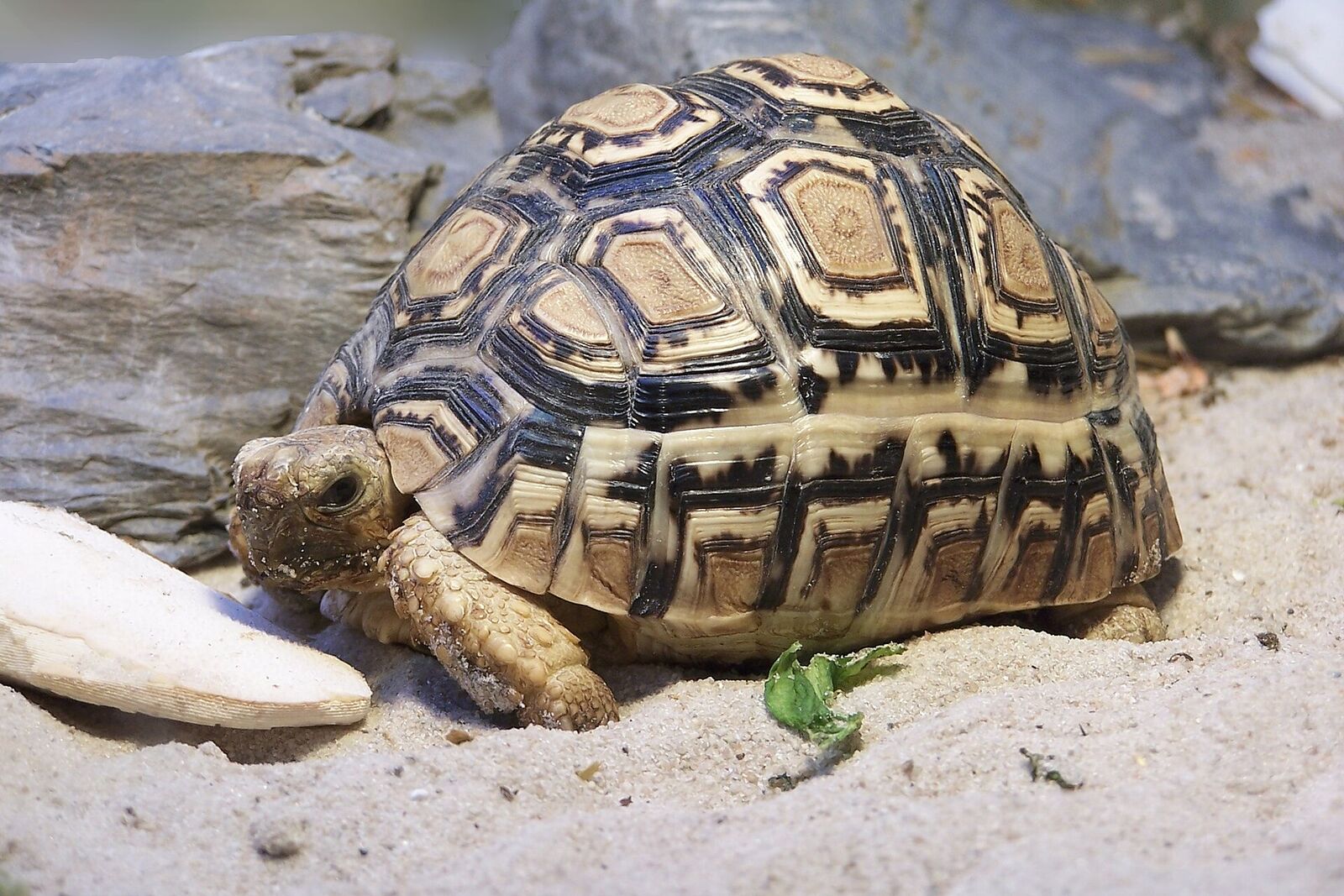
Leopard tortoise
Stigmochelys pardalis
A spotted savanna grazer.
Pet trade
 In-depth
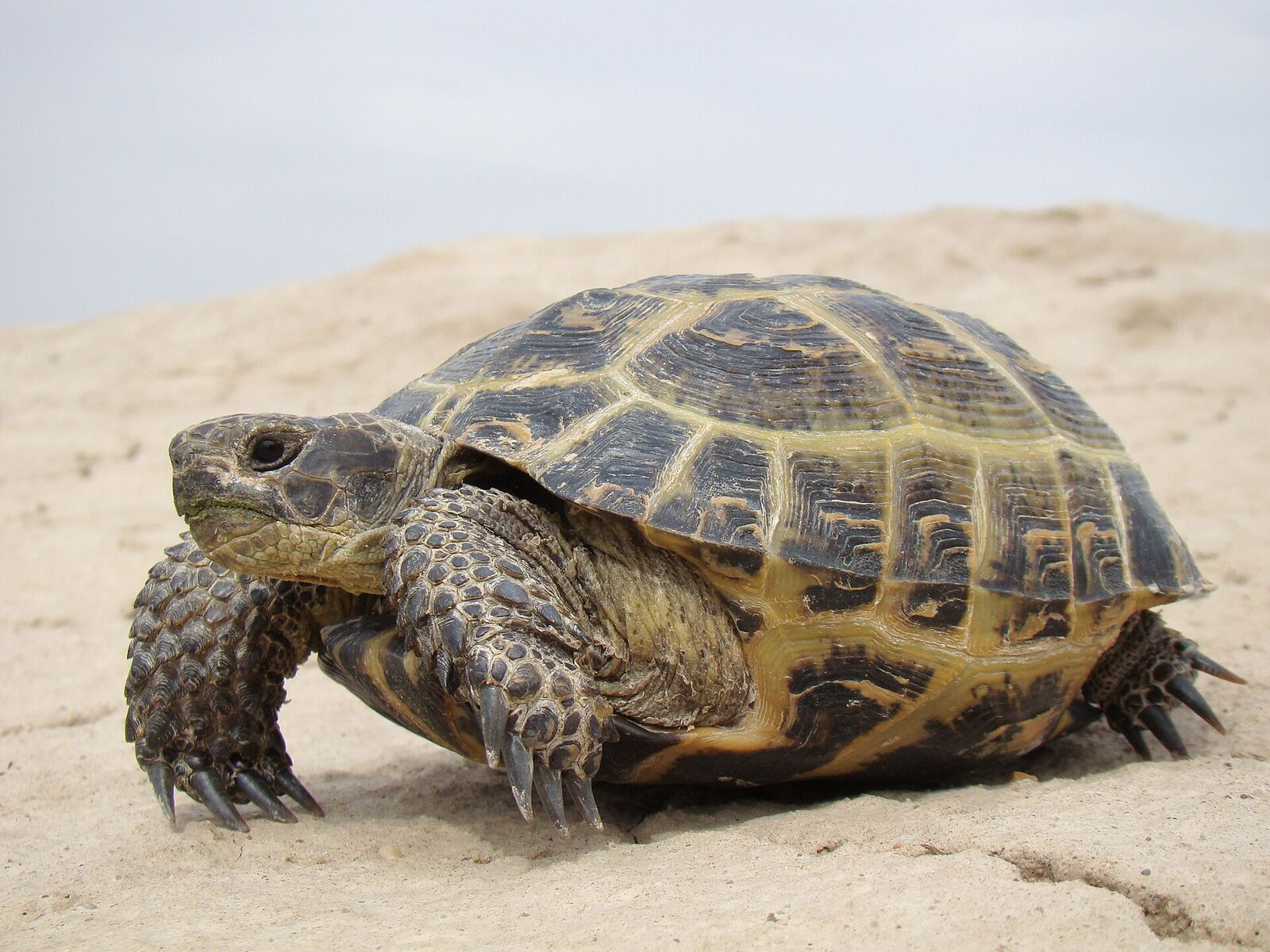
Russian tortoise
Testudo horsfieldii
Small, tough and a great first tortoise.
Pet trade
 In-depth
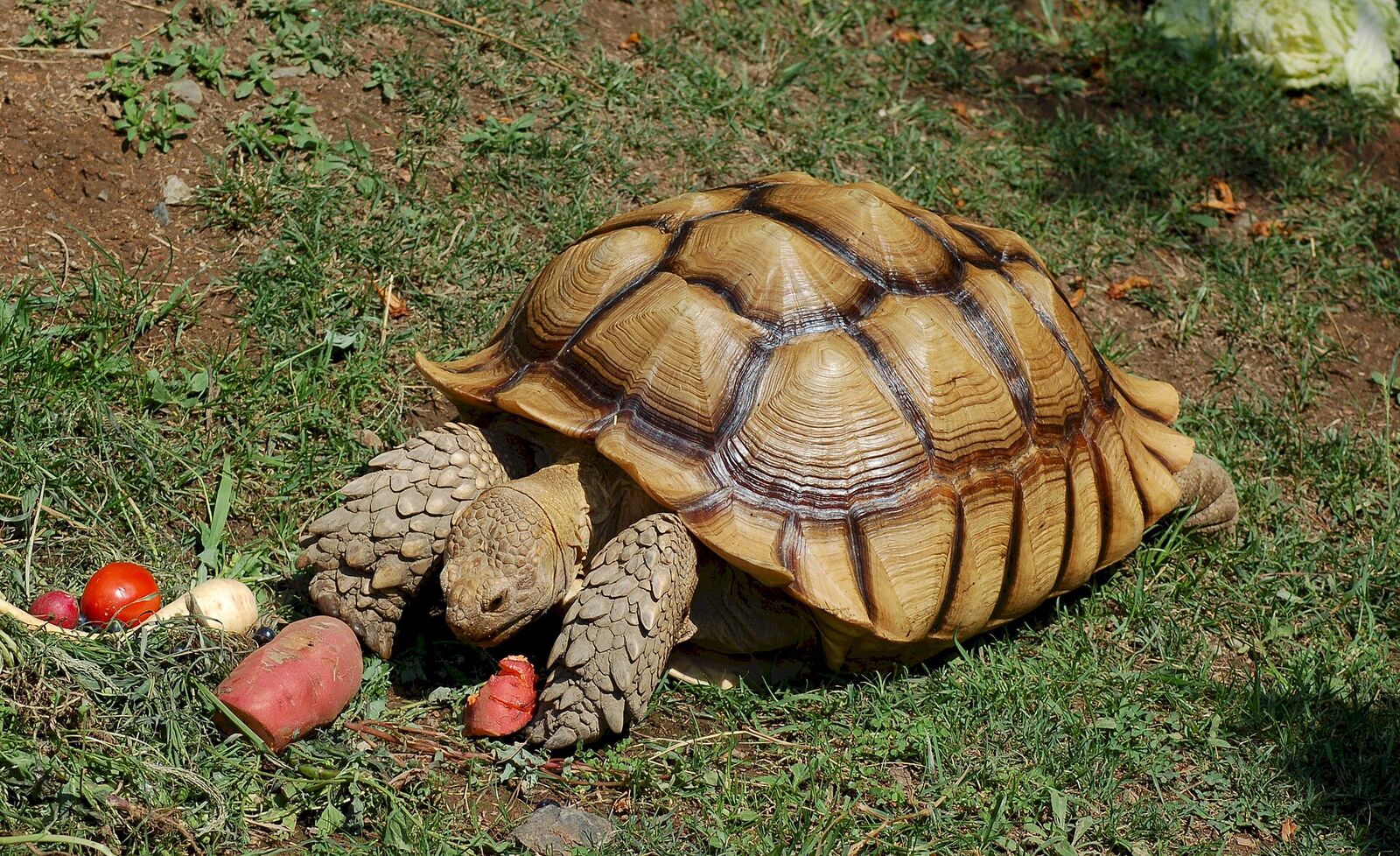
Sulcata (African spurred) tortoise
Centrochelys sulcata
The giant backyard tortoise, best adopted.
Pet trade

Egyptian tortoise
Testudo kleinmanni
Pet trade