Home / Reptiles / Turtles and tortoises / Leopard tortoise
Some federal rules apply In-depth sheetLeopard tortoise
Stigmochelys pardalis
Reptiles › Turtles and tortoises (Testudines) › Testudinidae (Tortoises)
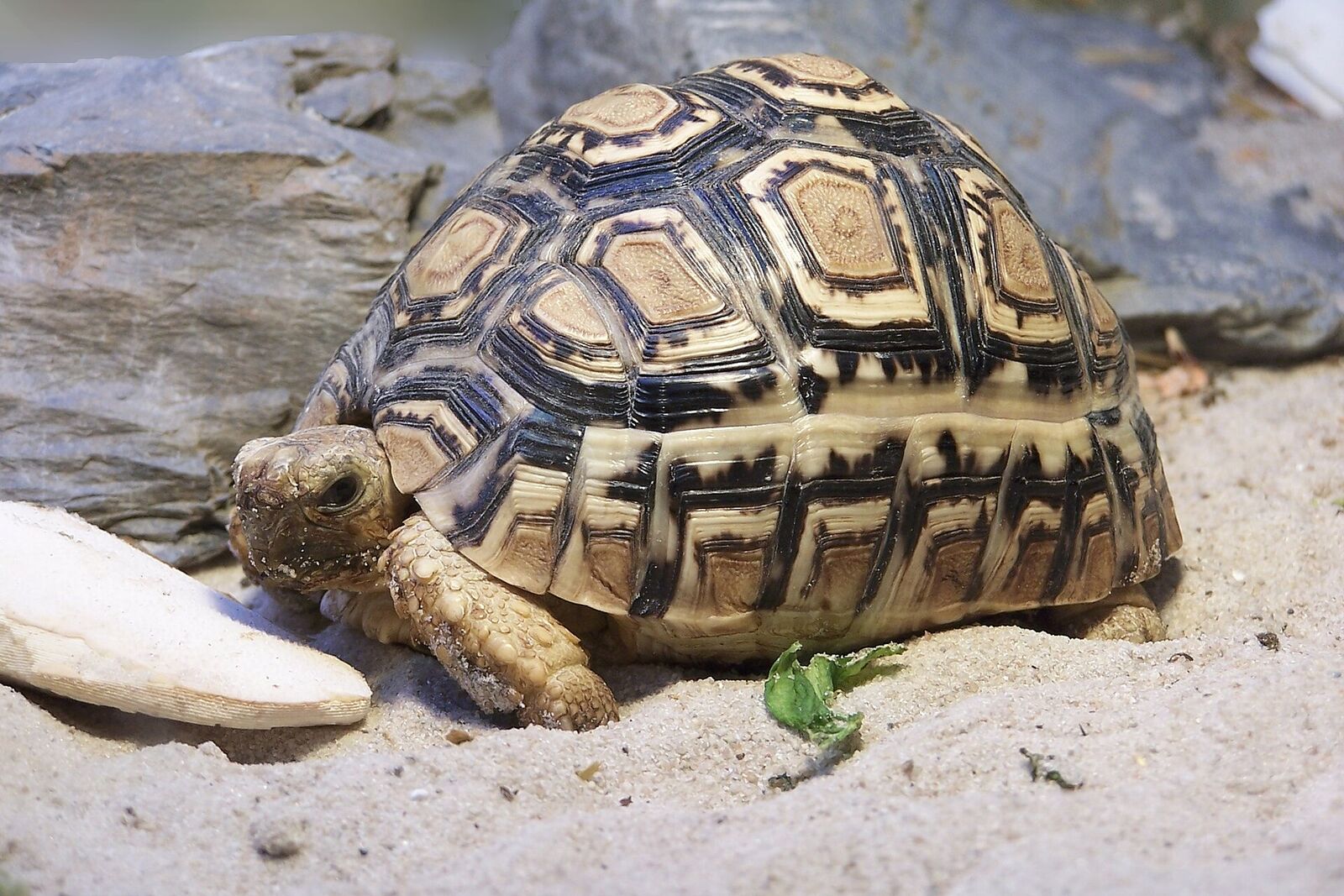
Leopard tortoises are large African grazers that need lots of warmth and space.
Care at a glance
Species-specific values
Values researched for this exact species. Where they differ from the group guide below, follow these. Air, surface and water temperatures are listed separately, and each source is kept as published rather than averaged.
| Preferred air temperature zone | 77–86 °F (25–30 °C) Veterinary POTZ; not water or basking surface. | 218 |
| Relative humidity | 30–50 % Veterinary table; corn snake, leopard gecko, bearded dragon and savannah monitor require more humidity during shedding. | 218 |
Care guide
Lighting
- Strong UVB (10–12%) about 12 hours a day.
Sources 46
Show the group care guide for grassland and giant tortoises
Grassland and giant tortoises
Applies to most species in this group. Habitat: Savanna, dry grassland and islands. Individual species can differ, so compare with the species numbers above and the linked sources.
Housing & setup
- Sulcatas, leopards and giants grow huge: plan for a large outdoor yard with a heated shed.
- They dig, so fences need to go deep or have a buried footing.
Climate & lighting
| Basking spot | 95–105°F |
| Warm side / daytime | 80–90°F |
| Cool side | 70–78°F |
| Humidity | 40–60% |
- UVB: Required (strong).
Diet
- Grasses and hay as a staple, plus weeds and leafy greens; no fruit for grassland species.
Health watch
- Bladder stones and dehydration from dry diets; give soaking water.
Understanding the animal
In the wild
In the wild
Researched for this exact species, not its family. Good care copies these conditions.12345
| Where it lives | Eastern and southern sub-Saharan Africa, in dry plains, grassland and shrub habitats. Uses low vegetation for feeding and shade and also occurs in mountainous terrain. |
| Ground it lives on | grassland soil beneath low herbs and shrubs |
| Climate | Nama-Karoo populations experience seasonal summer warming and winter cooling, adjusting activity to air temperature; numerical occupied-microhabitat temperature and relative-humidity ranges were not established. |
| Active | Primarily diurnal; Nama-Karoo observations show two daily activity peaks in summer and one in winter. Other Karoo fieldwork records some nocturnal movement. |
| Social life | Social associations are weak; mating interactions can involve aggressive ramming and biting. |
| Wild diet | Predominantly herbaceous plants, including forbs; grasses, flowers and occasional fruit also occur in the diet. |
| Behavior to plan for | Shelters beneath low plants in hot weather, and females dig egg nests. Males may repeatedly pursue and ram females during courtship. |
What this means for care
- Provide varied fibrous herbs and grasses rather than assuming grass is the only forage.
- Provide shaded ground-level retreats and well-drained substrate.
- Monitor mating harassment and provide separation and nesting ground.
- Animal Diversity Web: Stigmochelys pardalis
- Thermoregulation in leopard tortoises in the Nama-Karoo: The importance of behaviour and core body temperatures
- Movement of leopard tortoises in response to environmental and climatic variables in a semi-arid environment
- Wikipedia: Leopard tortoise
- The Reptile Database: Stigmochelys pardalis
Native climate (measured)
Native climate (measured)
| Warm-season highs | about 88°F (up to 93°F in the hottest sampled areas) |
| Cool-season lows | about 39°F (down to 29°F in the coldest sampled areas) |
| Average temperature | 59–72°F across sampled records |
| Relative humidity | 50–63% on average (driest month about 44%) |
| Rainfall | about 487 mm a year |
| Winters | Cool to cold winters (lows around 39°F) in much of its native range. Seasonal slowdown may be relevant, but species-specific biology determines whether brumation or hibernation occurs. |
Measured at 115 wild occurrence records sampled against WorldClim 2.1 climate data (1970–2000 averages). Air conditions in the range are ecological context, not enclosure settings: microhabitats such as burrows, leaf litter or basking rocks can be cooler, warmer or more humid.
Profile
Profile
Researched for this exact species. Sources are listed under In the wild above.
History
The species has undergone repeated taxonomic reassignment, having been placed in Geochelone, Stigmochelys, Centrochelys, and Psammobates by different authors. More recent consensus has settled on the monotypic genus Stigmochelys, and recent studies cited reject the traditional subspecies division.
Keeper tips
- Base habitat structure around the species' terrestrial grassland and semiarid savanna ecology.
- Provide access to a substantial shelter or retreat because wild leopard tortoises use abandoned mammal burrows during very hot and very cold weather.
- When using the supplied natural-diet information, emphasize mixed grasses, with succulents and thistles also documented as foods.
Behaviors reported
- It grazes extensively on mixed grasses.
- It shelters in abandoned fox, jackal, or aardvark burrows during very hot or very cold conditions.
- It generally does not dig except when excavating nests for egg laying.
Unique adaptations
- The carapace is high and domed with steep, almost vertical sides.
- The species uses existing mammal burrows as refuge during temperature extremes.
- Its feeding behavior is closely associated with grazing in grassland habitat.
Remarkable facts
- The leopard tortoise is the only living member of the genus Stigmochelys.
- It is described as the fourth-largest tortoise species in the world.
- Typical adults reach about 16 inches and 29 lb, while exceptionally large individuals may reach about 28 inches and 88 lb.
- Young animals have conspicuous black markings on a yellow background, while the markings tend to fade to brown or gray with age.
- The species is oviparous.
- Recent work cited rejects recognition of the traditionally proposed subspecies.
From the sources
From the sources
Quoted from the matching sections of reputable sources for this exact species. Specialist databases are used first; Wikipedia (community-edited, CC BY-SA 4.0) only fills gaps. Other sources are short credited quotes.
| Overview | The leopard tortoise (Stigmochelys pardalis) is a large and attractively marked tortoise found in the savannas of eastern and southern Africa, from Sudan to the southern Cape Province. It is the only extant member of the genus Stigmochelys, although in the past, it was commonly placed in Geochelone. This tortoise is a grazing species that favors semiarid, thorny to grassland habitats. In both very hot and very cold weather, it may dwell in abandoned fox, jackal, or aardvark burrows. — Wikipedia (community-edited) |
| Where it lives | They are widely distributed across the arid and savanna regions of eastern and southern Africa, extending from South Sudan and Somalia, across East Africa, to South Africa and Namibia. The species is generally absent from the humid forest regions of Central Africa. — Wikipedia (community-edited) |
| Behavior | Leopard tortoises are herbivorous; their diet consists of a wide variety of plants including forbs, thistles, grasses, and succulents. They consume berries and other fruits when available. They sometimes gnaw on bones or even ash and hyena feces to obtain calcium, necessary for bone development and their eggshells. — Wikipedia (community-edited) |
| Appearance and size | The leopard tortoise is the fourth-largest species of tortoise in the world, with typical adults reaching 40 cm and weighing 13 kg. Adults tend to be larger in the northern and southern ends of their range, where typical specimens weigh up to 20 kg, and an exceptionally large tortoise may reach 70 cm and weigh 40 kg. The carapace is high and domed with steep, almost vertical sides. — Wikipedia (community-edited) |
| History and naming | Apparently named after the Latin pardalis, a leopard, alluding to the color pattern. — The Reptile Database |
| Conservation | The leopard tortoise is a widespread species and remains common throughout most of its range. Human activities, including agricultural burning, consumption, and especially commercial exploitation in the pet trade, are potential threats, but have not yet caused significant population declines. They are increasingly being bred in captivity for the pet trade. — Wikipedia (community-edited) |
Data and studies
The numbers
The numbers
Each bar is what one source reports. Where several sources weigh in, the dashed gold band marks their average.
Basking
Cool end 77–82°F; nights 72–77°F.
Maximum recorded lifespan
Longest recorded lifespan reported by each database; typical lifespans are usually shorter. The AnAge record comes from an animal in human care.
Typical adult weight
Average adult body mass in each database (FishBase gives the maximum recorded weight).
Care articles for this species
Care articles for this species
- Leopard Tortoise Care Sheet (Reptiles Magazine)
- Leopard Tortoise Care (Reptiles Magazine)
- Leopard Tortoise Care And Breeding Tips (Reptiles Magazine)
Veterinary & husbandry research
Veterinary & husbandry research
- Occurrence and diversity of Campylobacter species in captive chelonians De Luca C et al., Veterinary microbiology 2020
- A novel herpesvirus detected in 3 species of chelonians Winter JM et al., Journal of veterinary diagnostic investigation: official publication of the American Association of Veterinary Laboratory Diagnosticians, Inc 2022
- Molecular and morphological characterization of hemoprotozoan infections in imported reptiles in Taiwan Chang YC et al., International journal for parasitology. Parasites and wildlife 2025
- Investigations on the prevalence of tortoise picorna-virus in captive tortoises in Germany Paries S et al., Tierarztliche Praxis. Ausgabe K, Kleintiere/Heimtiere 2018
Peer-reviewed papers that mention this species alongside captivity, zoos, veterinary care or aquaculture. Some cover several species or mention it only in passing, so check the abstract. See all 10 on PubMed → 170
Sources for this sheet
- Royal Veterinary College Exotics Service: Leopard tortoise care Zoo, university or veterinaryVet-school exotics hospital factsheet, reviewed 2021–2024.
- AnAge: The Animal Ageing and Longevity Database (Human Ageing Genomic Resources) Peer-reviewed researchCurated, referenced longevity and life-history records for thousands of species; maximum lifespans are often from zoo animals.
- Myhrvold et al. (2015). An amniote life-history database. Ecology 96: 3109 Peer-reviewed researchPeer-reviewed compilation of life-history data for over 21,000 birds, mammals and reptiles.
- Species+ (UNEP-WCMC and the CITES Secretariat) Zoo, university or veterinaryThe official database of species listed under CITES.
- USFWS International Affairs: CITES Zoo, university or veterinaryFederal agency that issues CITES permits.
- 21 CFR 1240.62: Turtles under 4 inches (FDA) Zoo, university or veterinaryFederal ban on selling small turtles.
- Merck Veterinary Manual: Management and husbandry of reptiles Zoo, university or veterinaryThe Merck Veterinary Manual: a standard veterinary reference written and reviewed by veterinary specialists.
- Merck Veterinary Manual: Nutritional, metabolic and endocrine diseases of reptiles Zoo, university or veterinaryThe Merck Veterinary Manual: a standard veterinary reference written and reviewed by veterinary specialists.
- Clint's Reptiles (YouTube): Sulcata Tortoise, The Best Pet Turtle? Expert educator & keeperClint Laidlaw, PhD in Biology Education and MS in Evolutionary Ecology; owner of Clint's Reptile Room and a longtime keeper. Rates each species on handleability, care, hardiness, availability and upfront cost.
- The Reptile Database Peer-reviewed researchScientist-curated catalog of every reptile species, with taxonomy and literature.
- GBIF Backbone Taxonomy (Global Biodiversity Information Facility) Peer-reviewed researchInternational scientific taxonomy used here for classification.
- Wikipedia (species article) Community referenceFree encyclopedia; useful overviews with their own citations. Intro text is quoted under CC BY-SA 4.0.
- PubMed (U.S. National Library of Medicine) Peer-reviewed researchIndex of peer-reviewed veterinary, zoo and husbandry research.
- iNaturalist (captive observations) Community referenceCommunity observation platform run by the California Academy of Sciences and National Geographic; observations marked captive show animals living in homes, zoos and aquariums.
- Reptiles Magazine (care articles) Experienced keeper or breederEstablished reptile and amphibian hobby magazine; care articles are written by breeders, keepers and veterinarians.
More tortoises
 In-depth
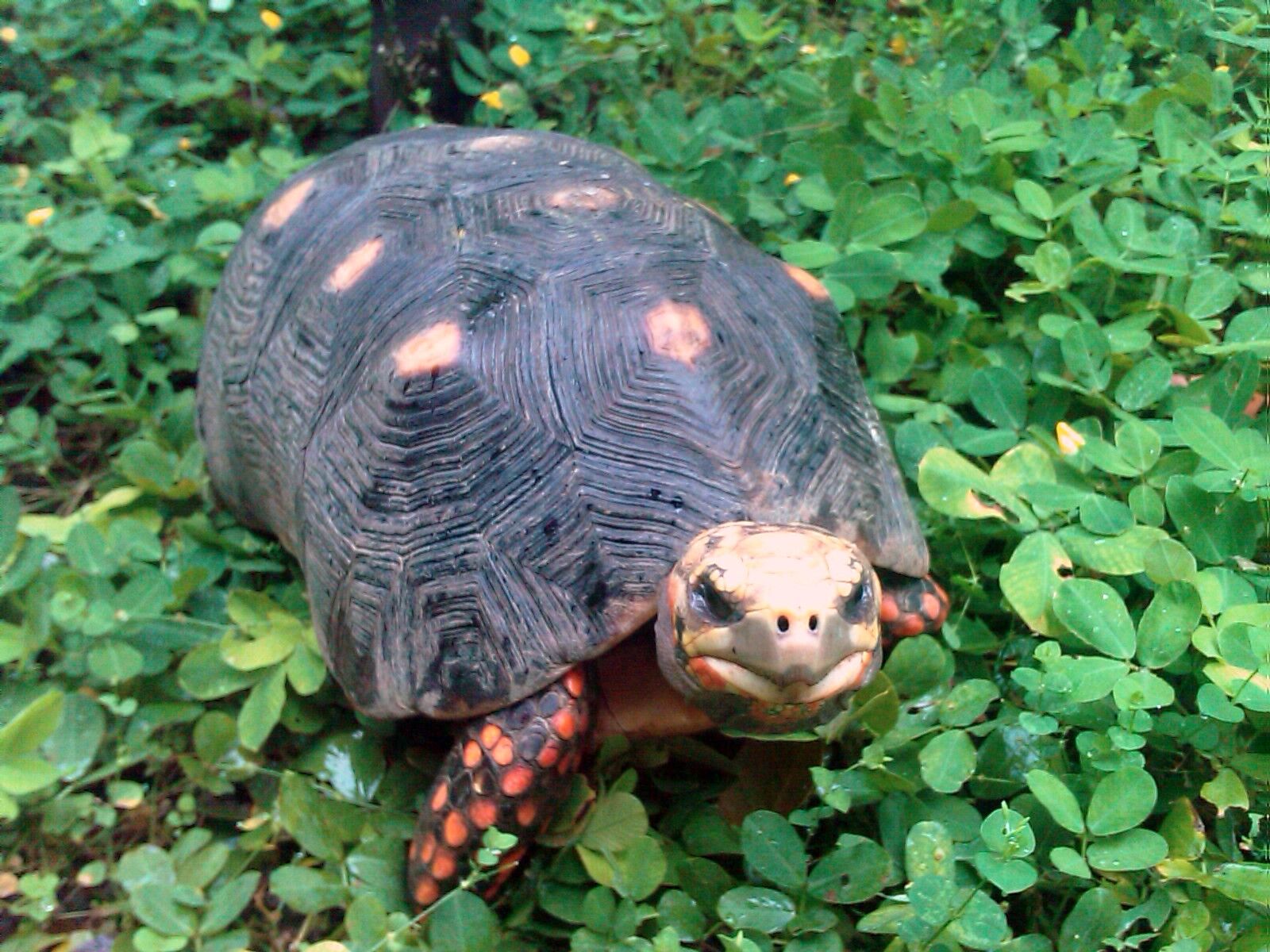
Red-footed tortoise
Chelonoidis carbonarius
A humid-forest tortoise that eats fruit.
Pet trade
 In-depth
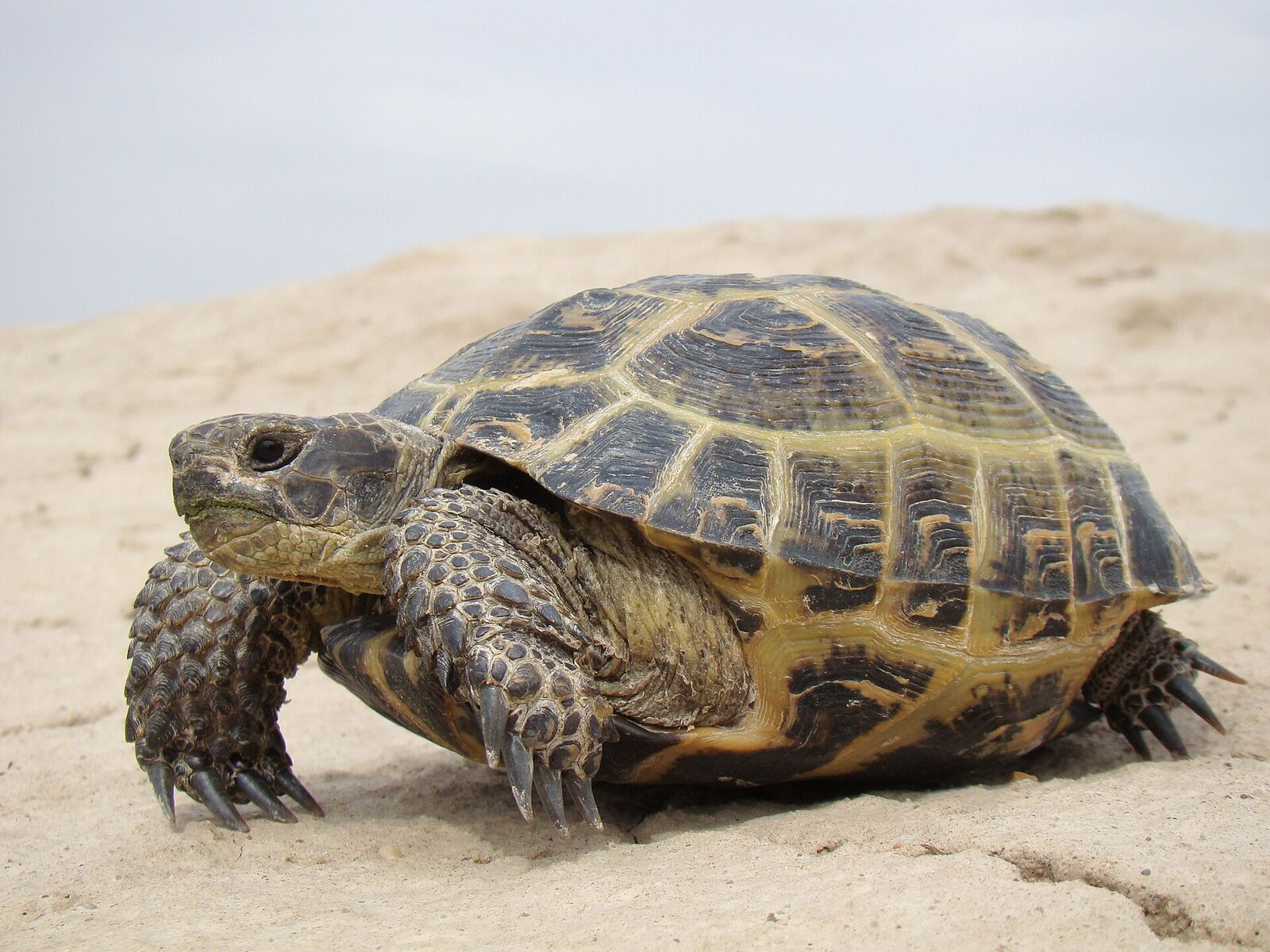
Russian tortoise
Testudo horsfieldii
Small, tough and a great first tortoise.
Pet trade
 In-depth
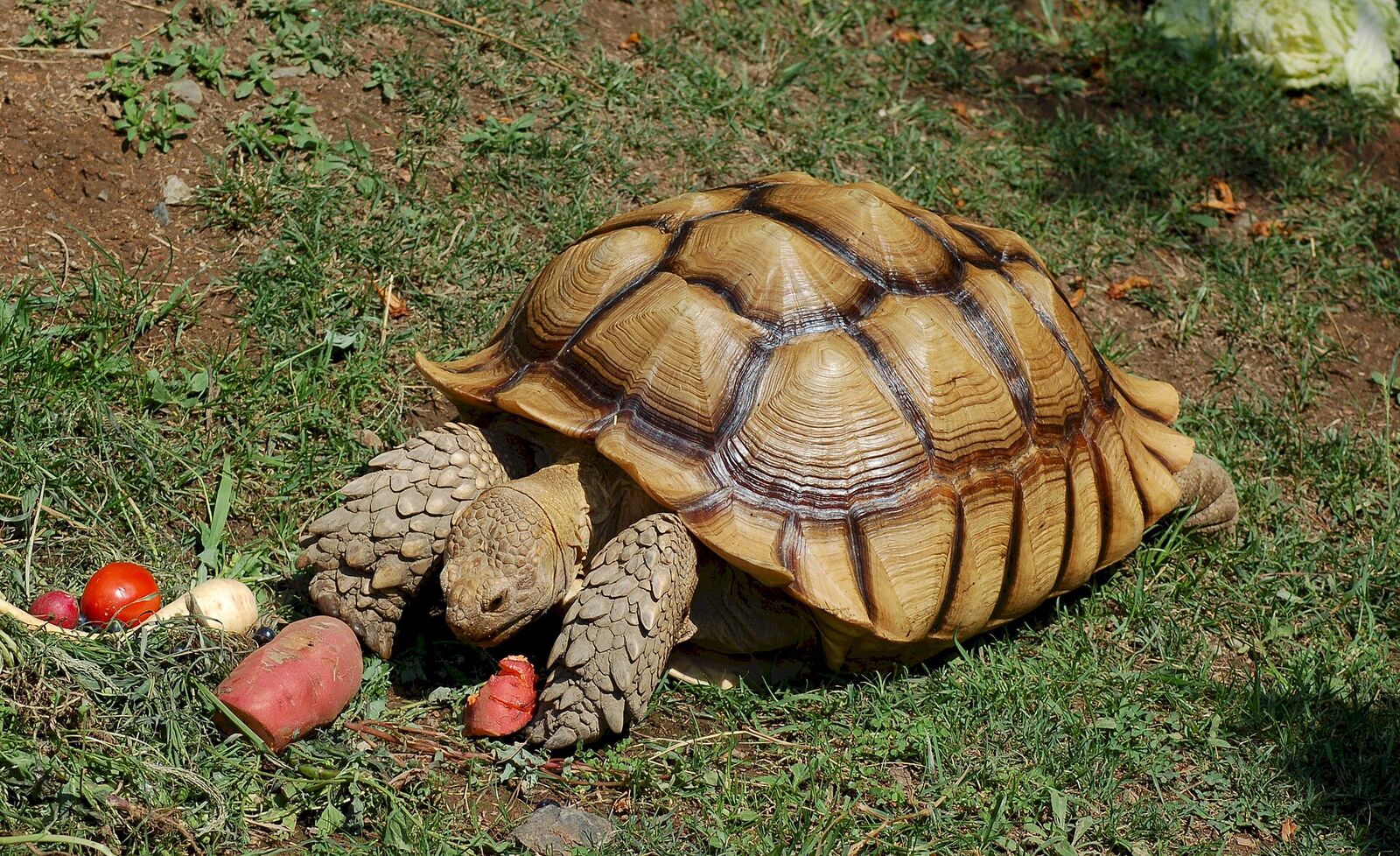
Sulcata (African spurred) tortoise
Centrochelys sulcata
The giant backyard tortoise, best adopted.
Pet trade

Egyptian tortoise
Testudo kleinmanni
Pet trade