Home / Reptiles / Snakes / Ball python
Some federal rules apply In-depth sheetBall python
Python regius
Reptiles › Snakes (Serpentes) › Pythonidae (Pythons)
Ball pythons are docile, manageable pythons that rarely exceed 5 feet. Clint's Reptiles gives them a perfect 5/5 for handleability.
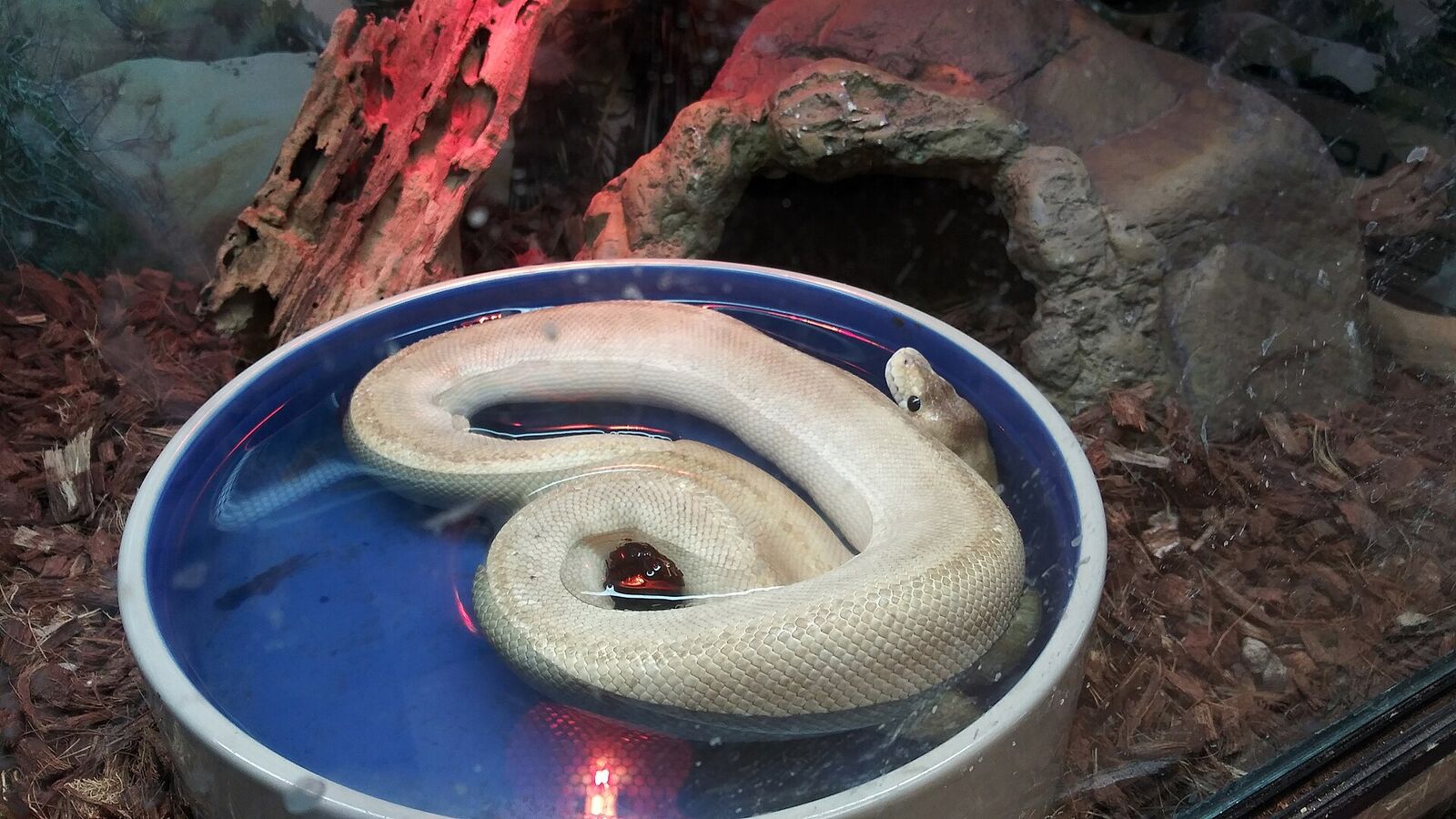
Care at a glance
Species-specific values
Values researched for this exact species. Where they differ from the group guide below, follow these. Air, surface and water temperatures are listed separately, and each source is kept as published rather than averaged.
| Warm hide temperature | 86–90 °F ReptiFiles recommendation; hide measurement not recast as basking surface | 204 |
| Cool hide temperature | 72–80 °F ReptiFiles recommendation; hide measurement not recast as basking surface | 204 |
| Air temperature night | 70–78 °F ReptiFiles recommendation; hide measurement not recast as basking surface | 204 |
| Humidity day | 60–80 % RH ReptiFiles recommendation; hide measurement not recast as basking surface | 204 |
| Humidity night | 80–100 % RH ReptiFiles recommendation; hide measurement not recast as basking surface | 204 |
| Uv index basking | 2–3 UVI ReptiFiles recommendation; hide measurement not recast as basking surface | 204 |
| Enclosure minimum | length: 48 in; width: 24 in; height: 24 in Adult baseline; length must also equal or exceed the individual snake | 205 |
| Social | House individually. | 205 |
| Preferred air temperature zone | 77–86 °F (25–30 °C) Veterinary POTZ; not water or basking surface. | 218 |
| Relative humidity | 50–80 % Veterinary table; corn snake, leopard gecko, bearded dragon and savannah monitor require more humidity during shedding. | 218 |
Care guide
Enclosure
- Absolute minimum 48×24×24 in for an adult; cool end about 75°F.
Sources 55
Feeding
- Adults usually eat every 1–2 weeks depending on weight; warm thawed prey to blood temperature.
Sources 55
Show the group care guide for pythons
Pythons
Applies to most species in this group. Habitat: Tropical and subtropical; terrestrial to arboreal depending on species. Individual species can differ, so compare with the species numbers above and the linked sources.
Housing & setup
- Give room for the snake to stretch out fully, with some climbing branches; scale enclosure length to the individual snake. Arboreal pythons (green tree and carpet pythons) need extra height.
- Hides that fit snugly, a heavy water bowl, and sturdy branches for semi-arboreal species.
- Moderate to high humidity helps shedding; avoid stagnant, soggy substrate.
Climate & lighting
Starting point only: Do not apply one python-family setpoint to every species; ball-python hide and night targets differ from these defaults. Check the species-specific values for this animal where shown.
| Warm side / daytime | 86–92°F |
| Cool side | 76–80°F |
| Night | 74–80°F |
| Humidity | 50–70% |
- UVB: Optional low-level UVB is increasingly used; not essential if diet is whole prey.
Diet
- Rodents (and rabbits or poultry for giants), offered every 1–2 weeks for young snakes and every 2–6 weeks for adults depending on size.
- Avoid power-feeding; obesity is the most common problem in captive pythons.
Social life
- Solitary.
Handling
- Any python over about 8–10 ft needs a second person present when handled.
Health watch
- Respiratory infections when cool and damp; stuck sheds when too dry; regurgitation after handling too soon after a meal.
- Wait at least 48 hours after feeding before handling.
Understanding the animal
In the wild
In the wild
Researched for this exact species, not its family. Good care copies these conditions.1234
| Where it lives | West and Central African savanna, open woodland and cultivated clearings. It spends substantial time in underground refuges and mammal burrows. |
| Ground it lives on | Savanna soil beneath grass and brush, especially sheltered burrows. |
| Climate | Tropical savanna with wet and dry seasons; activity is greater during the wet season. Numeric wild temperature and relative-humidity ranges were not established in the source. |
| Active | Primarily nocturnal, also active around dawn and dusk. |
| Social life | Solitary. |
| Wild diet | Small mammals, especially African rodents such as grass mice, shaggy rats, rufous-nosed rats and giant pouched rats. |
| Behavior to plan for | Uses sheltered ambush positions and can climb despite its frequent use of burrows. When threatened it may coil into a tight ball with its head protected inside. |
What this means for care
- Provide snug, dark refuges and substantial ground cover.
- Include secure low climbing opportunities as well as floor space.
- Allow retreat instead of repeatedly disturbing a tightly balled animal.
Native climate (measured)
Native climate (measured)
| Warm-season highs | about 97°F (up to 102°F in the hottest sampled areas) |
| Cool-season lows | about 66°F (down to 61°F in the coldest sampled areas) |
| Average temperature | 78–82°F across sampled records |
| Relative humidity | 60–77% on average (driest month about 45%) |
| Rainfall | about 1132 mm a year, with strong wet and dry seasons |
Measured at 105 wild occurrence records sampled against WorldClim 2.1 climate data (1970–2000 averages). Air conditions in the range are ecological context, not enclosure settings: microhabitats such as burrows, leaf litter or basking rocks can be cooler, warmer or more humid.
Profile
Profile
Researched for this exact species. Sources are listed under In the wild above.
Keeper tips
- Captive-born and captive-bred animals are preferred because they are generally healthier and less likely to carry parasites.
- A ball python should be well-started and reliably eating before purchase.
- An adult can be housed in an enclosure measuring about 4 ft by 2 ft by 2 ft according to the supplied care source.
- Provide branches or other climbing structures because ball pythons will use them.
- Be cautious with screen-topped glass enclosures because they can make humidity difficult to maintain.
Behaviors reported
- Coils into a tight ball with the head and neck tucked into the center when threatened.
- Usually relies on its balling defense rather than biting.
- Favors mammal burrows and other underground hiding places.
- May aestivate while sheltered underground.
- Males tend to be more semi-arboreal, while females tend to be more terrestrial.
Unique adaptations
- The characteristic tight ball posture protects the head and neck when the snake is threatened.
- It is a nonvenomous constrictor.
Remarkable facts
- The ball python is the smallest African python and can reach a maximum reported length of 182 cm (72 in).
- Females average about 116.2 cm (45.7 in) snout-to-vent length, while males average about 111.3 cm (43.8 in).
- Clutches range from 1 to 11 eggs.
- Females coil around their eggs until they hatch after approximately two months.
- Newly hatched ball pythons weigh about 65 to 103 g, with an average of 86 g.
From the sources
From the sources
Quoted from the matching sections of reputable sources for this exact species. Specialist databases are used first; Wikipedia (community-edited, CC BY-SA 4.0) only fills gaps. Other sources are short credited quotes.
| Overview | The ball python (Python regius), also called the royal python, is a python species native to West and Central Africa, where it lives in grasslands, shrublands and open forests. This nonvenomous constrictor is the smallest of the African pythons, growing to a maximum length of 182 cm. The name "ball python" refers to its tendency to curl into a ball when stressed or frightened. — Wikipedia (community-edited) |
| Where it lives | Ball pythons spend most of their time on or under the ground in burrows. — Animal Diversity Web |
| Social life and communication | Vision plays an important role in a ball python’s ability to secure prey. — Animal Diversity Web |
| Wild diet | Ball pythons are carnivorous and have mobile lower and upper jaws. — Animal Diversity Web |
| Behavior | Ball pythons move by way of rectilinear locomotion, whereby bilateral symmetrical contractions propel them forward as they push against the surface. — Animal Diversity Web |
| Reproduction | After laying their clutch of eggs, female ball pythons coil around their clutches until hatched (after approximately 2 months). — Animal Diversity Web |
| Lifespan | The average lifespan of ball pythons in captivity is 20 years. — Animal Diversity Web |
| Appearance and size | At birth, ball pythons range from 25 to 43 centimeters in length and grow to 1 to 1.5 meters as adults. — Animal Diversity Web |
| History and naming | Named after Latin rex, regis = king, regius = kingly. Apparently because it was often kept as a pet by African kings and other rulers. — The Reptile Database |
| Conservation | The ball python is listed as Near Threatened on the IUCN Red List; it experiences a high level of exploitation and the population is believed to be in decline in most of West Africa. The ball python is primarily threatened by poaching for the international exotic pet trade. It is also hunted for its skin, meat and use in traditional medicine. — Wikipedia (community-edited) |
Data and studies
Researched care notes
Researched care notes
Findings checked against veterinary, zoo, welfare, keeper and peer-reviewed sources. Air, basking-surface and water temperatures are kept separate, and where sources disagree both are shown. “Study” notes report what a paper measured, not a universal rule.
Ball / Royal Python (species)
- RSPCA gives a 30–32°C basking zone and a 24–26°C cool end. Measure the basking zone at snake level and the cool end with a digital thermometer.1
- ReptiFiles gives a 30–32°C warm hide and a 22–27°C cool hide. These are hide temperatures, not necessarily whole-enclosure air.2
- RSPCA describes 50–60% RH at the cool end, with brief increases near 80% that fall between misting.1
- ReptiFiles recommends 60–80% daytime RH with a central probe and higher night readings.2
- The veterinary table lists 50–80% RH; probe location is unspecified.3
- UVI recommendations disagree: RSPCA gives 1.0 at basking, while ReptiFiles gives 2–3. Measure at the animal’s basking position.1
- Provide enough length for full extension, cover, and multiple hides. A furnished enclosure differs from a large bare space.1
- RSPCA recommends thawed whole rodents and says additional supplementation is usually unnecessary with good-quality whole prey.1
- Housing research supports evaluating behavioural opportunities; survival in rack housing does not itself establish adequate welfare. Research interpretation.4
The numbers
The numbers
Each bar is what one source reports. Where several sources weigh in, the dashed gold band marks their average.
Hot spot / basking
Humidity
Lifespan
Maximum recorded lifespan
Longest recorded lifespan reported by each database; typical lifespans are usually shorter. The AnAge record comes from an animal in human care.
Care articles for this species
Care articles for this species
- Ball Python Care Guide (ReptiFiles)
- Ball Python Care Sheet (Reptiles Magazine)
- Ball Python Feeding Tips (ReptiFiles)
- Ball Python Terrarium Size Guidelines (ReptiFiles)
- Ball Python History, Care And Breeding (Reptiles Magazine)
- Feeding Ball Pythons (Reptiles Magazine)
Veterinary & husbandry research
Veterinary & husbandry research
- Pet snakes illegally marketed in Brazil: Climatic viability and establishment risk Fonseca É et al., PloS one 2017
- Oral, Cloacal, and Hemipenal Actinomycosis in Captive Ball Pythons (Python regius) Tillis SB et al., Frontiers in veterinary science 2020
- Piebaldism and chromatophore development in reptiles are linked to the tfec gene Garcia-Elfring A et al., Current biology: CB 2023
- The effects of UV light on calcium metabolism in ball pythons (Python regius) Hedley J et al., The Veterinary record 2013
Peer-reviewed papers that mention this species alongside captivity, zoos, veterinary care or aquaculture. Some cover several species or mention it only in passing, so check the abstract. See all 51 on PubMed → 170
Sources for this sheet
- Royal Veterinary College Exotics Service: Royal (ball) python care Zoo, university or veterinaryVet-school exotics hospital factsheet, reviewed 2021–2024.
- Clint's Reptiles (YouTube): Ball Python, The Best Pet Reptile? Expert educator & keeperClint Laidlaw, PhD in Biology Education and MS in Evolutionary Ecology; owner of Clint's Reptile Room and a longtime keeper. Rates each species on handleability, care, hardiness, availability and upfront cost.
- ReptiFiles: Ball python care Experienced keeper or breederWell-researched care guide.
- AnAge: The Animal Ageing and Longevity Database (Human Ageing Genomic Resources) Peer-reviewed researchCurated, referenced longevity and life-history records for thousands of species; maximum lifespans are often from zoo animals.
- Myhrvold et al. (2015). An amniote life-history database. Ecology 96: 3109 Peer-reviewed researchPeer-reviewed compilation of life-history data for over 21,000 birds, mammals and reptiles.
- Species+ (UNEP-WCMC and the CITES Secretariat) Zoo, university or veterinaryThe official database of species listed under CITES.
- USFWS International Affairs: CITES Zoo, university or veterinaryFederal agency that issues CITES permits.
- Merck Veterinary Manual: Management and husbandry of reptiles Zoo, university or veterinaryThe Merck Veterinary Manual: a standard veterinary reference written and reviewed by veterinary specialists.
- Merck Veterinary Manual: Nutritional, metabolic and endocrine diseases of reptiles Zoo, university or veterinaryThe Merck Veterinary Manual: a standard veterinary reference written and reviewed by veterinary specialists.
- ReptiFiles: Ball python terrarium size Experienced keeper or breederAdded in the 2026 source-checked care-guide review.
- ReptiFiles: Ball python humidity, temperature and lighting Experienced keeper or breederAdded in the 2026 source-checked care-guide review.
- Clint's Reptiles (YouTube): Ball Python, The Best Pet Reptile? Expert educator & keeperClint Laidlaw, PhD in Biology Education and MS in Evolutionary Ecology; owner of Clint's Reptile Room and a longtime keeper. His "Best Pet?" series reviews each species' care in depth.
- The Reptile Database Peer-reviewed researchScientist-curated catalog of every reptile species, with taxonomy and literature.
- GBIF Backbone Taxonomy (Global Biodiversity Information Facility) Peer-reviewed researchInternational scientific taxonomy used here for classification.
- Wikipedia (species article) Community referenceFree encyclopedia; useful overviews with their own citations. Intro text is quoted under CC BY-SA 4.0.
- PubMed (U.S. National Library of Medicine) Peer-reviewed researchIndex of peer-reviewed veterinary, zoo and husbandry research.
- iNaturalist (captive observations) Community referenceCommunity observation platform run by the California Academy of Sciences and National Geographic; observations marked captive show animals living in homes, zoos and aquariums.
- ReptiFiles (care guides) Experienced keeper or breederWell-researched reptile care guides that cite herpetological literature and experienced keepers.
- Reptiles Magazine (care articles) Experienced keeper or breederEstablished reptile and amphibian hobby magazine; care articles are written by breeders, keepers and veterinarians.
More pythons
 In-depth
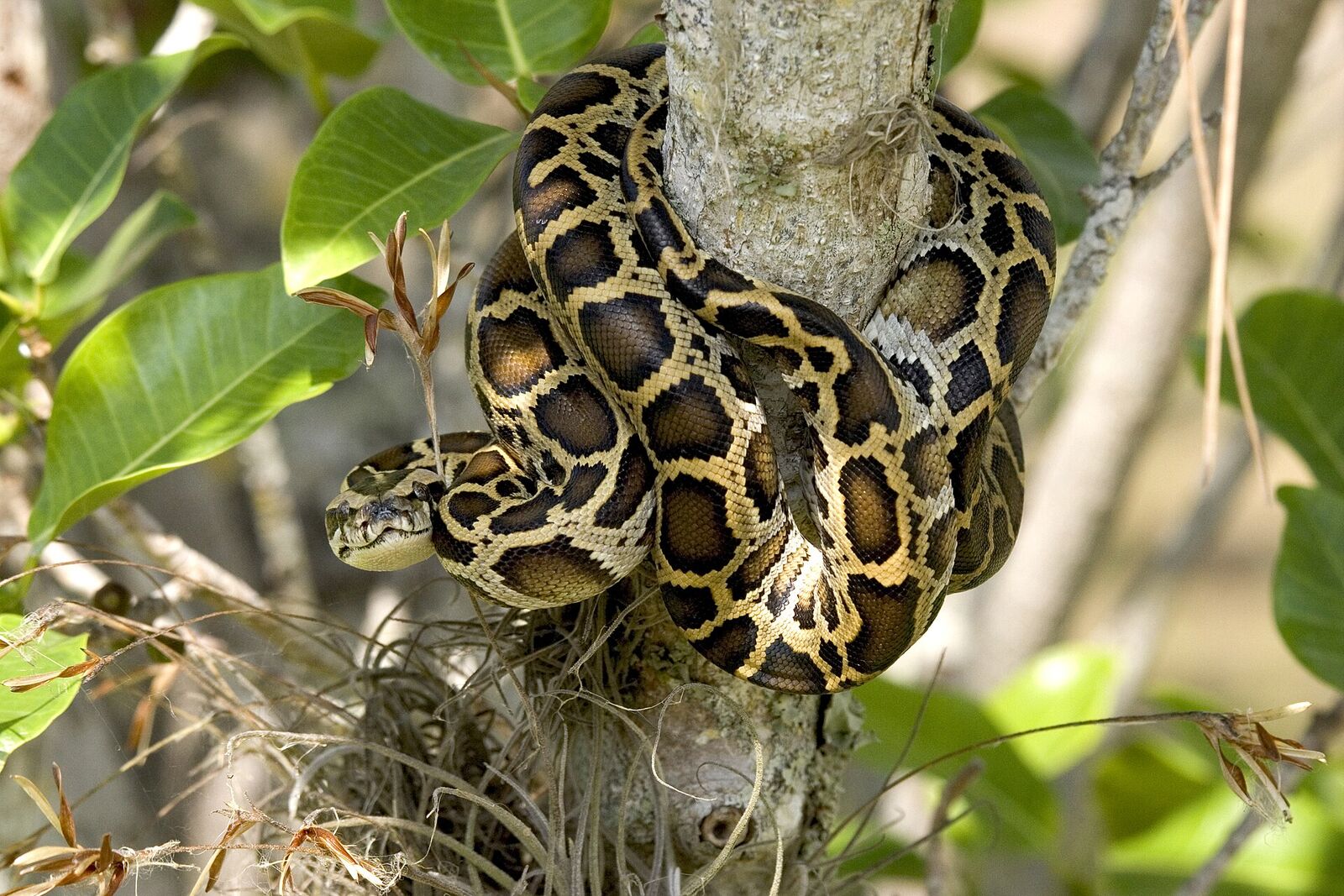
Burmese python
Python bivittatus
A heavy-bodied giant with a famously calm reputation.
Pet trade
 In-depth
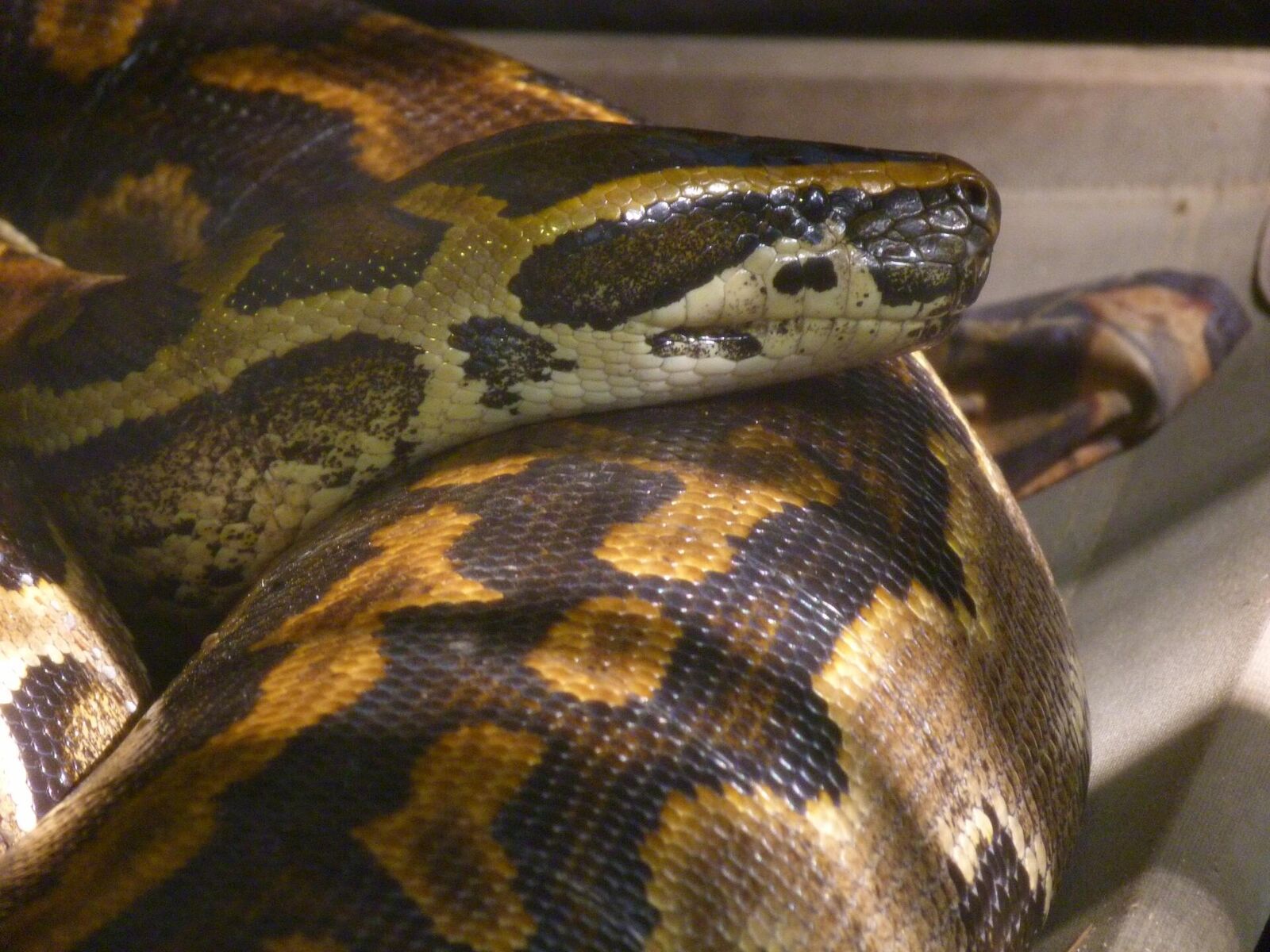
Central African rock python
Python sebae
Africa's largest snake, powerful and spirited.
Pet trade
 In-depth
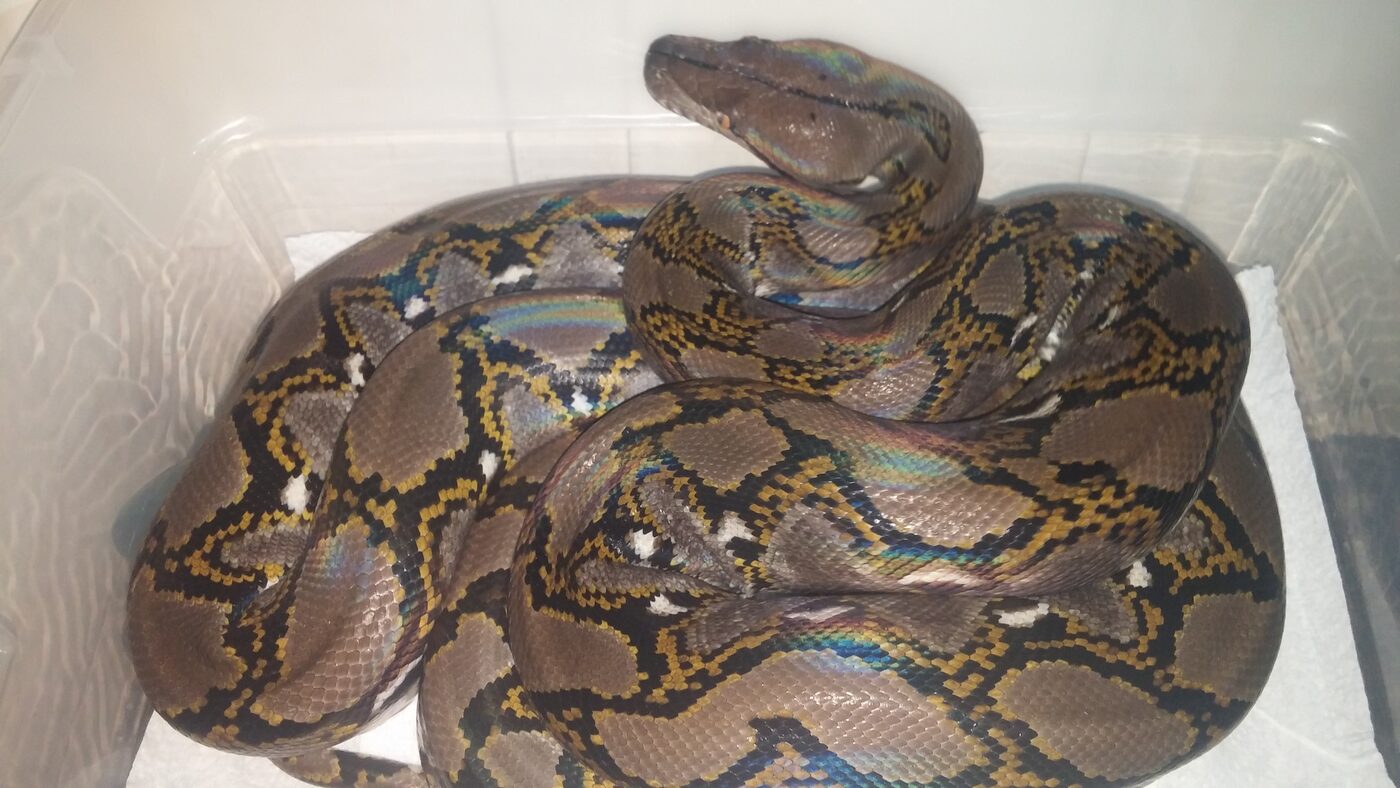
Reticulated python
Malayopython reticulatus
The world's longest snake, and a brilliant, active giant.
Pet trade
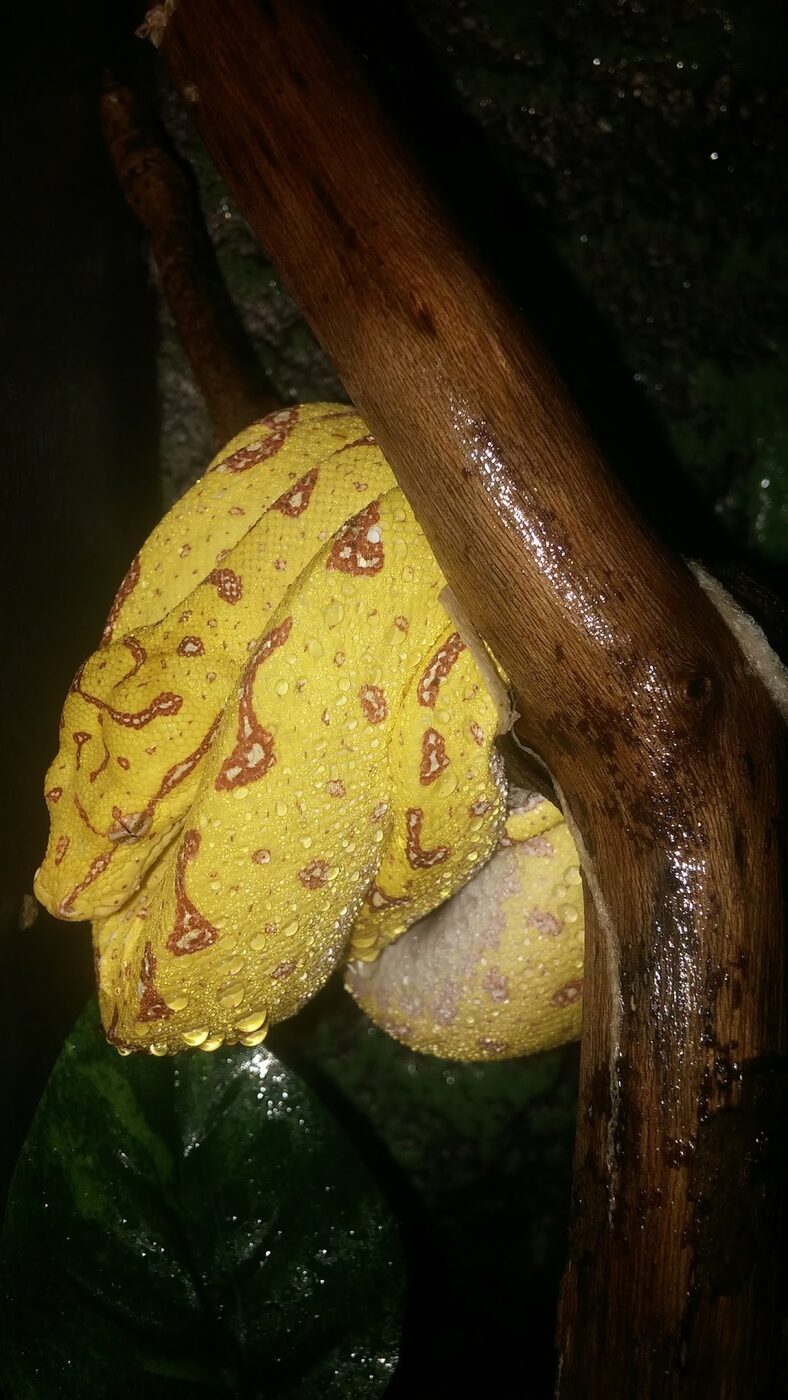
Green tree python
Morelia viridis
Pet trade