Home / Reptiles / Snakes / Reticulated python
Federal restrictions apply In-depth sheetReticulated python
Malayopython reticulatus
Reptiles › Snakes (Serpentes) › Pythonidae (Pythons)
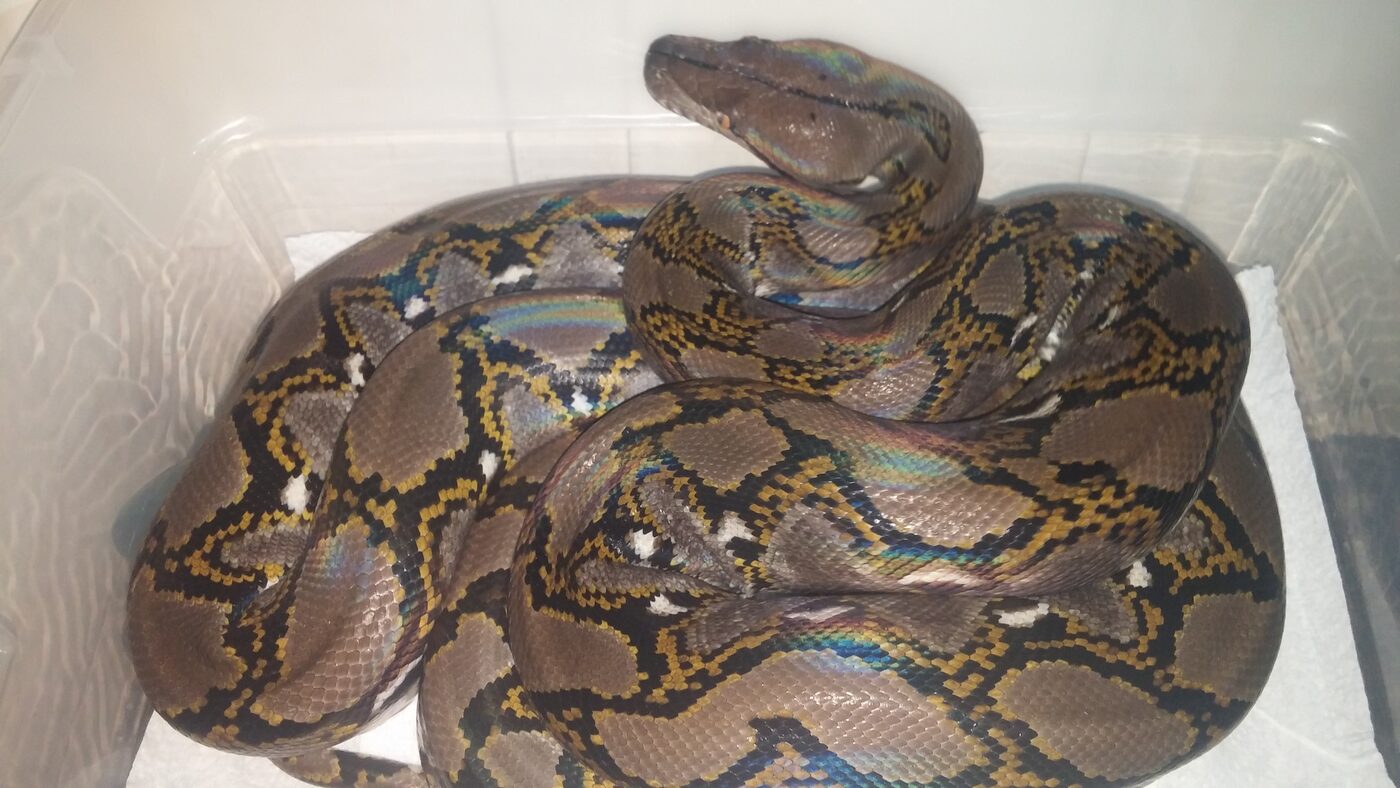
Reticulated pythons are intelligent, active giants that can exceed 20 feet, though island dwarf localities stay much smaller. Captive-bred retics raised with regular, careful handling are usually tractable, but their size and strength demand serious respect.
Warnings
Care guide
Enclosure
- A common rule of thumb: enclosure length equal to the snake's length, width half its length, and as tall as practical.
- Juveniles under 8 ft: at least 8×4×4 ft is recommended by some keepers; others raise hatchlings in tubs and size up as they grow.
- Floor space matters more than height.
Lighting
- 12 hours of light a day; many keepers now add UVB.
Sources 15
Feeding
- Hatchlings about every 7 days, juveniles every 1–2 weeks, subadults every 2–3 weeks, adults every 4–6 weeks.
- Meals roughly 10–30% of body weight. Avoid power-feeding; fast growth isn't healthy.
Handling & safety
- For any python 10 ft or longer, always have at least one other person present.
- Feeding response is strong; use a hook or tap-training so the snake knows handling time from feeding time.
Sources 15
Health
- Watch for respiratory infections, mites, stuck sheds and obesity.
Sources 15
Show the group care guide for giant constrictors
Giant constrictors
Applies to most species in this group. Habitat: Tropical forests, wetlands and savannas. Individual species can differ, so compare with the species numbers above and the linked sources.
Housing & setup
- Room-sized or custom enclosures: plan for an adult that may exceed 12–20 ft and 100+ lb.
- Large, filtered or frequently changed water features for anacondas; heavy, chew-proof hides and locks for all.
- Plan for the full adult size before buying a baby.
Climate & lighting
| Warm side / daytime | 86–92°F |
| Cool side | 78–82°F |
| Night | 75–80°F |
| Humidity | 60–80% |
Diet
- Large rodents, rabbits and poultry; adults may eat every 3–6 weeks.
- Use feeding tongs or a hook to separate feeding from handling.
Social life
- Solitary.
Handling
- Never handle a giant constrictor alone; one person per 4–5 ft of snake is a common safety rule.
Health watch
- Obesity, respiratory infections and blister disease from dirty, wet conditions.
- Bites from large constrictors need medical attention.
Understanding the animal
In the wild
In the wild
Researched for this exact species, not its family. Good care copies these conditions.123456
| Where it lives | South and Southeast Asian rainforest, woodland and adjoining grassland, often near water. It also occupies plantations and settlements where rodents and domestic animals provide prey. |
| Ground it lives on | Forest-floor leaf litter and vegetated banks; juveniles also use branches. |
| Water it lives in | Uses freshwater bodies and swims across channels; open-ocean crossings have also been reported. Water chemistry and a typical water-temperature range were not established. |
| Climate | Tropical forest climate; the provided text does not state specific temperatures, humidity values, or seasonal changes. |
| Active | Primarily nocturnal; particularly documented feeding at night around human settlements. |
| Social life | Solitary except for mating. |
| Wild diet | Mammals, birds and reptiles; settlement prey includes rats, pigeons, chickens and ducks, with larger individuals taking pigs or goats. |
| Behavior to plan for | An ambush constrictor and powerful swimmer; smaller animals climb readily. Its adult size and strength make enclosure escape and feeding responses consequential. |
What this means for care
- Provide climbing branches appropriate to the animal's current size.
- Design the entire enclosure and locks for adult strength.
- Provide a clean, accessible soaking area and sheltered ambush sites.
Native climate (measured)
Native climate (measured)
| Warm-season highs | about 89°F (up to 95°F in the hottest sampled areas) |
| Cool-season lows | about 71°F (down to 62°F in the coldest sampled areas) |
| Average temperature | 76–83°F across sampled records |
| Relative humidity | 76–83% on average (driest month about 75%) |
| Rainfall | about 2114 mm a year |
Measured at 104 wild occurrence records sampled against WorldClim 2.1 climate data (1970–2000 averages). Air conditions in the range are ecological context, not enclosure settings: microhabitats such as burrows, leaf litter or basking rocks can be cooler, warmer or more humid.
Profile
Profile
Researched for this exact species. Sources are listed under In the wild above.
History
Until the early 1990s, many reticulated pythons in the pet trade were wild-caught animals that passed through dealers before reaching keepers. nearly all are now captive-born, with a dramatic expansion in available colors, patterns, sizes, keepers, and breeders.
Keeper tips
- Treat the species as an advanced-care snake.
- Plan housing around the adult size potential of the particular locality or size type.
- Provide opportunities for terrestrial movement and climbing.
- Include access to water consistent with the species' natural use of bodies of water.
- Account for primarily nighttime activity.
Behaviors reported
- Primarily active at night.
- Uses trees, the forest floor, and bodies of water.
- Captive-bred animals are reported to receive far fewer temperament complaints than historically imported wild-caught animals.
Unique adaptations
- Heat pits occur on the snout and lips.
- Wild-type geometric coloration and patterning helps make the snake less conspicuous to predators and prey.
- The species has a muscular constrictor-type body.
- Its broad ecological flexibility allows it to use arboreal, terrestrial, and aquatic environments.
Remarkable facts
- Reticulated pythons are widespread through Southeast Asia, including Bangladesh, Burma, Cambodia, Indonesia, Laos, Malaysia, the Philippines, Singapore, Thailand, and Vietnam.
- Standard reticulated pythons are described as averaging about 14 to 20 feet long, while dwarf and super-dwarf forms have smaller average size potentials.
- The name 'reticulated' refers to the net-like pattern of irregular geometric markings.
- Wild-type animals generally have yellow or orange, black, and white diamond-like markings on a gray to tan background.
- The species has been heavily commercially exploited for the skin trade.
- The Reptile Database source records cases of reticulated pythons killing tigers, panthers, and crocodiles.
Stories
- Historically, imported reticulated pythons were often placed into cages after a long chain of capture, holding, export, dealing, and retail, and owners sometimes interpreted their resulting behavior as the snake simply being 'mean.'
From the sources
From the sources
Quoted from the matching sections of reputable sources for this exact species. Specialist databases are used first; Wikipedia (community-edited, CC BY-SA 4.0) only fills gaps. Other sources are short credited quotes.
| Overview | The reticulated python (Malayopython reticulatus) is a python species native to South and Southeast Asia. It is the world's longest snake, and the third heaviest after the green anaconda and Burmese python. It is a non-venomous constrictor and an excellent swimmer that has been reported far out at sea. It has colonized many small islands within its range. — Wikipedia (community-edited) |
| Appearance and size | Diagnosis (genus): A genus of pythonine snakes, of large to gigantic size (adult total length reportedly to 10 m). — The Reptile Database |
| History and naming | Named after the Latin reticulatus, meaning “made like a net”. In reference to the net-like dorsal pattern. — The Reptile Database |
Data and studies
The numbers
The numbers
Each bar is what one source reports. Where several sources weigh in, the dashed gold band marks their average.
Basking / warm side
Retics often choose cooler spots; a full gradient lets them pick.
Humidity
Enough humidity matters most for clean sheds.
Maximum recorded lifespan
Longest recorded lifespan reported by each database; typical lifespans are usually shorter.
Typical adult weight
Average adult body mass in each database (FishBase gives the maximum recorded weight).
Incubation
Female maturity
Cool side
Species-specific values from keeper care sheets. Basking figures are often surface readings taken with an infrared thermometer, which run hotter than air.
Night temperature
Species-specific values from keeper care sheets. Basking figures are often surface readings taken with an infrared thermometer, which run hotter than air.
Care articles for this species
Care articles for this species
- Reticulated Python Care Sheet (ReptiFiles)
- Reticulated Python Care Tips (Reptiles Magazine)
Veterinary & husbandry research
Veterinary & husbandry research
- A global assessment of reptiles in the skin trade Colston TJ et al., Scientific reports 2026
- Younger generations are more interested than older generations in having non-domesticated animals as pets Cronin KA et al., PloS one 2022
Peer-reviewed papers that mention this species alongside captivity, zoos, veterinary care or aquaculture. Some cover several species or mention it only in passing, so check the abstract. 170
Sources for this sheet
- ReptiFiles: Reticulated python care Experienced keeper or breederWell-researched care guides that cite herpetological literature and experienced keepers.
- Bob Clark (Reptiles Magazine, 2002): Reticulated pythons Experienced keeper or breederVeteran python breeder known for developing tiger retic morphs; an older article, but practical.
- Clint's Reptiles (YouTube): Reticulated Python, The Best Pet Snake? Expert educator & keeperClint Laidlaw, PhD in Biology Education and MS in Evolutionary Ecology; owner of Clint's Reptile Room and a longtime keeper. Rates each species on handleability, care, hardiness, availability and upfront cost.
- Myhrvold et al. (2015). An amniote life-history database. Ecology 96: 3109 Peer-reviewed researchPeer-reviewed compilation of life-history data for over 21,000 birds, mammals and reptiles.
- ReptiFiles (care guides) Experienced keeper or breederWell-researched reptile care guides that cite herpetological literature and experienced keepers.
- 50 CFR Part 16: Injurious wildlife (Lacey Act) Zoo, university or veterinaryCurrent federal regulation, read from eCFR.
- U.S. Association of Reptile Keepers v. Zinke (D.C. Cir. 2017) Zoo, university or veterinaryAppeals ruling that the Lacey Act's shipping ban does not cover moves between the continental states.
- Species+ (UNEP-WCMC and the CITES Secretariat) Zoo, university or veterinaryThe official database of species listed under CITES.
- USFWS International Affairs: CITES Zoo, university or veterinaryFederal agency that issues CITES permits.
- Merck Veterinary Manual: Management and husbandry of reptiles Zoo, university or veterinaryThe Merck Veterinary Manual: a standard veterinary reference written and reviewed by veterinary specialists.
- Merck Veterinary Manual: Nutritional, metabolic and endocrine diseases of reptiles Zoo, university or veterinaryThe Merck Veterinary Manual: a standard veterinary reference written and reviewed by veterinary specialists.
- Clint's Reptiles (YouTube): Reticulated Python, The Best Pet Snake? Expert educator & keeperClint Laidlaw, PhD in Biology Education and MS in Evolutionary Ecology; owner of Clint's Reptile Room and a longtime keeper. His "Best Pet?" series reviews each species' care in depth.
- The Reptile Database Peer-reviewed researchScientist-curated catalog of every reptile species, with taxonomy and literature.
- GBIF Backbone Taxonomy (Global Biodiversity Information Facility) Peer-reviewed researchInternational scientific taxonomy used here for classification.
- Wikipedia (species article) Community referenceFree encyclopedia; useful overviews with their own citations. Intro text is quoted under CC BY-SA 4.0.
- PubMed (U.S. National Library of Medicine) Peer-reviewed researchIndex of peer-reviewed veterinary, zoo and husbandry research.
- iNaturalist (captive observations) Community referenceCommunity observation platform run by the California Academy of Sciences and National Geographic; observations marked captive show animals living in homes, zoos and aquariums.
- Reptiles Magazine (care articles) Experienced keeper or breederEstablished reptile and amphibian hobby magazine; care articles are written by breeders, keepers and veterinarians.
More pythons
 In-depth
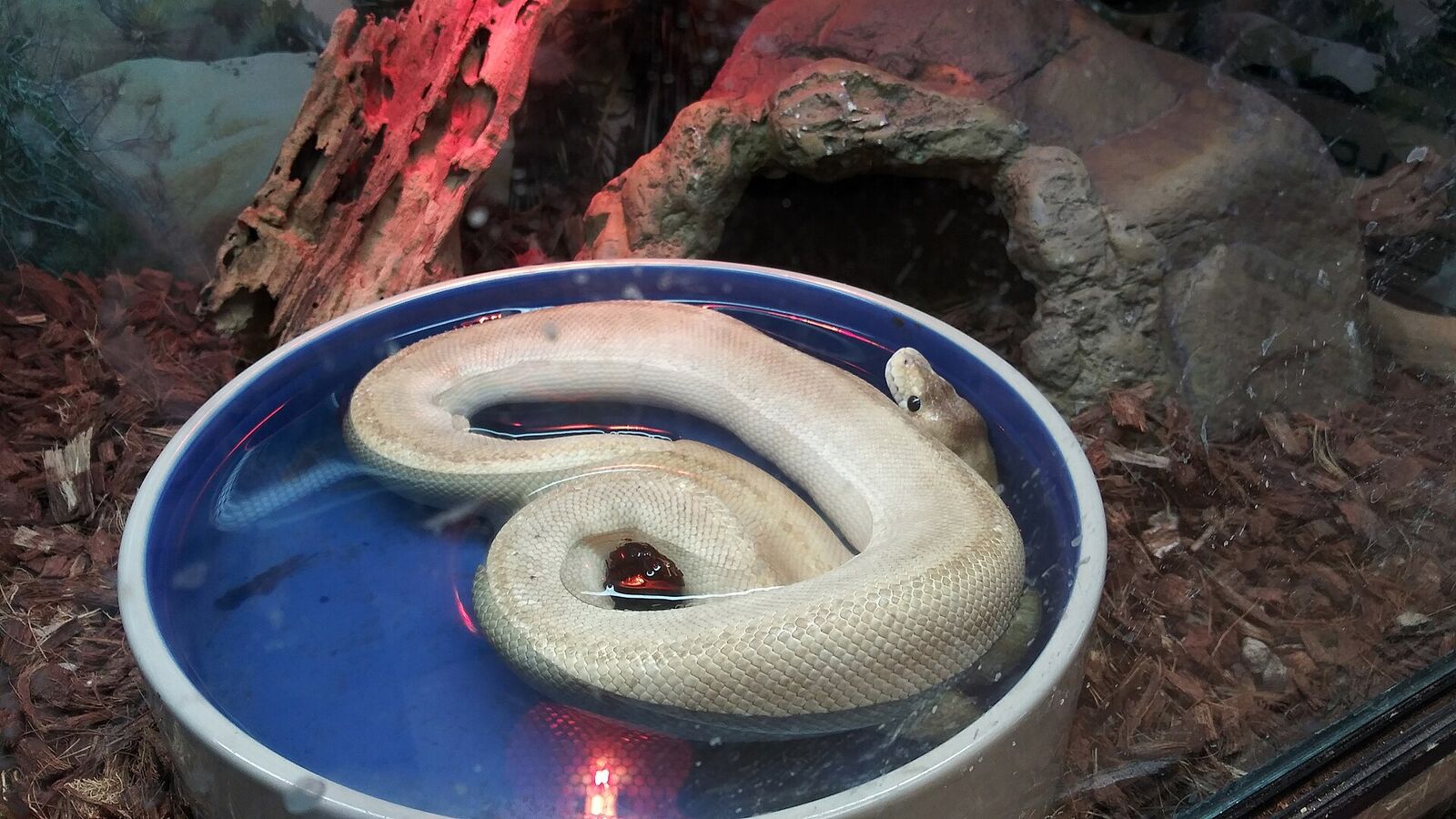
Ball python
Python regius
The calm, curl-up classic of pet snakes.
Pet trade
 In-depth
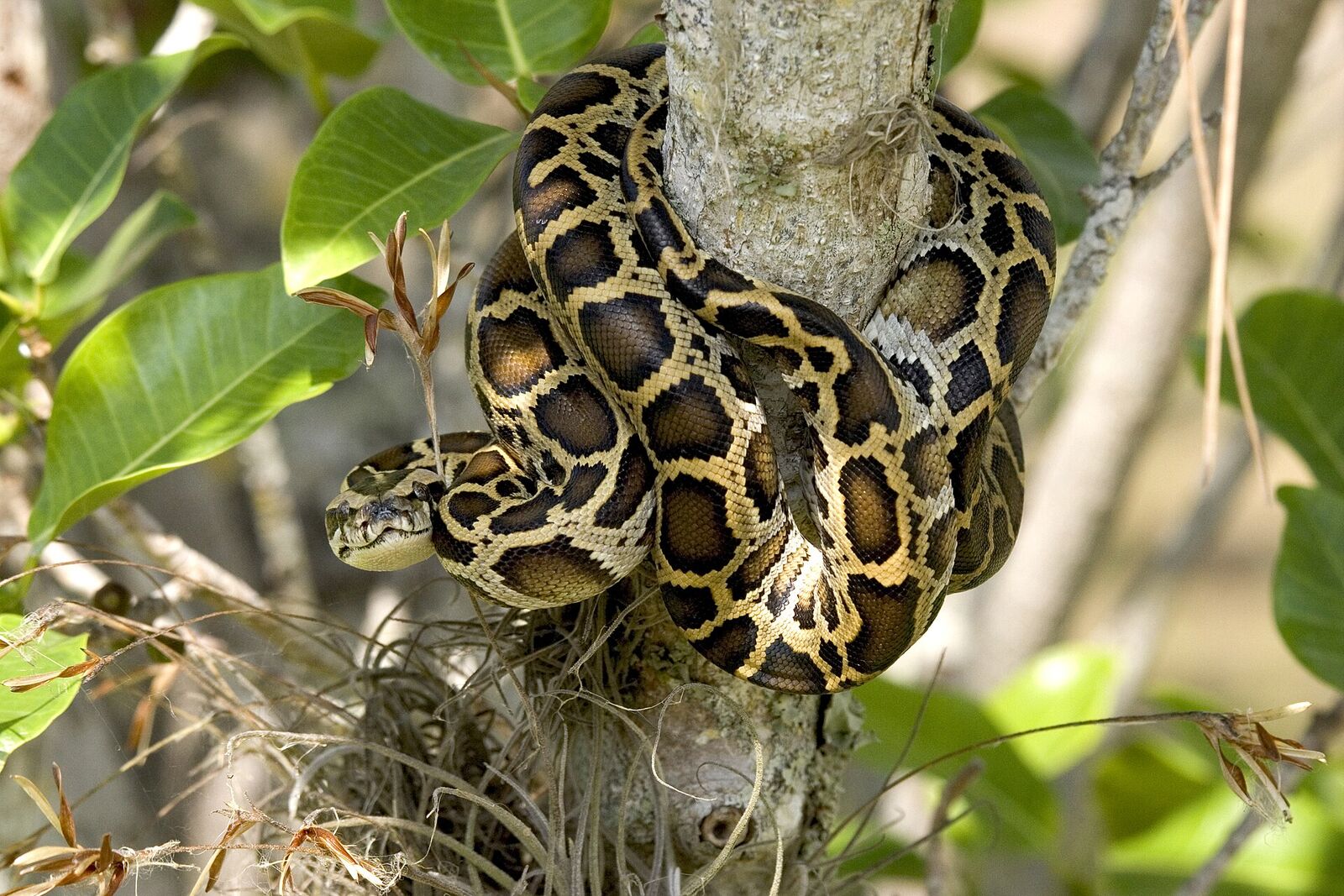
Burmese python
Python bivittatus
A heavy-bodied giant with a famously calm reputation.
Pet trade
 In-depth
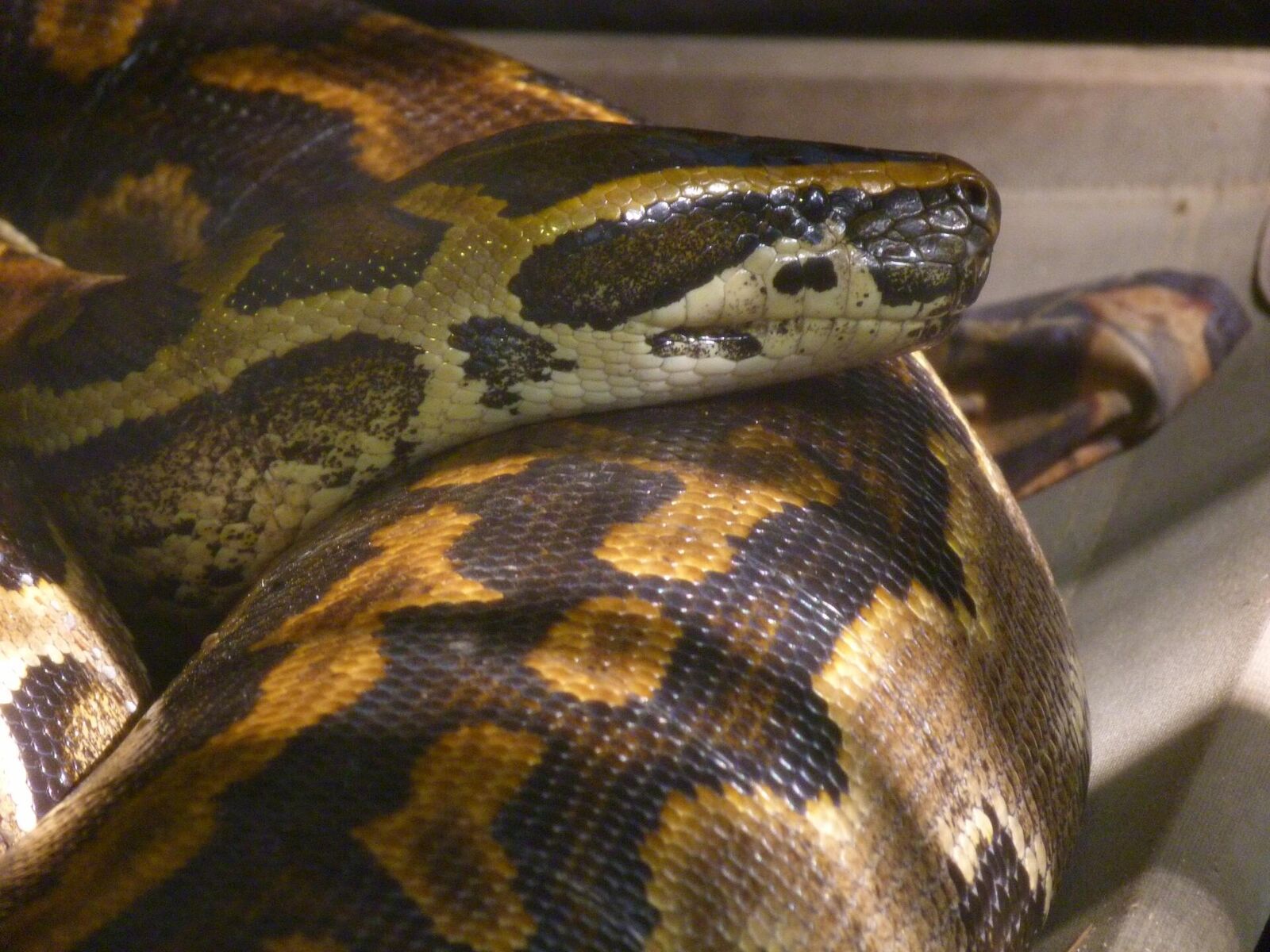
Central African rock python
Python sebae
Africa's largest snake, powerful and spirited.
Pet trade
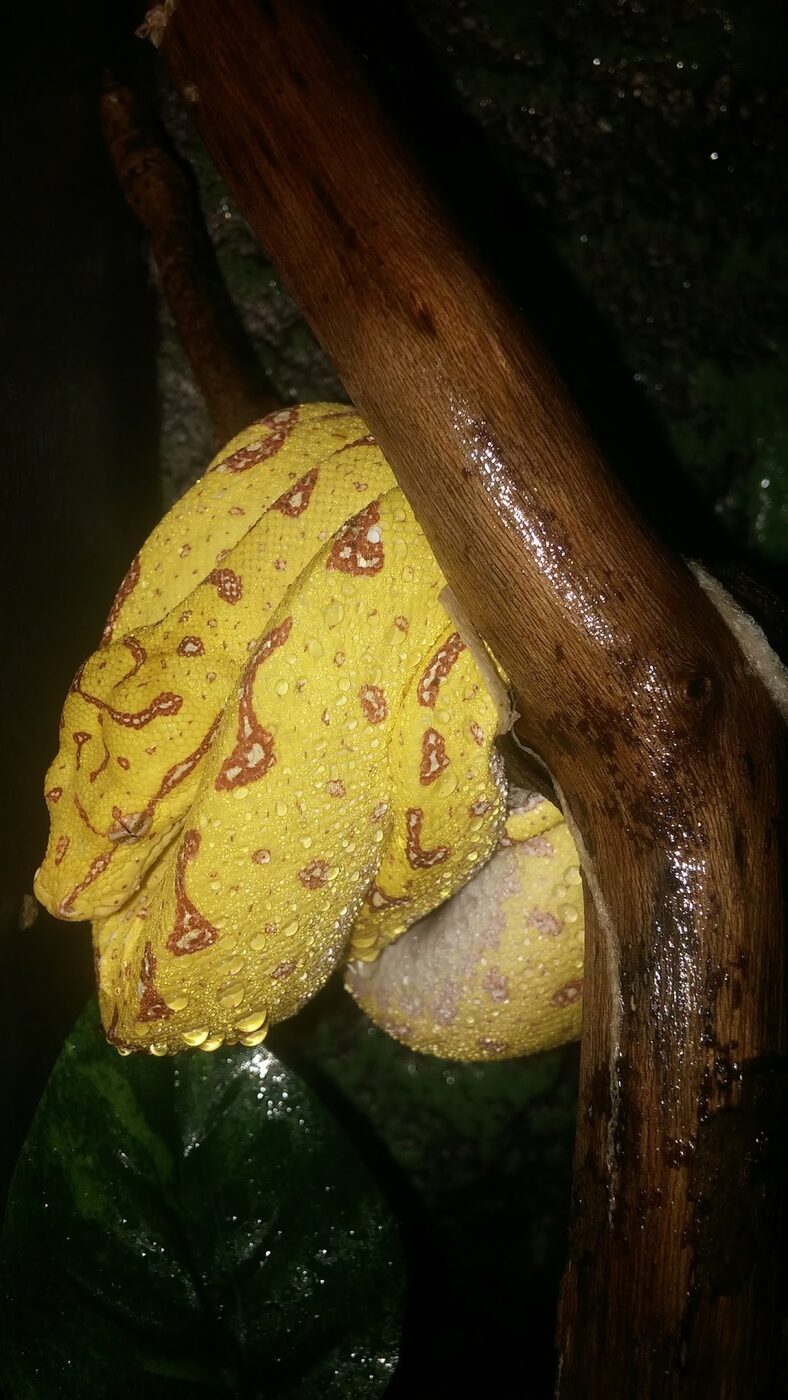
Green tree python
Morelia viridis
Pet trade