Home / Fishes / Cichlids / Cichlidae / William's mbuna
No federal permit to keepWilliam's mbuna
Maylandia greshakei
Fishes › Cichlids (Cichliformes) › Cichlidae (Cichlids)
William's mbuna (Maylandia greshakei), also known as ice blue zebra mbuna or ice blue zebra or the Pseudotropheus ice blue among the aquarium enthusiasts, is a species of cichlid fish endemic to Lake Malawi where it is only found at Makokola in the…
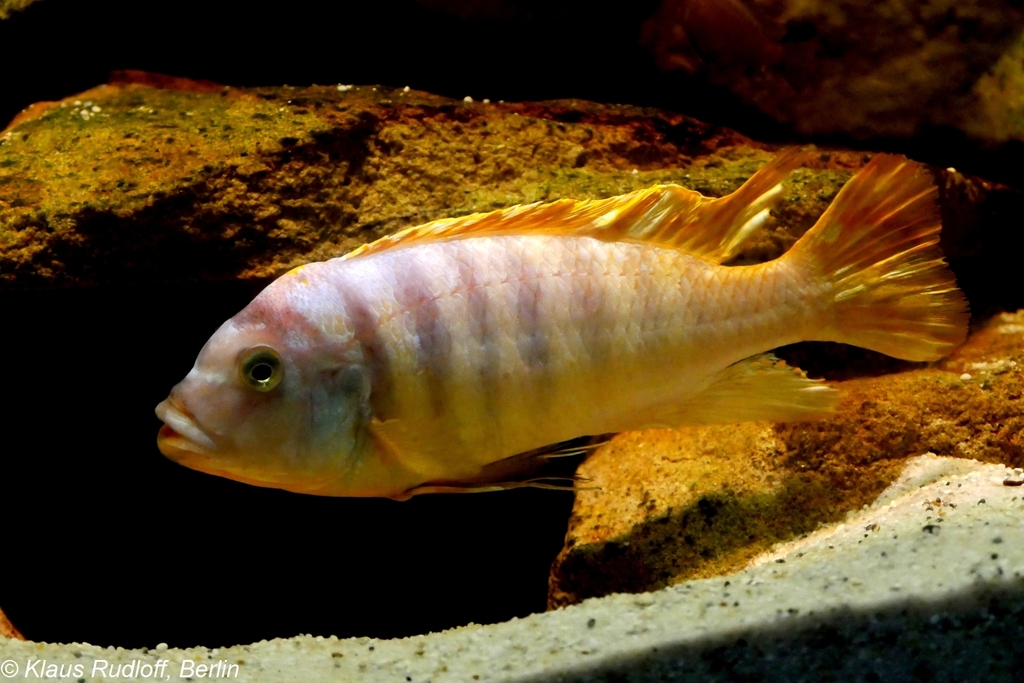
Care at a glance
Species-specific aquarium care
- Tank: At least 24 in long and 12 in front to back for one adult (adults commonly reach about 5.3 in / 13.4 cm).
- Water: Freshwater.
- Temperature: 75–79°F (range recorded for this species).
- Layout: Lives on or near the bottom: floor space and hiding places matter more than height.
- Diet: A plankton picker: offer small, frequent feedings of fine frozen and live foods (copepods, brine shrimp, daphnia). FishBase classes it as a herbivore.
Calculated from this species' own FishBase record: tank size from its typical adult length and swimming zone, water values from its recorded ranges. The group guide below fills in general care.
Care guide
Species care notes
- Tank: a base of at least 35 × 18 in (roughly 41 US gallons); space needed is rated “large tank”.
- Water: hard, alkaline water, 75–82 °F, pH 7.6–8.8, 10–25 dGH.
- Behaviour: temperament territorial.
- Difficulty: Moderate (Seriously Fish rating).
Short excerpts from the species profile:
- Setup: “Much of the aquarium should contain piles of rocks, arranged to form caves with small areas of open water between.”
- Diet: “It will accept most foods offered but vegetable matter in the form of spirulina flakes, blanched spinach etc.”
- Tankmates: “Aggressive and territorial.”
From the Seriously Fish profile for this species, which has the full habitat, maintenance, diet, behaviour and breeding write-up 167
Lake Malawi mbuna
Applies to most species in this group. Habitat: Rocky shores of Lake Malawi. Individual species can differ, so compare with the species numbers above and the linked sources.
Housing & setup
- Hard, alkaline water (pH 7.8–8.6) and lots of stacked rock with caves; a long tank (often 4 ft+).
- Keep in crowded groups of one male to several females per species, to spread aggression.
Climate & lighting
| Water | 76–82°F |
Diet
- Choose diet by mbuna species. The L. caeruleus profile offers vegetable foods alongside live or frozen foods; do not impose a universal ban on animal protein.
- Feed small amounts once or twice a day.
Social life
- Territorial; overstock mbuna-only tanks rather than mixing with peaceful fish.
Health watch
- Monitor water quality, feeding and aggression. Do not present dietary protein alone as a confirmed diagnosis or universal cause of abdominal swelling.
Understanding the animal
About this animal
About this animal
This species can reach a length of 13.4 centimetres (5.3 in) TL. It can also be found in the aquarium trade. The specific name honours the German ornamental fish importer Alfons Greshake.
Quoted from the Wikipedia article “William's mbuna” (CC BY-SA 4.0) 174
In the wild
In the wild
From this species’ own FishBase record (habitat, bottom type, water and breeding data), not its family. Good care copies these conditions.1
| Where it lives | Lives in freshwater. Stays near the bottom. Inhabits the rocky biotope of the reefs, where the rocks are permanently covered with a layer of sediment. Feeds mainly from the phytoplankton in the open water. Territorial males feed from the biocover on the rocks. |
| Water it lives in | Freshwater, 75–79 °F (24–26 °C), depth 15–35 m. |
| Climate | Tropical climate. |
| Wild diet | Selective plankton feeding. |
| Behavior to plan for | Breeding: external brooders. |
What this means for care
- Keep water within its wild range, 75–79 °F.
From the sources
From the sources
Quoted from the matching sections of reputable sources for this exact species. Specialist databases are used first; Wikipedia (community-edited, CC BY-SA 4.0) only fills gaps. Other sources are short credited quotes.
| Overview | William's mbuna (Maylandia greshakei), also known as ice blue zebra mbuna or ice blue zebra or the Pseudotropheus ice blue among the aquarium enthusiasts, is a species of cichlid fish endemic to Lake Malawi where it is only found at Makokola in the southeastern arm of the lake. This species can reach a length of 13.4 cm TL. It can also be found in the aquarium trade. The specific name honours the German ornamental fish importer Alfons Greshake. — Wikipedia (community-edited) |
| Where it lives | Home ranges Population dynamics Growth parameters Max. ages / sizes Length-weight rel. Length-frequencies Mass conversion Recruitment Abundance Life cycle Reproduction Maturity Maturity/Gills rel. — FishBase |
| Biology | Inhabits the rocky biotope of the reefs, where the rocks are permanently covered with a layer of sediment. Feeds mainly from the phytoplankton in the open water. Territorial males feed from the biocover on the rocks. — FishBase |
Data and studies
The numbers
The numbers
Each bar is what one source reports. Where several sources weigh in, the dashed gold band marks their average.
Adult length
Maximum recorded length. Measured as total length. Fish in home aquariums often stay smaller than wild records.
Water temperature
Range the species tolerates in nature; aim for the middle.
pH
Water hardness
Minimum tank footprint
Seriously Fish recommends a tank base of at least 35 × 18 in (about 41 US gallons).
Sources for this sheet
- FishBase (Froese & Pauly, eds.), version 24.07 Peer-reviewed researchThe global scientific database on fishes, maintained by a consortium of research institutions; every value is referenced.
- Seriously Fish species profiles Experienced keeper or breederLong-running aquarium reference written and peer-checked by experienced fishkeepers and ichthyologists; each profile covers habitat, tank size, water, diet, behaviour and breeding.
- Merck Veterinary Manual: Management of aquarium fish Zoo, university or veterinaryThe Merck Veterinary Manual: a standard veterinary reference written and reviewed by veterinary specialists.
- Merck Veterinary Manual: Types and features of aquatic systems Zoo, university or veterinaryThe Merck Veterinary Manual: a standard veterinary reference written and reviewed by veterinary specialists.
- Merck Veterinary Manual: Nutritional diseases of fish Zoo, university or veterinaryThe Merck Veterinary Manual: a standard veterinary reference written and reviewed by veterinary specialists.
- Seriously Fish — Labidochromis caeruleus Zoo, university or veterinaryAdded in the 2026 source-checked care-guide review.
- Wikipedia (species article) Community referenceFree encyclopedia; useful overviews with their own citations. Intro text is quoted under CC BY-SA 4.0.
- iNaturalist (captive observations) Community referenceCommunity observation platform run by the California Academy of Sciences and National Geographic; observations marked captive show animals living in homes, zoos and aquariums.
More cichlids

Agassiz's dwarf cichlid
Apistogramma agassizii
Aquarium hobby

Altolamprologus calvus
Altolamprologus calvus
Aquarium hobby

Altum Angel
Pterophyllum altum
Aquarium hobby
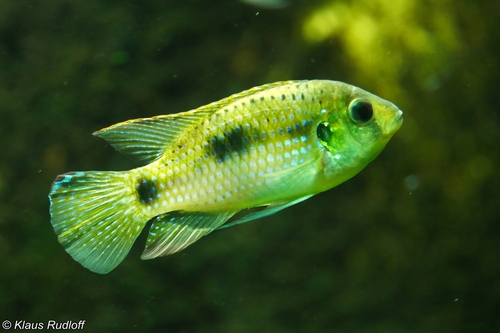
Anomalochromis thomasi
Anomalochromis thomasi
Aquarium hobby

Apistogramma eremnopyge
Apistogramma eremnopyge
Aquarium hobby
Argentine humphead
Gymnogeophagus balzanii
Aquarium hobby