Home / Fishes / Carp, barbs, minnows, loaches / Gastromyzontidae / Sewellia lineolata
No federal permit to keepSewellia lineolata
Sewellia lineolata
Fishes › Carp, barbs, minnows, loaches (Cypriniformes) › Gastromyzontidae (Hillstream loaches)
Sewellia lineolata, the reticulated hillstream loach, is a species of fish from the provinces of Thua Thien-Hue, Quang Nam, Quang Ngai and Binh Dinh in Vietnam.
Intro from Wikipedia (CC BY-SA 4.0)

Care at a glance
Species-specific values
Values researched for this exact species. Where they differ from the group guide below, follow these. Air, surface and water temperatures are listed separately, and each source is kept as published rather than averaged.
| Water temperature | 68–75 °F (20–24 °C) Seriously Fish aquarium recommendation; not a wild collection measurement. | 274 |
| Water pH | 6–7.5 pH Seriously Fish aquarium recommendation; not a wild collection measurement. | 274 |
| Water general hardness | 1–10 dGH Seriously Fish aquarium recommendation; not a wild collection measurement. | 274 |
| Maximum standard length | 65 mm SL Source maximum; not total length or a guaranteed adult size. | 274 |
| Minimum tank base | length: 75 cm; width: 30 cm | 274 |
| Social group size minimum | 6 fish | 274 |
| Habitat requirements | Mature, strongly oxygenated flowing water with biofilm-covered rocks; do not substitute a warm, still-water loach setup. | 274 |
| Diet | Biofilm and algae with associated microorganisms, supplemented with suitable foods; allow mature grazing surfaces. | 274 |
Species-specific aquarium care
- Tank: At least 24 in long and 12 in front to back for one adult (adults commonly reach about 2.2 in / 5.66 cm).
- Water: Freshwater.
- Layout: Lives on or near the bottom: floor space and hiding places matter more than height.
- Diet: FishBase classes it as a omnivore.
Calculated from this species' own FishBase record: tank size from its typical adult length and swimming zone, water values from its recorded ranges. The group guide below fills in general care.
Care guide
Species care notes
- Tank: a base of at least 30 × 12 in (roughly 18 US gallons); space needed is rated “modest tank”.
- Water: a fairly wide range, from slightly acidic to slightly alkaline, 68–75 °F, pH 6–7.5, 1–10 dGH.
- Behaviour: a shoaling fish best kept in a group of six or more; suited to a community tank.
- Difficulty: Moderate (Seriously Fish rating).
Short excerpts from the species profile:
- Setup: “The water must be clean, well-oxygenated, and ideally turn over 15-20 times per hour so we suggest the use of an over-sized filter as a minimum requirement plus additional powerheads, airstones, etc., as necessary.”
- Diet: “Much of the natural diet is composed of benthic algae plus associated micro-organisms although insect larvae are probably taken on an opportunistic basis.”
- Tankmates: “In terms of behaviour Sewellia spp.”
From the Seriously Fish profile for this species, which has the full habitat, maintenance, diet, behaviour and breeding write-up 167
Hillstream loaches
Applies to most species in this group. Habitat: Balitora inhabit fast-flowing Asian hillstream riffles with rocky beds and abundant dissolved oxygen. [fg177-bal]. Individual species can differ, so compare with the species numbers above and the linked sources.
Housing & setup
- Use a long river aquarium; the river-tank reference recommends at least 3 feet of length, rather than a species-tested minimum.
- Provide strong directional current and vigorous aeration throughout the occupied area.
- Supply smooth pebbles, boulders and numerous rocky refuges out of the main current.
- Use bright lighting and an established aquarium with grazing growth on rocks.
- For B. brucei, maintain pH 7.0–8.0 and medium hardness up to 12 dGH.
Climate & lighting
| Water | 68–75°F |
Diet
- Algae and established rock biofilm.
- Frozen bloodworms and mysis shrimp.
- Pelleted foods.
Social life
- Provide separate resting and feeding surfaces; hillstream keepers report competition for favored rocks, but a Balitora-specific group size is not established here.
Health watch
- Oxygen deprivation, especially during overheating or inadequate aeration.
- Poor condition from inadequate access to established grazing growth.
- Skin disease with patchy coloration and loss of appetite; obtain a diagnosis rather than treating by appearance alone.
Understanding the animal
In the wild
In the wild
From this species’ own FishBase record (habitat, bottom type, water and breeding data), not its family. Good care copies these conditions.1
| Where it lives | Lives in freshwater, in rivers and streams. Stays near the bottom. Rheophilous, inhabits rapids and riffles. Found in small streams with large and deep pools covered by submerged plants, provided that small riffles are present between these pools. Occurs also in high gradient streams consisting almost exclusively of waterfalls; in larger rivers, at the upper extremity of riffles where current velocity do not exceed 0.2 m/sec, as well as habitats with high water velocities exceeding 1 m/sec. Often associated with Annamia normani, Balitora sp., Schistura spp., Glyptothorax spp., Anguilla marmorata, and Rhinogobius spp. Stomach contents include benthic invertebrates and algae. Observed to be active during daytime searching in the periphyton on both horizontal and vertical surfaces of stones probably searching for aquatic invertebrates. |
| Water it lives in | Freshwater. |
| Climate | Tropical climate. |
Native climate (measured)
Native climate (measured)
| Warm-season highs | about 88°F (up to 92°F in the hottest sampled areas) |
| Cool-season lows | about 63°F (down to 61°F in the coldest sampled areas) |
| Average temperature | 73–79°F across sampled records |
| Relative humidity | 78–80% on average (driest month about 72%) |
| Rainfall | about 2045 mm a year |
Measured at 9 wild occurrence records sampled against WorldClim 2.1 climate data (1970–2000 averages). Air conditions in the range are ecological context, not enclosure settings: microhabitats such as burrows, leaf litter or basking rocks can be cooler, warmer or more humid.
From the sources
From the sources
Quoted from the matching sections of reputable sources for this exact species. Specialist databases are used first; Wikipedia (community-edited, CC BY-SA 4.0) only fills gaps. Other sources are short credited quotes.
| Overview | Sewellia lineolata, the reticulated hillstream loach, is a species of fish from the provinces of Thua Thien-Hue, Quang Nam, Quang Ngai and Binh Dinh in Vietnam. — Wikipedia (community-edited) |
| Where it lives | Home ranges Population dynamics Growth parameters Max. ages / sizes Length-weight rel. Length-frequencies Mass conversion Recruitment Abundance Life cycle Reproduction Maturity Maturity/Gills rel. — FishBase |
| Wild diet | Sewellia lineolata eat benthic algae and associated micro-organisms. Insect larvae may be eaten opportunistically. In the aquarium, fish flakes, mini pellets, and algae wafers can also be added to the diet, along with bloodworms, brine shrimp, daphnia, and tubifex. — Wikipedia (community-edited) |
| Biology | Rheophilous, inhabits rapids and riffles. Found in small streams with large and deep pools covered by submerged plants, provided that small riffles are present between these pools. — FishBase |
Data and studies
The numbers
The numbers
Each bar is what one source reports. Where several sources weigh in, the dashed gold band marks their average.
Adult length
Maximum recorded length. Measured as standard length (snout to the base of the tail, not counting the tail fin). Fish in home aquariums often stay smaller than wild records.
Water temperature
Range the species tolerates; aim for the middle.
pH
Water hardness
Minimum tank footprint
Seriously Fish recommends a tank base of at least 30 × 12 in (about 18 US gallons).
Sources for this sheet
- FishBase (Froese & Pauly, eds.), version 24.07 Peer-reviewed researchThe global scientific database on fishes, maintained by a consortium of research institutions; every value is referenced.
- Seriously Fish species profiles Experienced keeper or breederLong-running aquarium reference written and peer-checked by experienced fishkeepers and ichthyologists; each profile covers habitat, tank size, water, diet, behaviour and breeding.
- Loaches Online: Balitora brucei Experienced keeper or breederAdded in the 2026 source-checked care-guide review.
- Loaches Online: Hillstream Loaches — The Specialists at Life In The Fast Lane Experienced keeper or breederAdded in the 2026 source-checked care-guide review.
- Merck Veterinary Manual: Disorders and Diseases of Fish Zoo, university or veterinaryAdded in the 2026 source-checked care-guide review.
- Wikipedia (species article) Community referenceFree encyclopedia; useful overviews with their own citations. Intro text is quoted under CC BY-SA 4.0.
- iNaturalist (captive observations) Community referenceCommunity observation platform run by the California Academy of Sciences and National Geographic; observations marked captive show animals living in homes, zoos and aquariums.
More hillstream loaches

Chinese Butterfly Loach
Beaufortia kweichowensis
Aquarium hobby
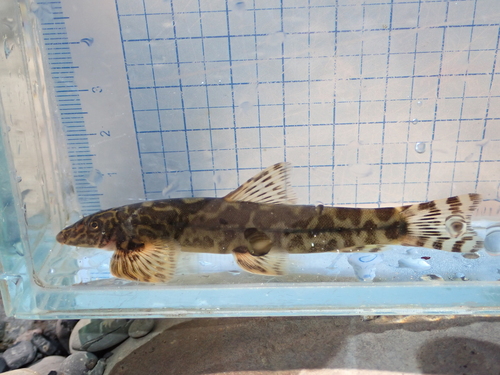
Formosania lacustris
Formosania lacustris
Aquarium hobby
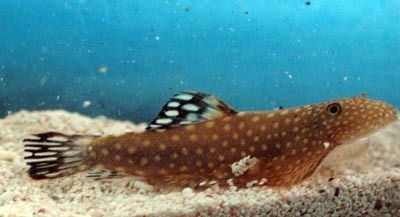
Gastromyzon ctenocephalus
Gastromyzon ctenocephalus
Aquarium hobby
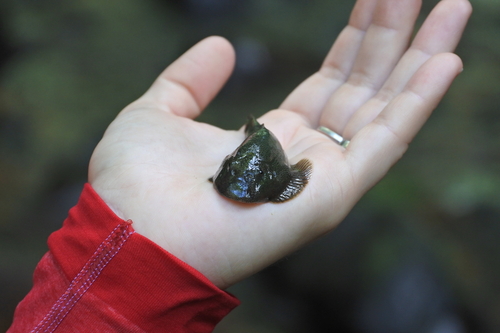
Gastromyzon lepidogaster
Gastromyzon lepidogaster
Aquarium hobby

Hypergastromyzon humilis
Hypergastromyzon humilis
Aquarium hobby
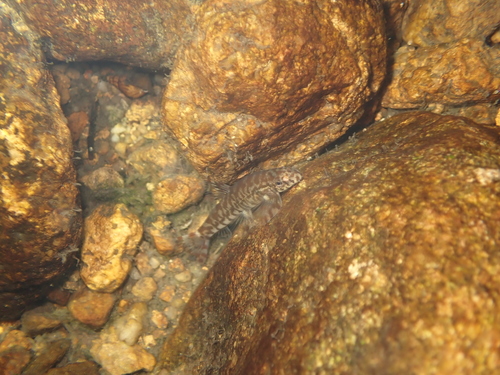
Liniparhomaloptera disparis
Liniparhomaloptera disparis
Aquarium hobby