Home / Birds / Parrots / Rosy-faced lovebird
No federal permit to keepRosy-faced lovebird
Agapornis roseicollis
Birds › Parrots (Psittaciformes) › Psittacidae (Parrots and parakeets)
The rosy-faced lovebird (Agapornis roseicollis), also known as the rosy-collared or peach-faced lovebird, is a species of lovebird native to the Namibian savanna woodlands.

Care at a glance
Species-specific values
Values researched for this exact species. Where they differ from the group guide below, follow these. Air, surface and water temperatures are listed separately, and each source is kept as published rather than averaged.
| Minimum cage dimensions | length: 20 in; width: 20 in; height: 30 in Table cage minimum; exercise space additional. | 316 |
| Maximum bar spacing | 0.5 in | 316 |
| Diet pellet fraction | 40–50 % MSD small-pet-bird recommendation; incompatible with higher VCA recommendation, retained separately. Source does not specify dry-weight versus offered-food basis. | 317 |
| Diet pellet fraction | 75–80 % VCA lovebird recommendation; retained separately from MSD. Source does not specify dry-weight versus offered-food basis. | 321 |
Care guide
Lovebirds
Applies to most species in this group. Habitat: African savanna and woodland. Individual species can differ, so compare with the species numbers above and the linked sources.
Housing & setup
- A roomy cage with toys to shred; nest boxes trigger breeding, so add one only if you plan to breed.
Diet
- Use a balanced lovebird diet with vegetables and limited fruit. Veterinary sources give different pellet/seed proportions; retain both recommendations and convert gradually.
Social life
- Pairs or single birds with lots of attention.
Health watch
- Can be aggressive toward other bird species; mixed-species aviaries are risky.
Understanding the animal
About this animal
About this animal
Loud and constant chirpers, these birds are very social animals and often congregate in small groups in the wild. They eat throughout the day and take frequent baths.
Quoted from the Wikipedia article “Rosy-faced lovebird” (CC BY-SA 4.0) 174
In the wild
In the wild
Researched for this exact species, not its family. Good care copies these conditions.1
| Where it lives | Native to southwestern Africa from northwestern South Africa through Namibia into southwestern Angola. Uses dry woodland and desert-edge country where trees occur near permanent water. |
| Ground it lives on | Dry open soil beneath sparse trees for fallen-seed feeding; also feeds and roosts above ground |
| Climate | Hot, arid conditions, with cooler periods when birds huddle to conserve heat. Numeric native-range air temperature and relative-humidity ranges were not established in the sources used. |
| Active | Diurnal, sleeping at night in sheltered nests. |
| Social life | Strong pair bonds within flocks commonly numbering 5–20; larger gatherings occur at ripe seed supplies. Females can dominate pair interactions. |
| Wild diet | Seeds gathered from plants or ground, including Acacia and Albizia; flowers and their reproductive parts. |
| Behavior to plan for | Uses sociable-weaver and sparrow-weaver nests for shelter. Females carry cut nesting strips tucked into rump feathers; birds climb with feet and beak. |
What this means for care
- Prioritize compatible social companionship and sheltered roosting.
- Provide plant and ground-level seed-foraging opportunities.
- Keep drinking water continuously available despite the dry habitat.
- Offer safe shreddable plant material and climbing branches.
Native climate (measured)
Native climate (measured)
| Warm-season highs | about 88°F (up to 106°F in the hottest sampled areas) |
| Cool-season lows | about 41°F (down to 37°F in the coldest sampled areas) |
| Average temperature | 63–75°F across sampled records |
| Relative humidity | 33–69% on average (driest month about 26%) |
| Rainfall | about 353 mm a year |
| Winters | Cool to cold winters (lows around 41°F) in much of its native range. Seasonal slowdown may be relevant, but species-specific biology determines whether brumation or hibernation occurs. |
Measured at 107 wild occurrence records sampled against WorldClim 2.1 climate data (1970–2000 averages). Air conditions in the range are ecological context, not enclosure settings: microhabitats such as burrows, leaf litter or basking rocks can be cooler, warmer or more humid.
From the sources
From the sources
Quoted from the matching sections of reputable sources for this exact species. Specialist databases are used first; Wikipedia (community-edited, CC BY-SA 4.0) only fills gaps. Other sources are short credited quotes.
| Overview | The rosy-faced lovebird (Agapornis roseicollis), also known as the rosy-collared or peach-faced lovebird, is a species of lovebird native to the Namibian savanna woodlands. Loud and constant chirpers, these birds are very social animals and often congregate in small groups in the wild. They eat throughout the day and take frequent baths. Coloration can vary widely among populations. — Wikipedia (community-edited) |
| Where it lives | Agapornis roseicollis lives in dry regions near permanent standing water. — Animal Diversity Web |
| Wild diet | The diet consists mainly of seeds and berries. When food is plentiful, the birds may gather in flocks containing hundreds of individuals. They can sometimes be pests in agricultural areas, feeding on crops such as millet. — Wikipedia (community-edited) |
| Behavior | Agapornis roseicollis is a very social bird. — Animal Diversity Web |
| Reproduction | In this species pair formation is very rapid and can occur at as early an age as two months. — Animal Diversity Web |
| Lifespan | The typical lifespan in captivity of A. roseicollis is 15 to 25 years. — Animal Diversity Web |
| Appearance and size | Agapornis roseicollis is widely regarded as one of the most beautiful lovebird species. — Animal Diversity Web |
| History and naming | It was described by the French ornithologist Louis Pierre Vieillot in 1818. It was originally named Psittacus roseicollis but later moved to the genus Agapornis with the other lovebirds. — Wikipedia (community-edited) |
| Conservation | Populations have been reduced in some areas by trapping for the pet trade. However, numbers may have increased in other areas due to human creation of new water sources and the building of artificial structures which provide new nesting sites. Because of this, the species is classed as Least Concern by the International Union for Conservation of Nature (IUCN). — Wikipedia (community-edited) |
Data and studies
Researched care notes
Researched care notes
Findings checked against veterinary, zoo, welfare, keeper and peer-reviewed sources. Air, basking-surface and water temperatures are kept separate, and where sources disagree both are shown. “Study” notes report what a paper measured, not a universal rule.
Budgerigars, Cockatiels, And Lovebirds (nutrition module, not completed species sheets)
Researched for this genus; applies to its species unless a species note says otherwise.
- MSD discusses a mixed formulated-food/seed strategy for these small parrots, differing from its large-parrot percentages.1
- Offered food and selected food may differ. Measure actual consumption during diet changes.1
Lovebirds
Researched for this genus; applies to its species unless a species note says otherwise.
- Lovebirds can be territorial and may pursue larger animals; social boldness does not establish safe contact with other birds, dogs or cats.2
Budgerigar, Cockatiel And Lovebirds (Shared reproductive additions)
Researched for this genus; applies to its species unless a species note says otherwise.
- Persistent laying can deplete calcium and lead to egg binding or other reproductive disease; it requires assessment beyond simply replacing a cuttlebone.3
- For birds laying excessively, veterinary management can include reducing reproductive cues such as nest boxes, extended daylight and sexualized owner interactions.3
- A weak or nonperching hen with straining or breathing difficulty may have egg binding and needs urgent veterinary attention.3
The numbers
The numbers
Each bar is what one source reports. Where several sources weigh in, the dashed gold band marks their average.
Typical adult weight
Average adult body mass in each database (FishBase gives the maximum recorded weight).
Veterinary & husbandry research
Veterinary & husbandry research
- Toxoplasmosis in a Pet Peach-Faced Lovebird (Agapornis roseicollis) Cooper MK et al., The Korean journal of parasitology 2015
- Atypical Mycosis in Psittacine Birds: A Retrospective Study Galosi L et al., Frontiers in veterinary science 2022
- Plasmodium matutinum Causing Avian Malaria in Lovebirds (Agapornis roseicollis) Hosted in an Italian Zoo Cocumelli C et al., Microorganisms 2021
- Bilateral osteoma cutis in a Peach-Faced Lovebird (Agapornis roseicollis) Pinzón-Osorio CA et al., The Journal of veterinary medical science 2020
Peer-reviewed papers that mention this species alongside captivity, zoos, veterinary care or aquaculture. Some cover several species or mention it only in passing, so check the abstract. See all 13 on PubMed → 170
Sources for this sheet
- AnAge: The Animal Ageing and Longevity Database (Human Ageing Genomic Resources) Peer-reviewed researchCurated, referenced longevity and life-history records for thousands of species; maximum lifespans are often from zoo animals.
- Myhrvold et al. (2015). An amniote life-history database. Ecology 96: 3109 Peer-reviewed researchPeer-reviewed compilation of life-history data for over 21,000 birds, mammals and reptiles.
- 9 CFR 2.1: Animal Welfare Act licensing (USDA) Zoo, university or veterinaryWho needs a USDA license to breed, sell or exhibit animals.
- Merck Veterinary Manual: Management of pet birds Zoo, university or veterinaryThe Merck Veterinary Manual: a standard veterinary reference written and reviewed by veterinary specialists.
- Merck Veterinary Manual: Nutritional diseases of pet birds Zoo, university or veterinaryThe Merck Veterinary Manual: a standard veterinary reference written and reviewed by veterinary specialists.
- MSD Veterinary Manual — Management of Pet Birds Zoo, university or veterinaryAdded in the 2026 source-checked care-guide review.
- VCA Animal Hospitals — Feeding Pet Lovebirds Zoo, university or veterinaryAdded in the 2026 source-checked care-guide review.
- GBIF Backbone Taxonomy (Global Biodiversity Information Facility) Peer-reviewed researchInternational scientific taxonomy used here for classification.
- Species+ (UNEP-WCMC and the CITES Secretariat) Zoo, university or veterinaryThe official database of species listed under CITES.
- Wikipedia (species article) Community referenceFree encyclopedia; useful overviews with their own citations. Intro text is quoted under CC BY-SA 4.0.
- PubMed (U.S. National Library of Medicine) Peer-reviewed researchIndex of peer-reviewed veterinary, zoo and husbandry research.
- iNaturalist (captive observations) Community referenceCommunity observation platform run by the California Academy of Sciences and National Geographic; observations marked captive show animals living in homes, zoos and aquariums.
More parrots and parakeets
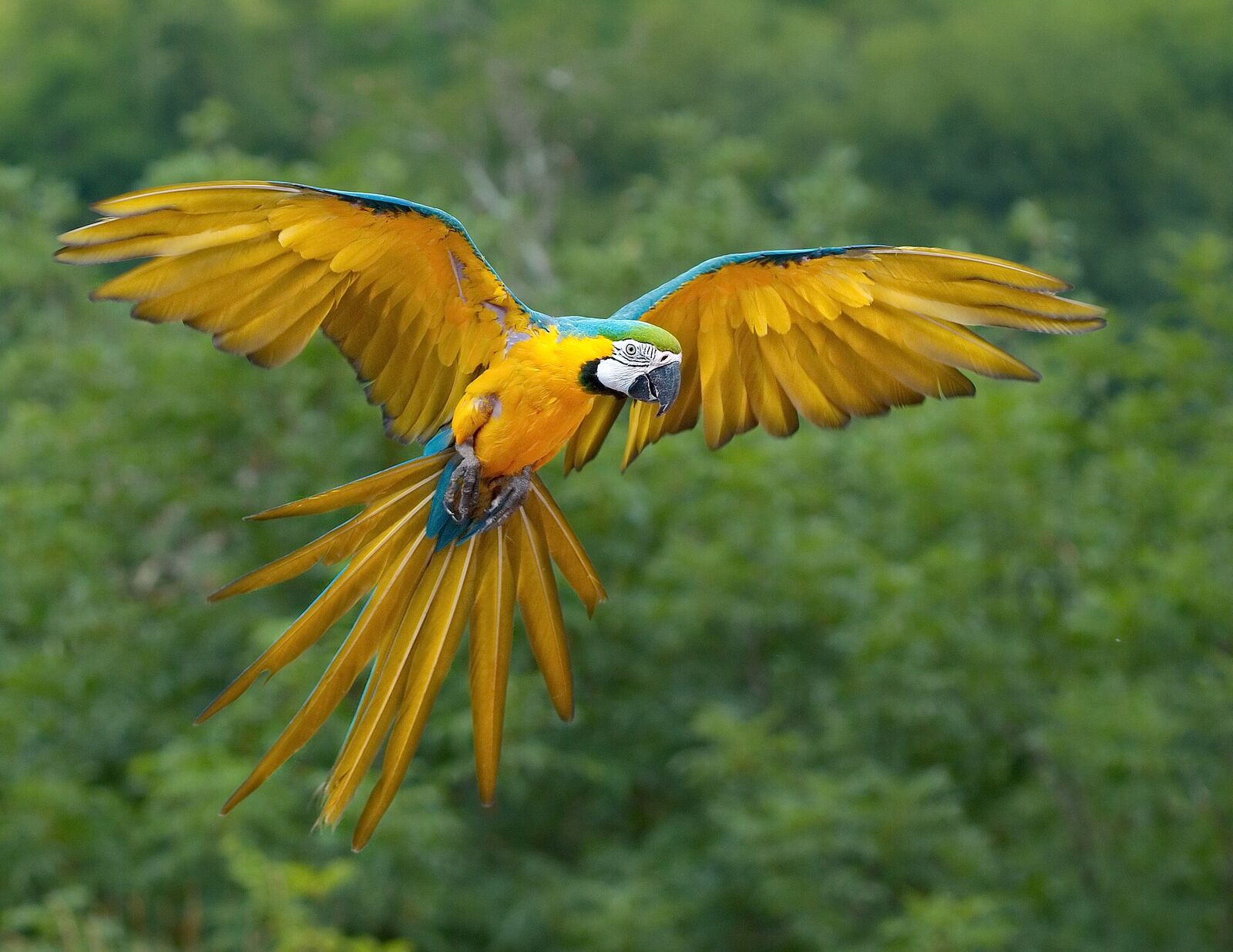 In-depth
Blue-and-yellow macaw
Ara ararauna
A loud, brilliant, lifelong commitment.
Pet trade
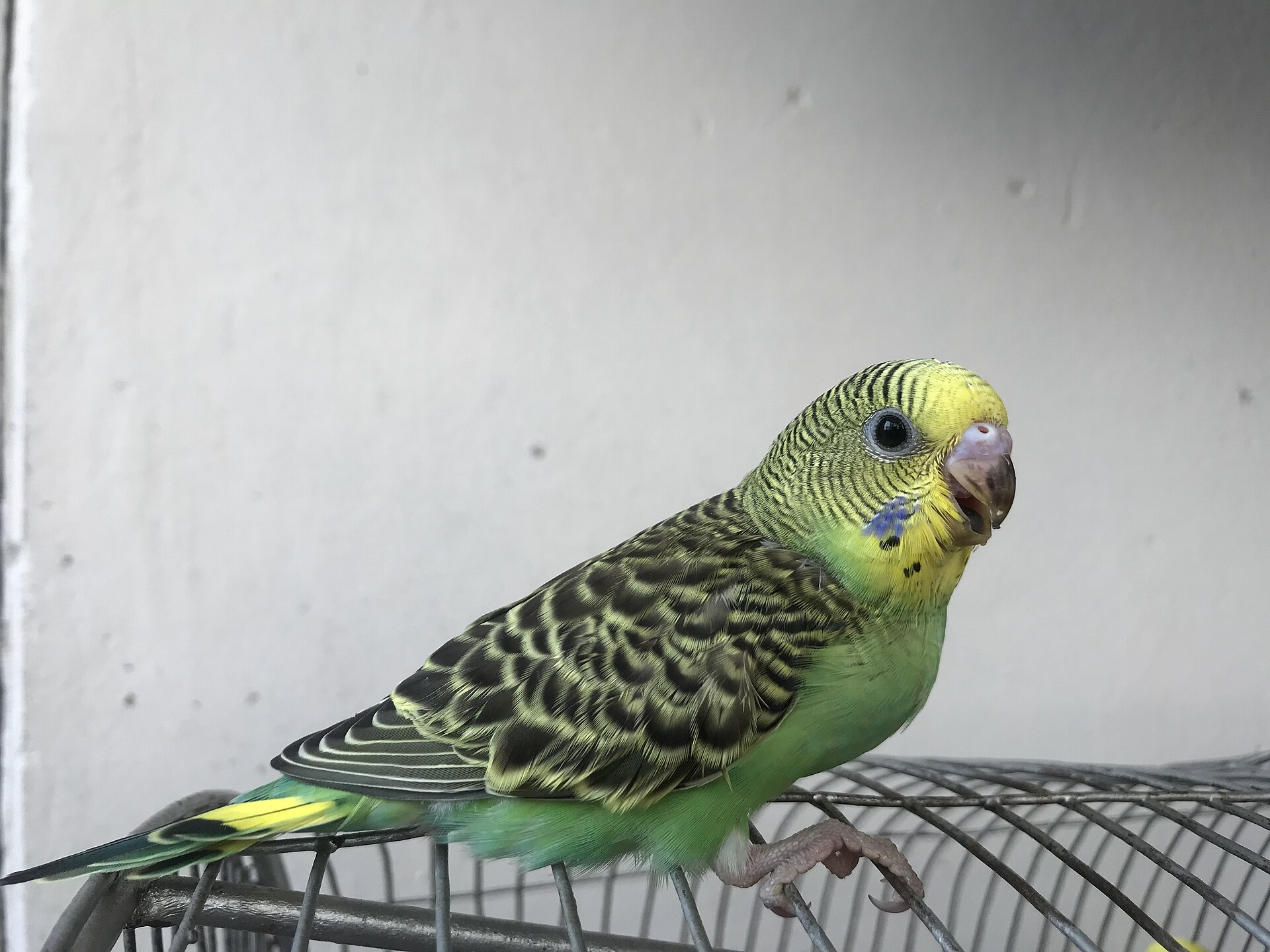 In-depth
Budgerigar
Melopsittacus undulatus
A small parrot with a big vocabulary.
Pet trade
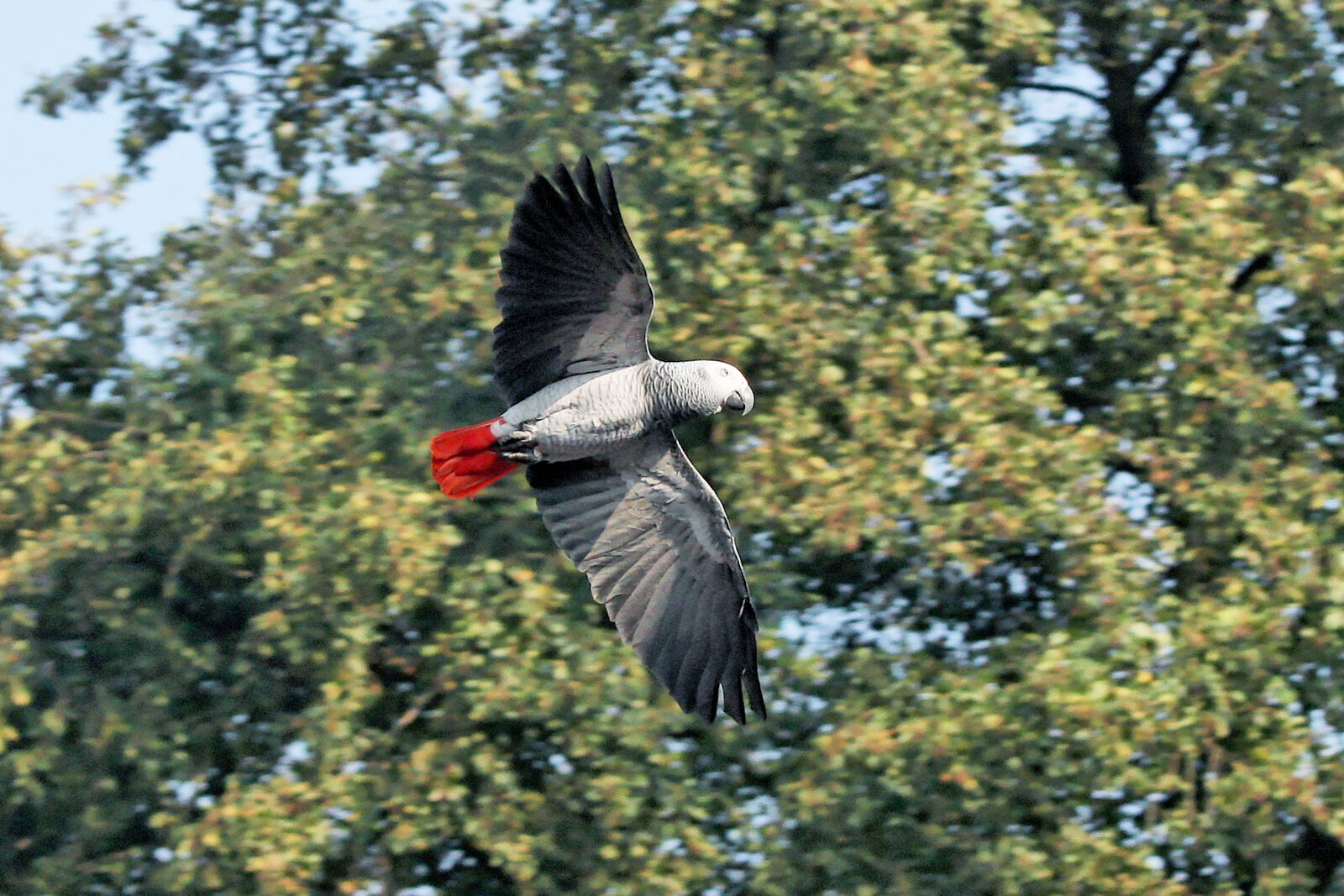 In-depth
Gray parrot (Congo African grey)
Psittacus erithacus
One of the most intelligent birds on Earth.
Pet trade

Hyacinth macaw
Anodorhynchus hyacinthinus
Pet trade

Kea
Nestor notabilis
Pet trade