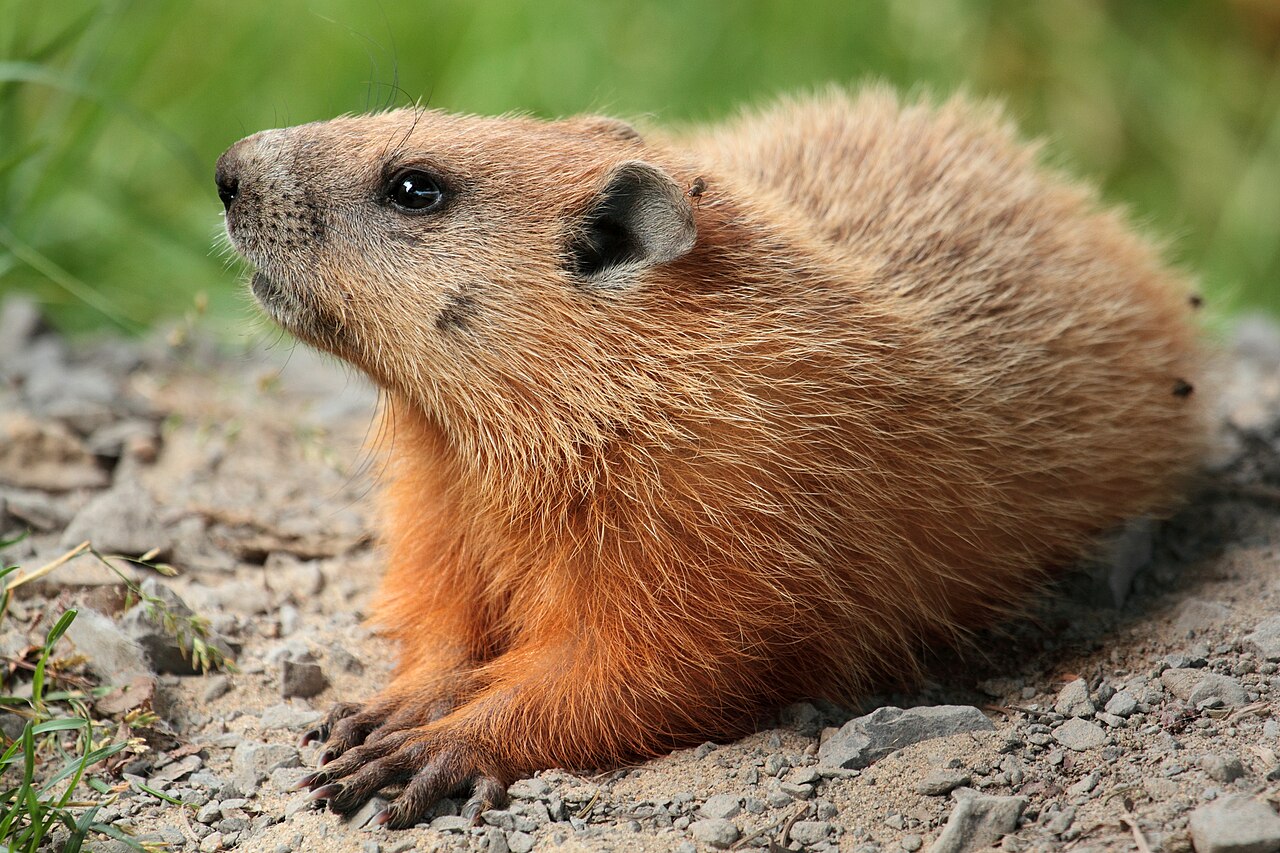
Home / Mammals / Rodents / Black-tailed prairie dog
No federal permit to keep In-depth sheetBlack-tailed prairie dog
Cynomys ludovicianus
Mammals › Rodents (Rodentia) › Sciuridae (Squirrels and ground squirrels)
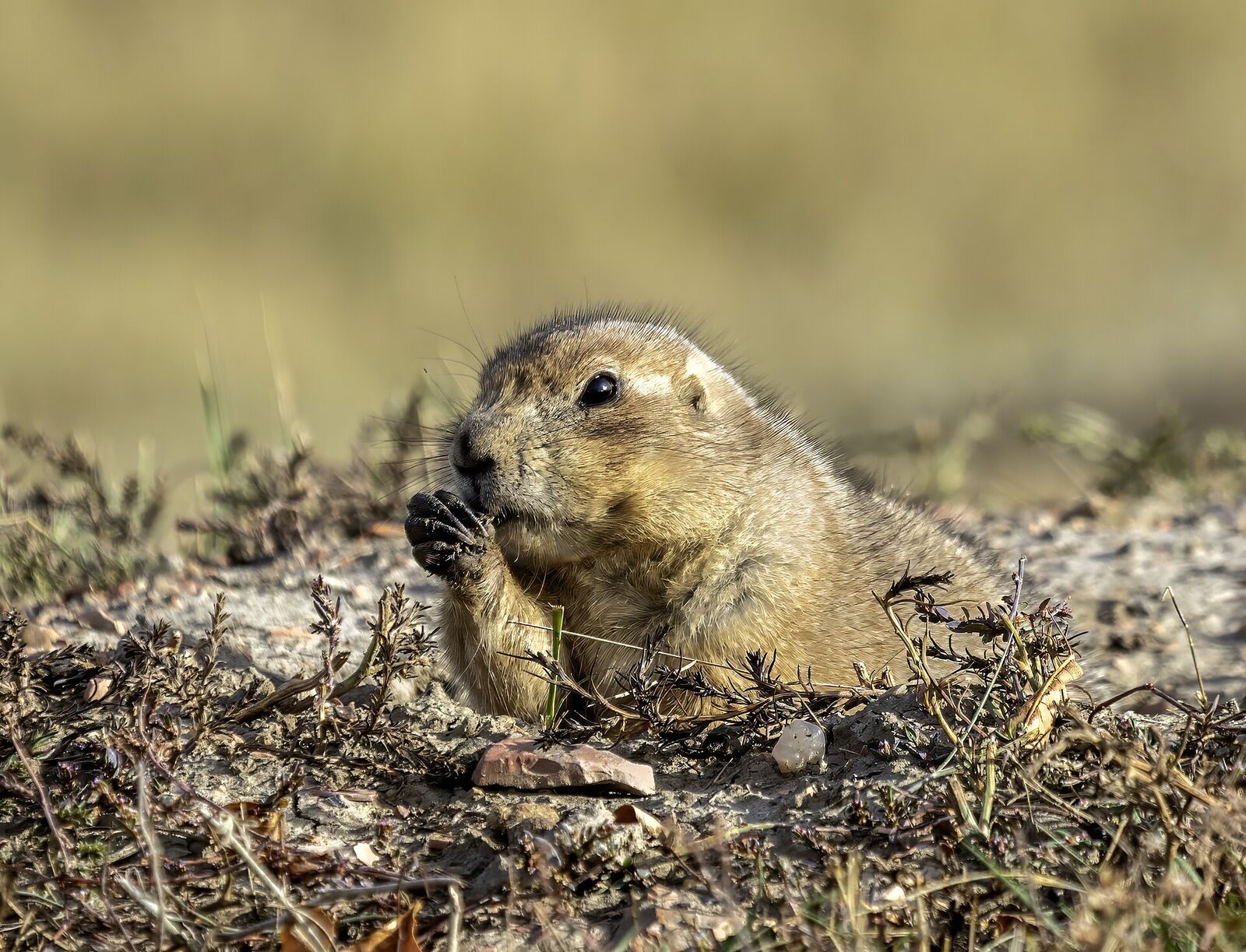
Black-tailed prairie dogs live in family groups called coteries and dig huge burrow systems. They're active year-round and don't hibernate.
Care at a glance
Species-specific values
Values researched for this exact species. Where they differ from the group guide below, follow these. Air, surface and water temperatures are listed separately, and each source is kept as published rather than averaged.
| Diet | Smithsonian example: herbivore pellets, hay and grass with leafy and root vegetables. Zoo menu example, not a complete ration formula. | 314 |
| Documented captive lifespan | greater than: 8 years Reported possible longevity, not an average or upper limit. | 314 |
Care guide
Diet
- Over 98% vegetation: grasses, weeds, roots; they get most moisture from food.
Sources 72
Health
- Fleas can carry plague; buy from reputable captive sources and work with a vet.
Sources 72
Show the group care guide for prairie dogs
Prairie dogs
Applies to most species in this group. Habitat: Shortgrass prairie colonies. Individual species can differ, so compare with the species numbers above and the linked sources.
Housing & setup
- Provide room for burrowing and manage compatible conspecific social groups. Black-tailed prairie dogs naturally live in colonies; human attention should not be presented as an equivalent social arrangement.
Diet
- Grass hay, prairie dog pellets and limited vegetables.
Social life
- Highly social colony animals.
Health watch
- Obesity, dental abscesses and respiratory disease.
- Prairie dogs can carry plague.
Understanding the animal
In the wild
In the wild
Researched for this exact species, not its family. Good care copies these conditions.12
| Where it lives | North American Great Plains short-grass country, in open, relatively level grasslands and dry flats. Colonies occupy extensive burrow systems and maintain short vegetation nearby. |
| Ground it lives on | dry diggable prairie soil beneath short grass |
| Climate | Temperate and arid. The sources do not give normal humidity values or a seasonal temperature range. Above-ground activity decreases during rain or snow and when temperatures exceed 100 F. In winter the animals continue emerging and foraging but may enter nighttime torpor. |
| Active | Diurnal and active year-round; unlike several other prairie dogs, does not routinely hibernate. |
| Social life | Colonial towns divided into territorial coteries of related females, young and one or a few males. |
| Wild diet | Mostly grass and forb leaves, stems and roots; also seasonal cactus and occasional insects. |
| Behavior to plan for | Maintains burrows and trims vegetation to improve visibility. Alarm calls prompt rapid retreat; breeding females fiercely defend nursery burrows. |
What this means for care
- Provide deep digging areas and underground escape barriers.
- Manage compatible coteries with ample refuge entrances and separation options.
- Offer fibrous grass-and-forb feeding rather than seed-heavy rodent food.
- Do not prescribe hibernation from a generic prairie-dog guide.
Native climate (measured)
Native climate (measured)
| Warm-season highs | about 89°F (up to 94°F in the hottest sampled areas) |
| Cool-season lows | about 16°F (down to 13°F in the coldest sampled areas) |
| Average temperature | 48–62°F across sampled records |
| Relative humidity | 46–51% on average (driest month about 42%) |
| Rainfall | about 433 mm a year |
| Winters | Cool to cold winters (lows around 16°F) in much of its native range. Seasonal slowdown may be relevant, but species-specific biology determines whether brumation or hibernation occurs. |
Measured at 115 wild occurrence records sampled against WorldClim 2.1 climate data (1970–2000 averages). Air conditions in the range are ecological context, not enclosure settings: microhabitats such as burrows, leaf litter or basking rocks can be cooler, warmer or more humid.
Profile
Profile
Researched for this exact species. Sources are listed under In the wild above.
History
Before extensive habitat destruction and eradication efforts, black-tailed prairie dogs were much more abundant across central North America. The species was one of two prairie dogs described in the journals and diaries of the Lewis and Clark Expedition.
Keeper tips
- Provide opportunities for digging that accommodate the species' long digging claws and burrow-associated behavior.
- Avoid maintaining conditions that resemble persistently moist habitat, because the species is reported as absent from moist areas.
- Plan activity and observation around daytime hours because the species is diurnal.
- Expect above-ground activity to decrease during rain, snow, or extreme heat.
- Be aware that winter torpor can occur even though black-tailed prairie dogs do not fully hibernate.
Behaviors reported
- Remains active enough to appear above ground during midwinter.
- Uses nighttime torpor during winter to conserve energy.
- Reduces above-ground activity during rain and snow.
- Reduces above-ground activity when temperatures exceed 100 F.
Unique adaptations
- Long black claws are used for digging.
- Nighttime winter torpor conserves energy without requiring full seasonal hibernation.
- The species undergoes two molts per year with somewhat different summer and winter pelage.
- Its body is compact and its ears are small and positioned close to the head.
Remarkable facts
- Adults are generally about 14 to 17 inches long, with a 3- to 4-inch tail.
- The black tip of the tail gives the species its common name.
- Males are typically larger and heavier than females.
- Both sexes reach their highest reported weights in autumn and their lowest in winter.
- The species historically ranged from southern Canada to northern Mexico.
- Occupied acreage and populations are far below historic levels.
Stories
- A prairie dog town in Texas was reported to cover about 25,000 square miles and contain 400,000,000 individuals.
- Black-tailed prairie dogs were among the prairie dogs documented by the Lewis and Clark Expedition.
From the sources
From the sources
Quoted from the matching sections of reputable sources for this exact species. Specialist databases are used first; Wikipedia (community-edited, CC BY-SA 4.0) only fills gaps. Other sources are short credited quotes.
| Overview | The black-tailed prairie dog (Cynomys ludovicianus) is a rodent of the family Sciuridae (the squirrels) found in the Great Plains of North America from about the United States–Canada border to the United States–Mexico border. Unlike some other prairie dogs, these animals do not truly hibernate. The black-tailed prairie dog can be seen above ground in midwinter. A black-tailed prairie dog town in Texas was reported to cover 64000 km2 and included 400,000,000 individuals. — Wikipedia (community-edited) |
| Where it lives | Cynomys ludovicianus occupies a relatively restricted range of open, level, arid, short-grass plains. — Animal Diversity Web |
| Reproduction | Mating is closely related to social structure in these animals. — Animal Diversity Web |
| Appearance and size | Cynomys ludovicianus varies in length between 352 and 415 mm. — Animal Diversity Web |
Data and studies
The numbers
The numbers
Each bar is what one source reports. Where several sources weigh in, the dashed gold band marks their average.
Lifespan in care
Maximum recorded lifespan
Longest recorded lifespan reported by each database; typical lifespans are usually shorter. The AnAge record comes from an animal in human care.
Typical adult weight
Average adult body mass in each database (FishBase gives the maximum recorded weight).
Veterinary & husbandry research
Veterinary & husbandry research
- CARDIAC ASSESSMENT OF ZOO-KEPT, BLACK-TAILED PRAIRIE DOGS (CYNOMYS LUDOVICIANUS) ANESTHETIZED WITH ISOFLURANE Garcia EB et al., Journal of zoo and wildlife medicine: official publication of the American Association of Zoo Veterinarians 2016
- Physiologic reference ranges for captive black-tailed prairie dogs (Cynomys ludovicianus) Keckler MS et al., Journal of the American Association for Laboratory Animal Science: JAALAS 2010
- COMPUTED TOMOGRAPHIC FEATURES OF INCISOR PSEUDO-ODONTOMAS IN PRAIRIE DOGS (CYNOMYS LUDOVICIANUS) Pelizzone I et al., Veterinary radiology & ultrasound: the official journal of the American College of Veterinary Radiology and the International Veterinary Radiology Association 2017
Peer-reviewed papers that mention this species alongside captivity, zoos, veterinary care or aquaculture. Some cover several species or mention it only in passing, so check the abstract. See all 31 on PubMed → 170
Sources for this sheet
- Animal Diversity Web (University of Michigan): Cynomys ludovicianus Zoo, university or veterinaryUniversity-hosted species account, mostly wild biology.
- AnAge: The Animal Ageing and Longevity Database (Human Ageing Genomic Resources) Peer-reviewed researchCurated, referenced longevity and life-history records for thousands of species; maximum lifespans are often from zoo animals.
- Myhrvold et al. (2015). An amniote life-history database. Ecology 96: 3109 Peer-reviewed researchPeer-reviewed compilation of life-history data for over 21,000 birds, mammals and reptiles.
- 9 CFR 2.1: Animal Welfare Act licensing (USDA) Zoo, university or veterinaryWho needs a USDA license to breed, sell or exhibit animals.
- Smithsonian National Zoo — Black-tailed prairie dog Zoo, university or veterinaryAdded in the 2026 source-checked care-guide review.
- GBIF Backbone Taxonomy (Global Biodiversity Information Facility) Peer-reviewed researchInternational scientific taxonomy used here for classification.
- Wikipedia (species article) Community referenceFree encyclopedia; useful overviews with their own citations. Intro text is quoted under CC BY-SA 4.0.
- PubMed (U.S. National Library of Medicine) Peer-reviewed researchIndex of peer-reviewed veterinary, zoo and husbandry research.
- iNaturalist (captive observations) Community referenceCommunity observation platform run by the California Academy of Sciences and National Geographic; observations marked captive show animals living in homes, zoos and aquariums.