Home / Fishes / Catfish / Zebra oto
No federal permit to keepZebra oto
Otocinclus cocama
Fishes › Catfish (Siluriformes) › Loricariidae (Plecos)
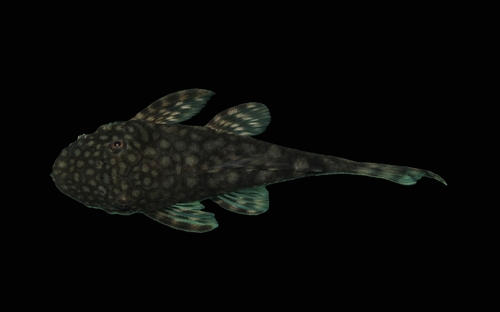
The zebra oto or tiger oto (Otocinclus cocama) is a species of freshwater ray-finned fish belonging to the family Loricariidae, the suckermouth armored catfishes, and the subfamily Hypoptopomatinae, the cascudinhos.

Care at a glance
Species-specific aquarium care
- Tank: At least 24 in long and 12 in front to back for one adult (adults commonly reach about 1.7 in / 4.38 cm).
- Water: Freshwater.
- Layout: Lives on or near the bottom: floor space and hiding places matter more than height.
Calculated from this species' own FishBase record: tank size from its typical adult length and swimming zone, water values from its recorded ranges. The group guide below fills in general care.
Care guide
Species care notes
- Tank: a base of at least 18 × 12 in (roughly 11 US gallons); space needed is rated “modest tank”.
- Water: a fairly wide range, from slightly acidic to slightly alkaline, 70–77 °F, pH 6–7.5, 2–10 dGH.
- Behaviour: temperament peaceful; a shoaling fish best kept in a group of six or more; not a community fish.
- Difficulty: Moderate (Seriously Fish rating).
Short excerpts from the species profile:
- Setup: “Requires a mature, densely-planted set-up, ideally with floating vegetation and roots, twigs or branches to add structural complexity.”
- Diet: “Vegetarian, it feeds on algae and aufwuch in its habitat.”
- Tankmates: “Peaceful with other species but does not make an ideal community fish due to its small size and rather timid nature.”
- Breeding: “Has been achieved, but unforunately very few details are available.”
From the Seriously Fish profile for this species, which has the full habitat, maintenance, diet, behaviour and breeding write-up 167
Plecos (suckermouth catfish)
Applies to most species in this group. Habitat: South American rivers. Individual species can differ, so compare with the species numbers above and the linked sources.
Housing & setup
- Driftwood (some species rasp it for fiber), caves and good flow.
- Common plecos reach 18–24 in; many smaller species stay under 6 in.
Diet
- Algae wafers and vegetables for herbivores; meaty foods for carnivorous species.
Health watch
- Starvation if they're expected to live on algae alone.
Understanding the animal
About this animal
About this animal
This catfish is found in South America, where it is restricted to Peru.
Quoted from the Wikipedia article “Zebra oto” (CC BY-SA 4.0) 174
In the wild
In the wild
From this species’ own FishBase record (habitat, bottom type, water and breeding data), not its family. Good care copies these conditions.1
| Where it lives | Lives in freshwater, in rivers and streams. Stays near the bottom. Found in a medium size creek with clear water and lost of marginal vegetation. |
| Water it lives in | Freshwater. |
| Climate | Tropical climate. |
Native climate (measured)
Native climate (measured)
| Warm-season highs | about 89°F (up to 91°F in the hottest sampled areas) |
| Cool-season lows | about 69°F (down to 68°F in the coldest sampled areas) |
| Average temperature | 79–80°F across sampled records |
| Relative humidity | 83–85% on average (driest month about 82%) |
| Rainfall | about 2631 mm a year, spread fairly evenly |
Measured at 5 wild occurrence records sampled against WorldClim 2.1 climate data (1970–2000 averages). Air conditions in the range are ecological context, not enclosure settings: microhabitats such as burrows, leaf litter or basking rocks can be cooler, warmer or more humid.
From the sources
From the sources
Quoted from the matching sections of reputable sources for this exact species. Specialist databases are used first; Wikipedia (community-edited, CC BY-SA 4.0) only fills gaps. Other sources are short credited quotes.
| Overview | The zebra oto or tiger oto (Otocinclus cocama) is a species of freshwater ray-finned fish belonging to the family Loricariidae, the suckermouth armored catfishes, and the subfamily Hypoptopomatinae, the cascudinhos. This catfish is found in South America, where it is restricted to Peru. — Wikipedia (community-edited) |
| Where it lives | Home ranges Population dynamics Growth parameters Max. ages / sizes Length-weight rel. Length-frequencies Mass conversion Recruitment Abundance Life cycle Reproduction Maturity Maturity/Gills rel. — FishBase |
| Appearance and size | The zebra oto has a general body-shape like other Otocinclus species. They are small, have a suckermouth, and have armor on their bodies. The zebra oto can be distinguished from all other members of this genus by its vertical stripe-like blotches and its complete lateral line. — Wikipedia (community-edited) |
| Biology | Facultative air-breathing in the genus; Found in a medium size creek with clear water and lost of marginal vegetation. — FishBase |
| History and naming | The zebra oto was described in 2004 from a tributary of the Río Ucayali in Peru. Its closest relatives appear to be O. huaorani, O. bororo, O. mariae, and O. mura, as well as the more recently described species O. batmani. — Wikipedia (community-edited) |
Data and studies
The numbers
The numbers
Each bar is what one source reports. Where several sources weigh in, the dashed gold band marks their average.
Adult length
Maximum recorded length. Measured as standard length (snout to the base of the tail, not counting the tail fin). Fish in home aquariums often stay smaller than wild records.
Water temperature
Range the species tolerates; aim for the middle.
pH
Water hardness
Minimum tank footprint
Seriously Fish recommends a tank base of at least 18 × 12 in (about 11 US gallons).
Sources for this sheet
- FishBase (Froese & Pauly, eds.), version 24.07 Peer-reviewed researchThe global scientific database on fishes, maintained by a consortium of research institutions; every value is referenced.
- Seriously Fish species profiles Experienced keeper or breederLong-running aquarium reference written and peer-checked by experienced fishkeepers and ichthyologists; each profile covers habitat, tank size, water, diet, behaviour and breeding.
- Merck Veterinary Manual: Management of aquarium fish Zoo, university or veterinaryThe Merck Veterinary Manual: a standard veterinary reference written and reviewed by veterinary specialists.
- Merck Veterinary Manual: Types and features of aquatic systems Zoo, university or veterinaryThe Merck Veterinary Manual: a standard veterinary reference written and reviewed by veterinary specialists.
- Merck Veterinary Manual: Nutritional diseases of fish Zoo, university or veterinaryThe Merck Veterinary Manual: a standard veterinary reference written and reviewed by veterinary specialists.
- Seriously Fish — Ancistrus sp. “3” / common bristlenose identification Zoo, university or veterinaryAdded in the 2026 source-checked care-guide review.
- Wikipedia (species article) Community referenceFree encyclopedia; useful overviews with their own citations. Intro text is quoted under CC BY-SA 4.0.
- iNaturalist (captive observations) Community referenceCommunity observation platform run by the California Academy of Sciences and National Geographic; observations marked captive show animals living in homes, zoos and aquariums.
More plecos
Ancistrus claro
Ancistrus claro
Aquarium hobby

Baryancistrus chrysolomus
Baryancistrus chrysolomus
Aquarium hobby

Baryancistrus demantoides
Baryancistrus demantoides
Aquarium hobby

Bushymouth catfish
Ancistrus dolichopterus
Aquarium hobby

Chaetostoma formosae
Chaetostoma formosae
Aquarium hobby

Chocolate-colored catfish
Rineloricaria lanceolata
Aquarium hobby