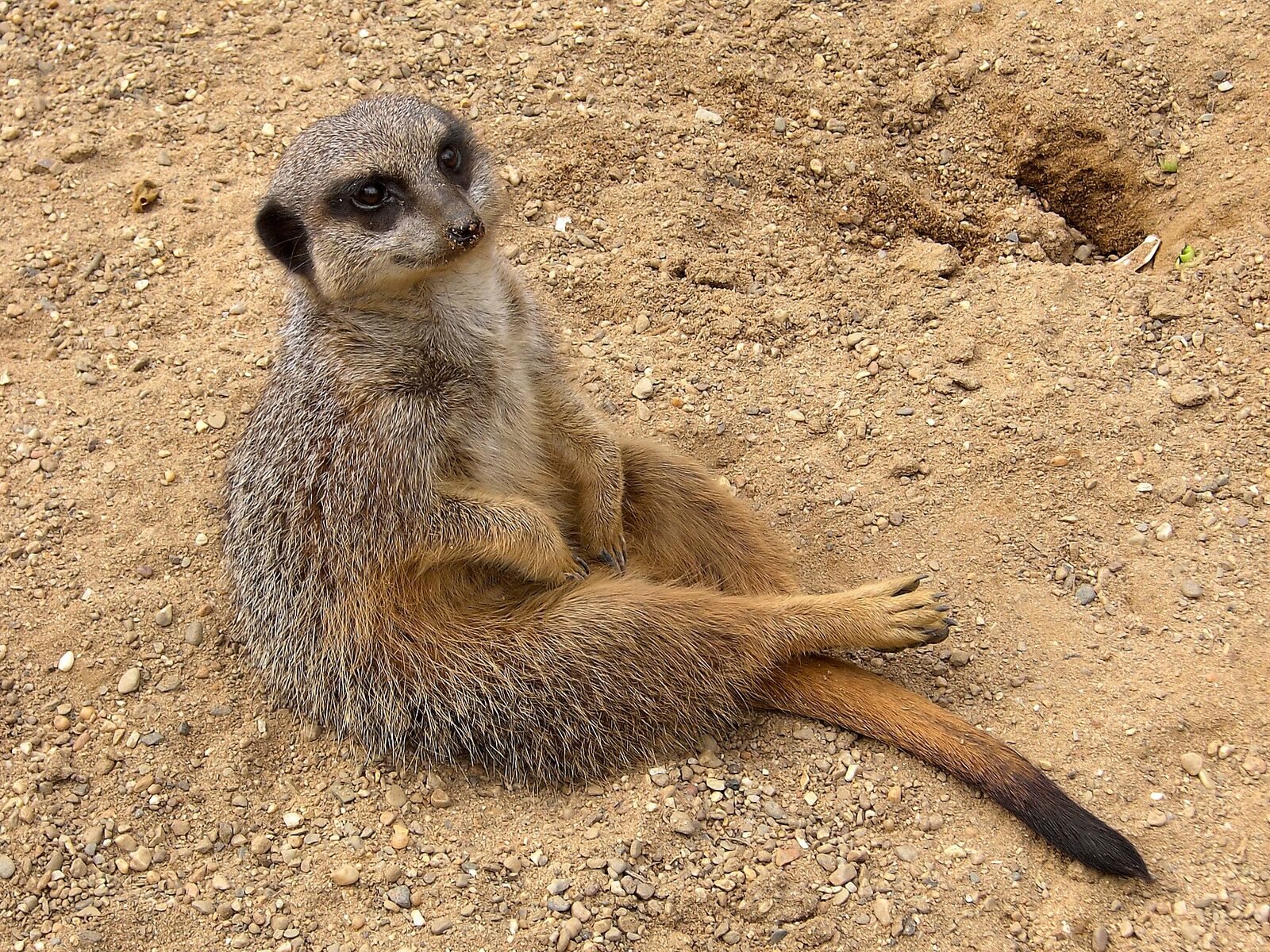
Home / Mammals / Cats, dogs and other carnivores / Common kusimanse
No federal permit to keep In-depth sheetCommon kusimanse
Crossarchus obscurus
Mammals › Cats, dogs and other carnivores (Carnivora) › Herpestidae (Mongooses and meerkats)
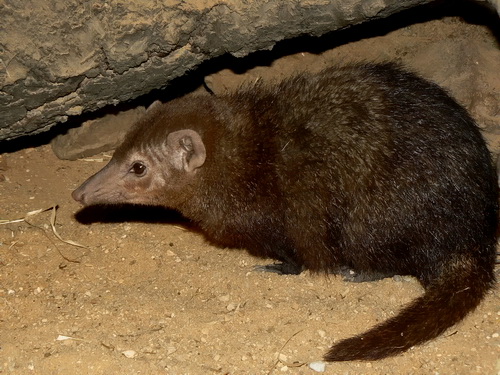
Kusimanses are small, highly social mongooses from West African forests. They live in groups, dig constantly and forage through leaf litter for insects and other small prey.
Care guide
Housing
- Deep, diggable substrate, logs, hollow branches and dense hiding cover, like their forest-floor home.
- They're social; many keepers house them in pairs or groups.
Sources 11
Diet
- Omnivores: insects, larvae, small reptiles, crabs, soft fruits and berries.
- Scatter-feed in substrate so they can forage naturally.
Sources 11
Behavior & enrichment
- Constant diggers and foragers. Leaf litter, dig boxes and puzzle feeders are essential.
- Wild kusimanses often forage along streams, where they hunt crabs and other prey.
Sources 11
Health & vet care
- Watch their weight; active foragers can still overeat in captivity.
- Find an exotics vet before acquiring one.
Sources 2
Show the group care guide for mongooses and meerkats
Mongooses and meerkats
Applies to most species in this group. Habitat: Savanna and forest. Individual species can differ, so compare with the species numbers above and the linked sources.
Housing & setup
- Secure enclosures with deep digging substrate, heat lamps and dens.
Diet
- Insectivore and carnivore diets with insects.
Health watch
- Most mongoose genera, including meerkats, are federally injurious wildlife.
Understanding the animal
In the wild
In the wild
Researched for this exact species, not its family. Good care copies these conditions.12
| Where it lives | West African high forest and riparian forest in Ghana, Côte d’Ivoire, Liberia and Sierra Leone. Forages in dense ground vegetation and around water edges. |
| Ground it lives on | Forest soil and leaf litter beneath logs, stones and dense cover. |
| Water it lives in | Occasionally forages at freshwater edges for crabs; not primarily aquatic. Chemistry and temperature ranges were not found. |
| Active | Primarily diurnal; the consulted ADW account also reports nighttime foraging, so activity is not exclusively daytime. |
| Social life | Gregarious groups, sometimes 20 or more; moves around a shared territory. |
| Wild diet | Insects and larvae, small reptiles, freshwater crabs, tender fruit and berries. |
| Behavior to plan for | Scratches through litter, turns debris and probes with its snout. Shelters in logs, burrows or excavated termite mounds and can climb sloping trees. |
What this means for care
- Provide compatible group housing with numerous sheltered retreats.
- Use deep litter, diggable soil and movable foraging debris.
- Include covered climbing opportunities rather than only open savanna furnishings.
Native climate (measured)
Native climate (measured)
| Warm-season highs | about 89°F (up to 91°F in the hottest sampled areas) |
| Cool-season lows | about 70°F (down to 69°F in the coldest sampled areas) |
| Average temperature | 78–80°F across sampled records |
| Relative humidity | 83–83% on average (driest month about 77%) |
| Rainfall | about 1449 mm a year |
Measured at 125 wild occurrence records sampled against WorldClim 2.1 climate data (1970–2000 averages). Air conditions in the range are ecological context, not enclosure settings: microhabitats such as burrows, leaf litter or basking rocks can be cooler, warmer or more humid.
Profile
Profile
Researched for this exact species. Sources are listed under In the wild above.
History
The common kusimanse is native to the high forests of West Africa. The supplied source also states that it has been exported to other countries for the pet trade.
Keeper tips
- Provide opportunities for ground-level exploration because most natural activity occurs on the ground.
- Include multiple sheltered retreats resembling the varied hollows, burrows, and termite-mound refuges used in the wild.
- Provide dense cover and structurally complex areas consistent with its high-forest habitat.
- Account for its strong social behavior and frequent vocal communication.
- Expect scent marking and territorial threat displays as normal species behavior.
Behaviors reported
- Whistles are used to maintain contact while traveling through dense rainforest understory.
- Groups are nomadic and do not remain long in one part of their territory.
- Adults take turns carrying young that cannot yet keep up with the traveling group.
- The group may aggressively defend its territory even against much larger intruders.
Unique adaptations
- Long foreclaws and well-developed foot pads support terrestrial movement and foraging.
- An elongated snout extends beyond the lower lip.
- Anal scent glands are used for territorial marking.
- Contact whistles help group members remain connected in dense forest vegetation.
Remarkable facts
- Adults are typically about 13 inches long and weigh approximately 2.2 lb.
- The species is native to West Africa.
- It occurs from sea level to roughly 3,281 ft elevation.
- Its coat includes long, bristle-like guard hairs over a dense underfur.
- It has a short tapering tail and relatively short legs.
From the sources
From the sources
Quoted from the matching sections of reputable sources for this exact species. Specialist databases are used first; Wikipedia (community-edited, CC BY-SA 4.0) only fills gaps. Other sources are short credited quotes.
| Overview | The common kusimanse (Crossarchus obscurus), also called long-nosed kusimanse and kusimanse, is a small, diurnal member of the Mungotinae. — Wikipedia (community-edited) |
| Where it lives | This mongoose differs from the other social mongooses ( Helogale, Mungos, Suricata ) in that it lives in the high forests of Western Africa and not in the open areas that these other species normally occupy. — Animal Diversity Web |
| Wild diet | This mammal kills it prey with one single bite to the back of the neck, but they do not shake their prey. — Animal Diversity Web |
| Behavior | Crossarchus obscurus is a gregarious species, highly social, and diurnal. — Animal Diversity Web |
| Reproduction | Individuals of the species reach sexual maturity in nine months. — Animal Diversity Web |
| Lifespan | In captivity, C. obscurus is known to live nine years (Goldman, 1987). — Animal Diversity Web |
| Appearance and size | Cusimanses are small mongooses. — Animal Diversity Web |
| History and naming | Due to its ease of training, and social nature, the common kusimanse is commonly available in the exotic pet trade and is found in many zoos worldwide. It tends to become quite bonded to its owner, and does not interact well with any other kind of household pet. It is highly energetic, requiring a large amount of space to satiate its natural wandering instinct. — Wikipedia (community-edited) |
| Conservation | The common kusimanse is not listed as threatened or endangered, and while no exact numbers of the wild population is known, is not considered to be at risk. — Wikipedia (community-edited) |
Data and studies
The numbers
The numbers
Each bar is what one source reports. Where several sources weigh in, the dashed gold band marks their average.
Lifespan in care (average to maximum)
Average recorded 4.5 years; known to reach 9.
Maximum recorded lifespan
Longest recorded lifespan reported by each database; typical lifespans are usually shorter. The AnAge record comes from an animal in human care.
Typical adult weight
Average adult body mass in each database (FishBase gives the maximum recorded weight).
Veterinary & husbandry research
Veterinary & husbandry research
- First record and infestation pattern of Haemaphysalis muhsamae on wild mammals in Ghana Danso-Coffie CK et al., Medical and veterinary entomology 2026
Peer-reviewed papers that mention this species alongside captivity, zoos, veterinary care or aquaculture. Some cover several species or mention it only in passing, so check the abstract. 170
Sources for this sheet
- Animal Diversity Web: Crossarchus obscurus Zoo, university or veterinaryUniversity-hosted species account.
- Just Wright Exotics at Beacon Fire Farm: Animal care information Experienced keeper or breederThe farm's general care notes and emergency guidance for adopters.
- AnAge: The Animal Ageing and Longevity Database (Human Ageing Genomic Resources) Peer-reviewed researchCurated, referenced longevity and life-history records for thousands of species; maximum lifespans are often from zoo animals.
- Myhrvold et al. (2015). An amniote life-history database. Ecology 96: 3109 Peer-reviewed researchPeer-reviewed compilation of life-history data for over 21,000 birds, mammals and reptiles.
- 9 CFR 2.1: Animal Welfare Act licensing (USDA) Zoo, university or veterinaryWho needs a USDA license to breed, sell or exhibit animals.
- Royal Veterinary College Exotics Service: Meerkat care Zoo, university or veterinaryVet-school exotics hospital factsheet, reviewed 2021–2024.
- 50 CFR Part 16: Injurious wildlife (Lacey Act) Zoo, university or veterinaryCurrent federal regulation, read from eCFR.
- GBIF Backbone Taxonomy (Global Biodiversity Information Facility) Peer-reviewed researchInternational scientific taxonomy used here for classification.
- Wikipedia (species article) Community referenceFree encyclopedia; useful overviews with their own citations. Intro text is quoted under CC BY-SA 4.0.
- PubMed (U.S. National Library of Medicine) Peer-reviewed researchIndex of peer-reviewed veterinary, zoo and husbandry research.
- iNaturalist (captive observations) Community referenceCommunity observation platform run by the California Academy of Sciences and National Geographic; observations marked captive show animals living in homes, zoos and aquariums.