Home / Fishes / Carp, barbs, minnows, loaches / Cobitidae / Jonklaas' s loach
No federal permit to keepJonklaas' s loach
Lepidocephalichthys jonklaasi
Fishes › Carp, barbs, minnows, loaches (Cypriniformes) › Cobitidae (Spined loaches)
Lepidocephalichthys jonklaasi, known as the Jonklaas's loach or the spotted loach, is an endemic fish species restricted to the wet zone of Sri Lanka.
Care at a glance
Species-specific aquarium care
- Tank: At least 24 in long and 12 in front to back for one adult (adults commonly reach about 2.4 in / 6 cm).
- Water: Freshwater.
- Layout: Lives on or near the bottom: floor space and hiding places matter more than height.
- Availability: Rarely or never seen in the aquarium trade; expect to source it from specialists or not at all.
Calculated from this species' own FishBase record: tank size from its typical adult length and swimming zone, water values from its recorded ranges. The group guide below fills in general care.
Care guide
Species care notes
- Tank: a base of at least 24 × 12 in (roughly 14 US gallons); space needed is rated “modest tank”.
- Water: a fairly wide range, from slightly acidic to slightly alkaline, 68–77 °F, pH 5.5–7.5, 2–15 dGH.
- Behaviour: a shoaling fish best kept in a group of six or more; not a community fish.
- Difficulty: Moderate (Seriously Fish rating).
Short excerpts from the species profile:
- Setup: “Should not prove difficult to keep but must be provided with a soft, sandy substrate since some of its time will be spent completely buried, or with only eyes protruding.”
- Diet: “Probably a micropredator sifting mouthfuls of substrate through the gills from which insect larvae, small crustaceans and suchlike are extracted.”
From the Seriously Fish profile for this species, which has the full habitat, maintenance, diet, behaviour and breeding write-up 167
Spined loaches
Applies to most species in this group. Habitat: Spined loaches inhabit freshwater bottoms from tropical Pangio forest streams and swamps to temperate weather-loach streams, wetlands and paddy fields. Individual species can differ, so compare with the species numbers above and the linked sources.
Housing & setup
- For Pangio semicincta, provide at least a 60 × 30 cm (24 × 12 in) footprint; adult Misgurnus anguillicaudatus need at least 120 × 45 cm (48 × 18 in).
- Use soft sand for burrowing; coarse gravel can injure fish and inhibit feeding.
- Provide shaded retreats beneath secured wood or smooth rocks, with leaf litter and low-light plants for Pangio.
- Cover the aquarium securely and protect filter intakes against entry by small loaches.
- Use mature biological filtration, gentle circulation and surface agitation rather than strong flow for Pangio and weather loaches.
Climate & lighting
| Water | 70–79°F |
Diet
- Sinking complete foods reaching the bottom.
- Live or frozen Daphnia and Artemia.
- Bloodworms and small worms as part of a varied diet.
Social life
- Keep Pangio in groups of at least five or six with peaceful companions. Weather loaches can be kept singly but appear more active with conspecifics; they may eat eggs, fry or tiny fish.
Health watch
- Skin injuries and feeding impairment from unsuitable burrowing substrate.
- Ammonia-related illness in immature aquaria.
- Nutritional deficiencies if bottom dwellers receive insufficient suitable food.
Understanding the animal
About this animal
About this animal
The species was first recorded from the Wilpita area (Daraniyagala 1952). It is currently known from 12 locations in the wet zone including Beraliya, Dombagaskandha, Madakada, Gilimale, Hiyare, Kottawa, Kanneliya, Weddagala, Nakiyadeniya, Pahiyangala and Boralugoda.
Quoted from the Wikipedia article “Lepidocephalichthys jonklaasi” (CC BY-SA 4.0) 174
In the wild
In the wild
From this species’ own FishBase record (habitat, bottom type, water and breeding data), not its family. Good care copies these conditions.1
| Where it lives | Lives in freshwater. Stays near the bottom. Not enough is known of the biology of this species. Inhabits shallow, slow-flowing rivulets, heavily shaded, with leaf debris. |
| Water it lives in | Freshwater. |
| Climate | Tropical climate. |
| Behavior to plan for | Breeding: open water/substratum egg scatterers. |
From the sources
From the sources
Quoted from the matching sections of reputable sources for this exact species. Specialist databases are used first; Wikipedia (community-edited, CC BY-SA 4.0) only fills gaps. Other sources are short credited quotes.
| Overview | Lepidocephalichthys jonklaasi, known as the Jonklaas's loach or the spotted loach, is an endemic fish species restricted to the wet zone of Sri Lanka. The species was first recorded from the Wilpita area (Daraniyagala 1952). It is currently known from 12 locations in the wet zone including Beraliya, Dombagaskandha, Madakada, Gilimale, Hiyare, Kottawa, Kanneliya, Weddagala, Nakiyadeniya, Pahiyangala and Boralugoda. It is recorded from a wide range of altitudes. — Wikipedia (community-edited) |
| Where it lives | Home ranges Population dynamics Growth parameters Max. ages / sizes Length-weight rel. Length-frequencies Mass conversion Recruitment Abundance Life cycle Reproduction Maturity Maturity/Gills rel. — FishBase |
| Reproduction | Breeding of this has not observed either in the wild or captive conditions. — Wikipedia (community-edited) |
| Appearance and size | Members of the genus Lepidocephalichthys have a sharp, erectile spine on their cheeks. In some species the spine is sharp enough to puncture easily one's hand during handling of the live fish. However, it is not venomous or harmful. — Wikipedia (community-edited) |
| Biology | Facultative air-breathing in the genus; Not enough is known of the biology of this species. Inhabits shallow, slow-flowing rivulets, heavily shaded, with leaf debris. This fish is not visible from the water surface, being concealed beneath leaf debris. — FishBase |
| Conservation | According to the 2007 red list of threatened fauna and flora of Sri Lanka, Lepidocephalichthys jonklaasi (Deraniyagala, 1956) is listed in the Endangered category. In the previous redlist published in 2002 it was listed as Endangered as well. In the 1999 red list it has been listed as Threatened species. — Wikipedia (community-edited) |
Data and studies
The numbers
The numbers
Each bar is what one source reports. Where several sources weigh in, the dashed gold band marks their average.
Adult length
Maximum recorded length. Measured as total length. Fish in home aquariums often stay smaller than wild records.
Water temperature
Range the species tolerates; aim for the middle.
pH
Water hardness
Minimum tank footprint
Seriously Fish recommends a tank base of at least 24 × 12 in (about 14 US gallons).
Sources for this sheet
- FishBase (Froese & Pauly, eds.), version 24.07 Peer-reviewed researchThe global scientific database on fishes, maintained by a consortium of research institutions; every value is referenced.
- Seriously Fish species profiles Experienced keeper or breederLong-running aquarium reference written and peer-checked by experienced fishkeepers and ichthyologists; each profile covers habitat, tank size, water, diet, behaviour and breeding.
- Seriously Fish — pangio semicincta Experienced keeper or breederAdded in the 2026 source-checked care-guide review.
- Seriously Fish — misgurnus anguillicaudatus Experienced keeper or breederAdded in the 2026 source-checked care-guide review.
- Merck Veterinary Manual — Disorders and Diseases of Fish Zoo, university or veterinaryAdded in the 2026 source-checked care-guide review.
- Wikipedia (species article) Community referenceFree encyclopedia; useful overviews with their own citations. Intro text is quoted under CC BY-SA 4.0.
More spined loaches
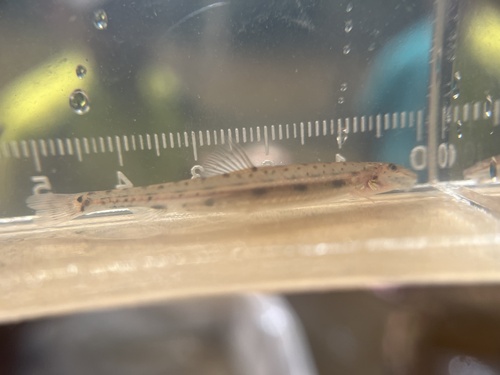
Acanthopsoides molobrion
Acanthopsoides molobrion
Aquarium hobby
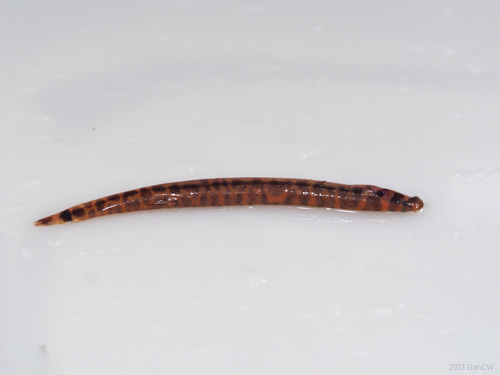
Borneo loach
Pangio shelfordii
Aquarium hobby
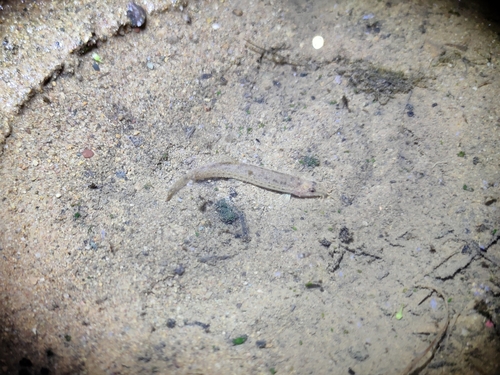
Burmese loach
Lepidocephalichthys berdmorei
Aquarium hobby

Common spiny loach
Lepidocephalichthys thermalis
Aquarium hobby

Giant Kuhli Loach
Pangio myersi
Aquarium hobby

Golden Kuhli Loach
Pangio doriae
Aquarium hobby