Home / Fishes / Tetras, piranhas and pacus / Tiger fish
No federal permit to keepTiger fish
Hydrocynus vittatus
Fishes › Tetras, piranhas and pacus (Characiformes) › Alestidae (African tetras)
Hydrocynus vittatus, the African tigerfish, tiervis or ngwesh is a freshwater fish distributed throughout much of Africa.

Care at a glance
Species-specific aquarium care
- Tank: An adult reaches about 41.3 in (105 cm). That needs a pond or public-aquarium-scale system, far beyond a home aquarium.
- Water: Freshwater.
- Temperature: 72–82°F (range recorded for this species).
- Layout: Lives on or near the bottom: floor space and hiding places matter more than height.
- Diet: A predator: feed meaty foods sized to its mouth (frozen fish, shrimp, worms); it will eat tankmates that fit in its mouth. FishBase classes it as a carnivore.
- Availability: Rarely or never seen in the aquarium trade; expect to source it from specialists or not at all.
Calculated from this species' own FishBase record: tank size from its typical adult length and swimming zone, water values from its recorded ranges. The group guide below fills in general care.
Care guide
Species care notes
- Tank: a base of at least 118 × 35 in (roughly 642 US gallons); space needed is rated “very large tank”.
- Water: a fairly wide range, from slightly acidic to slightly alkaline, 75–82 °F, pH 6.5–8, 5–25 dGH.
- Difficulty: Moderate (Seriously Fish rating).
Short excerpts from the species profile:
- Setup: “There is no need for any decor except perhaps a sandy base due to the speed and power of these fish.”
- Diet: “It is a piscivore by nature and many sources state that it will only feed on live fish.”
- Tankmates: “Should really only be kept alone or with other similarly sized members of the same species.”
- Breeding: “Has been bred in aquaria but little to no information exists.”
From the Seriously Fish profile for this species, which has the full habitat, maintenance, diet, behaviour and breeding write-up 167
African tetras
Applies to most species in this group. Habitat: African freshwater habitats range from the Congo drainage occupied by Congo tetras to large rivers and lakes inhabited by giant tigerfish. Individual species can differ, so compare with the species numbers above and the linked sources.
Housing & setup
- Adult Congo tetras need at least 120 × 30 × 30 cm (about 48 × 12 × 12 inches).
- For Congo tetras, combine plants, floating vegetation and driftwood with open swimming space and good circulation.
- Congo-tetra source parameters are pH 6.0–7.5 and hardness 3–18 dGH; maintain consistently high water quality.
- Hydrocynus goliath needs a facility-scale system: the source suggests roughly 15,000 litres rather than a home aquarium.
- For giant tigerfish, prioritize oxygenation, clean water and open swimming space with minimal hard decor.
Climate & lighting
| Water | 73.4–82.4°F |
Diet
- For Congo tetras: suitable dried omnivore foods including algae-based foods.
- For Congo tetras: small live or frozen worms, insects and crustaceans.
- For tigerfish: appropriately sized dead fish such as whitebait.
Social life
- Congo tetras suit mixed-sex shoals with peaceful companions; fin-nippers damage male fins. Adult giant tigerfish should be kept alone and may attack smaller fish without warning.
Handling
- Giant tigerfish require professional separation and maintenance procedures because adults pose a serious bite hazard.
Health watch
- Ammonia toxicity.
- Nutritional deficiencies.
Understanding the animal
About this animal
About this animal
This predatory fish is generally a piscivore but it has been observed leaping out of the water and catching barn swallows in flight.
Quoted from the Wikipedia article “Hydrocynus vittatus” (CC BY-SA 4.0) 174
In the wild
In the wild
From this species’ own FishBase record (habitat, bottom type, water and breeding data), not its family. Good care copies these conditions.1
| Where it lives | Lives in freshwater, in rivers and streams, lakes. Stays near the bottom. Prefers warm, well-oxygenated water, mainly larger rivers and lakes; all but the largest form roving schools of like-sized fish; aptly described as fierce and voracious; diet increasingly piscivorous, becoming exclusive fish feeders when above 90-100 mm length; feeds on whatever prey is most abundant but Brycinus, Micralestes, Barbus, and Limnothrissa are favored. |
| Water it lives in | Freshwater, 72–82 °F (22–28 °C). |
| Climate | Tropical climate. |
| Wild diet | Hunting macrofauna (predator). |
What this means for care
- Keep water within its wild range, 72–82 °F.
Native climate (measured)
Native climate (measured)
| Warm-season highs | about 90°F (up to 96°F in the hottest sampled areas) |
| Cool-season lows | about 57°F (down to 45°F in the coldest sampled areas) |
| Average temperature | 70–78°F across sampled records |
| Relative humidity | 59–74% on average (driest month about 53%) |
| Rainfall | about 973 mm a year, with strong wet and dry seasons |
Measured at 272 wild occurrence records sampled against WorldClim 2.1 climate data (1970–2000 averages). Air conditions in the range are ecological context, not enclosure settings: microhabitats such as burrows, leaf litter or basking rocks can be cooler, warmer or more humid.
From the sources
From the sources
Quoted from the matching sections of reputable sources for this exact species. Specialist databases are used first; Wikipedia (community-edited, CC BY-SA 4.0) only fills gaps. Other sources are short credited quotes.
| Overview | Hydrocynus vittatus, the African tigerfish, tiervis or ngwesh is a freshwater fish distributed throughout much of Africa. This predatory fish is generally a piscivore but it has been observed leaping out of the water and catching barn swallows in flight. — Wikipedia (community-edited) |
| Where it lives | Home ranges Population dynamics Growth parameters Max. ages / sizes Length-weight rel. Length-frequencies Mass conversion Recruitment Abundance Life cycle Reproduction Maturity Maturity/Gills rel. — FishBase |
| Wild diet | Hydrocynus vittatus are fierce hunters and are mostly piscivorous, and tend to eat whatever fish is most available. Smaller fish will hunt in large schools, while larger African tigerfish hunt alone. Favoured prey fish include other African tetras (such as Brycinus and Micralestes), cichlids, gobies, barbels, carp, Limnothrissa, and clariid catfish. — Wikipedia (community-edited) |
| Behavior | Hydrocynus vittatus mainly live near the bottom of the large freshwater rivers and lakes they inhabit. During the day they tend to be found closer to the surface and then move towards the bottom at night. They thrive in highly oxygenated water in warm climates. — Wikipedia (community-edited) |
| Appearance and size | Maximum length 105 cm fl male/unsexed; maximum published weight 28.0 kg; maximum reported age 8 years. — FishBase |
| Biology | Prefers warm, well-oxygenated water, mainly larger rivers and lakes; all but the largest form roving schools of like-sized fish; aptly described as fierce and voracious; diet increasingly piscivorous, becoming exclusive fish feeders when above 90-100 mm length; feeds on whatever prey is most abundant but Brycinus, Micralestes, Barbus, and Limnothrissa are favored (, 52193 ). — FishBase |
Data and studies
The numbers
The numbers
Each bar is what one source reports. Where several sources weigh in, the dashed gold band marks their average.
Maximum recorded lifespan
Longest recorded lifespan reported by each database; typical lifespans are usually shorter.
Typical adult weight
Average adult body mass in each database (FishBase gives the maximum recorded weight).
Adult length
Maximum recorded length. Measured as fork length. Fish in home aquariums often stay smaller than wild records.
Water temperature
Range the species tolerates in nature; aim for the middle.
pH
Water hardness
Minimum tank footprint
Seriously Fish recommends a tank base of at least 118 × 35 in (about 642 US gallons).
Sources for this sheet
- AnAge: The Animal Ageing and Longevity Database (Human Ageing Genomic Resources) Peer-reviewed researchCurated, referenced longevity and life-history records for thousands of species; maximum lifespans are often from zoo animals.
- FishBase (Froese & Pauly, eds.), version 24.07 Peer-reviewed researchThe global scientific database on fishes, maintained by a consortium of research institutions; every value is referenced.
- Seriously Fish species profiles Experienced keeper or breederLong-running aquarium reference written and peer-checked by experienced fishkeepers and ichthyologists; each profile covers habitat, tank size, water, diet, behaviour and breeding.
- Seriously Fish — Phenacogrammus interruptus Experienced keeper or breederAdded in the 2026 source-checked care-guide review.
- Seriously Fish — Hydrocynus goliath Experienced keeper or breederAdded in the 2026 source-checked care-guide review.
- Merck Veterinary Manual — Disorders and Diseases of Fish Zoo, university or veterinaryAdded in the 2026 source-checked care-guide review.
- Wikipedia (species article) Community referenceFree encyclopedia; useful overviews with their own citations. Intro text is quoted under CC BY-SA 4.0.
- iNaturalist (captive observations) Community referenceCommunity observation platform run by the California Academy of Sciences and National Geographic; observations marked captive show animals living in homes, zoos and aquariums.
More african tetras
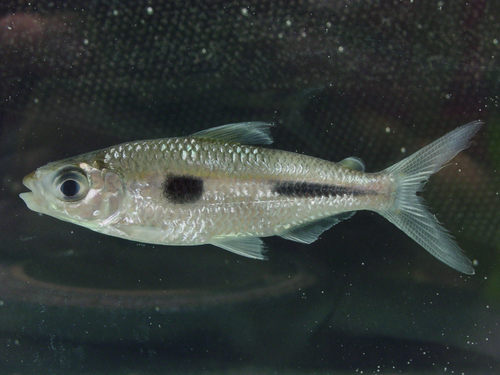
Boulenger's Featherfin Tetra
Bryconaethiops boulengeri
Aquarium hobby

Congo tetra
Phenacogrammus interruptus
Aquarium hobby

Giant tigerfish
Hydrocynus goliath
Aquarium hobby
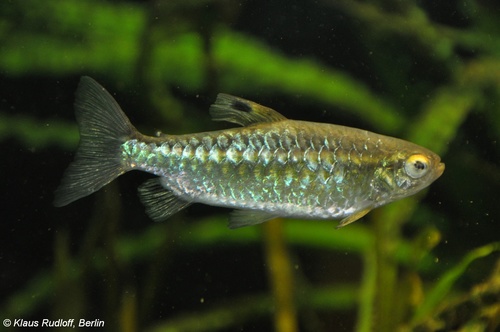
Niger tetra
Arnoldichthys spilopterus
Aquarium hobby
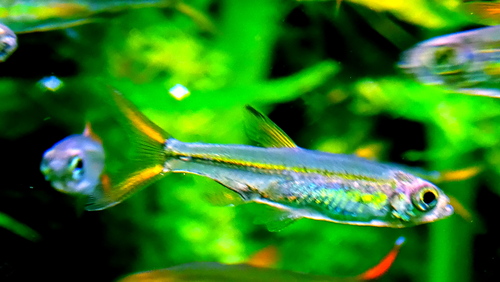
Sierra leone dwarf characin
Ladigesia roloffi
Aquarium hobby

Yellow-tailed African tetra
Alestopetersius caudalis
Aquarium hobby