Home / Fishes / Gouramis, bettas, snakeheads / Banded gourami
No federal permit to keepBanded gourami
Trichogaster fasciata
Fishes › Gouramis, bettas, snakeheads (Anabantiformes) › Osphronemidae (Gouramis and bettas)
Trichogaster fasciata, the banded gourami or striped gourami or Colisa or Kholshe, is a tropical labyrinth perch found in some Asian countries, including Bangladesh, Eastern India, Northeastern India, Nepal, Upper Myanmar, China and Pakistan. It is…
Intro from Wikipedia (CC BY-SA 4.0)

Care at a glance
Species-specific aquarium care
- Tank: At least 24 in long and 12 in front to back for one adult (adults commonly reach about 4.9 in / 12.5 cm).
- Water: Freshwater.
- Temperature: 72–82°F (range recorded for this species).
- pH: 6–7.5.
- Hardness: 4–15 dGH.
- Layout: Uses both the bottom and open water: give open swimming space plus cover near the substrate.
- Diet: A substrate browser: offer sinking foods and let it sift the bottom; use soft sand if it digs. FishBase classes it as a carnivore.
- Availability: Rarely or never seen in the aquarium trade; expect to source it from specialists or not at all.
Calculated from this species' own FishBase record: tank size from its typical adult length and swimming zone, water values from its recorded ranges. The group guide below fills in general care.
Care guide
Species care notes
- Water: a fairly wide range, from slightly acidic to slightly alkaline, 70–82 °F, pH 6–7.5, 5–15 dGH.
- Difficulty: Beginner (Seriously Fish rating).
Short excerpts from the species profile:
- Setup: “This is not a very vigorous species.”
- Tankmates: “Suitable for most peaceful community tanks but it can be a bit aggressive when spawning.”
- Breeding: “Like many Anabantoids it's a bubble nest builder.”
From the Seriously Fish profile for this species, which has the full habitat, maintenance, diet, behaviour and breeding write-up 167
Gouramis and labyrinth fish
Applies to most species in this group. Habitat: Warm, still, vegetated waters. Individual species can differ, so compare with the species numbers above and the linked sources.
Housing & setup
- Planted, calm tanks with floating plants; they breathe air at the surface, so leave a gap under the lid.
Diet
- Food acceptance is species-specific. Parosphromenus deissneri needs tiny live invertebrate foods and commonly refuses dried foods; a pellet/flake staple cannot cover every labyrinth fish.
Health watch
- Males are territorial; dwarf gourami iridovirus.
Understanding the animal
In the wild
In the wild
From this species’ own FishBase record (habitat, bottom type, water and breeding data), not its family. Good care copies these conditions.1
| Where it lives | Lives in freshwater, in rivers and streams, lakes, estuaries. Uses both the bottom and open water. Occurs in large rivers, estuaries, ditches, ponds. |
| Water it lives in | Freshwater, 72–82 °F (22–28 °C), pH 6–7.5, hardness 4–15 dH. |
| Climate | Tropical climate. |
| Wild diet | Browsing on substrate. |
| Behavior to plan for | Breeding: nesters. |
What this means for care
- Keep water within its wild range, 72–82 °F.
From the sources
From the sources
Quoted from the matching sections of reputable sources for this exact species. Specialist databases are used first; Wikipedia (community-edited, CC BY-SA 4.0) only fills gaps. Other sources are short credited quotes.
| Overview | Trichogaster fasciata, the banded gourami or striped gourami or Colisa or Kholshe, is a tropical labyrinth perch found in some Asian countries, including Bangladesh, Eastern India, Northeastern India, Nepal, Upper Myanmar, China and Pakistan. It is also called the giant gourami, and for this reason it is often confused with the Osphronemus goramy, which has the same common name. — Wikipedia (community-edited) |
| Where it lives | Home ranges Population dynamics Growth parameters Max. ages / sizes Length-weight rel. Length-frequencies Mass conversion Recruitment Abundance Life cycle Reproduction Maturity Maturity/Gills rel. — FishBase |
| Wild diet | The mouth of this species is bordered by thick lips, the upper being protrudable and more pronounced in the male. Small and feeble teeth are present in the mouth and buccal cavity. The intestine is long and coiled. — Wikipedia (community-edited) |
| Reproduction | Male defends the bubble-nest. — FishBase |
| Biology | Obligate air-breathing; Occurs in large rivers, estuaries, ditches, ponds and lakes, generally preferring weedy environment. An air-breathing species. — FishBase |
| History and naming | Trichogaster fasciata was formally described in 1801 by Marcus Elieser Bloch and Johann Gottlob Schneider, with the type locality given as Tranquebar, a Danish trading post in India. It is the type species of the genus Trichogaster. — Wikipedia (community-edited) |
Data and studies
The numbers
The numbers
Each bar is what one source reports. Where several sources weigh in, the dashed gold band marks their average.
Adult length
Maximum recorded length. Measured as total length. Fish in home aquariums often stay smaller than wild records.
Water temperature
Range the species tolerates in nature; aim for the middle.
Sources for this sheet
- FishBase (Froese & Pauly, eds.), version 24.07 Peer-reviewed researchThe global scientific database on fishes, maintained by a consortium of research institutions; every value is referenced.
- Seriously Fish species profiles Experienced keeper or breederLong-running aquarium reference written and peer-checked by experienced fishkeepers and ichthyologists; each profile covers habitat, tank size, water, diet, behaviour and breeding.
- Merck Veterinary Manual: Management of aquarium fish Zoo, university or veterinaryThe Merck Veterinary Manual: a standard veterinary reference written and reviewed by veterinary specialists.
- Merck Veterinary Manual: Types and features of aquatic systems Zoo, university or veterinaryThe Merck Veterinary Manual: a standard veterinary reference written and reviewed by veterinary specialists.
- Merck Veterinary Manual: Nutritional diseases of fish Zoo, university or veterinaryThe Merck Veterinary Manual: a standard veterinary reference written and reviewed by veterinary specialists.
- Seriously Fish — Parosphromenus deissneri Zoo, university or veterinaryAdded in the 2026 source-checked care-guide review.
- Wikipedia (species article) Community referenceFree encyclopedia; useful overviews with their own citations. Intro text is quoted under CC BY-SA 4.0.
- iNaturalist (captive observations) Community referenceCommunity observation platform run by the California Academy of Sciences and National Geographic; observations marked captive show animals living in homes, zoos and aquariums.
More gouramis and bettas

Alfred's Licorice Gourami
Parosphromenus alfredi
Aquarium hobby

Barito Betta
Betta pallifina
Aquarium hobby
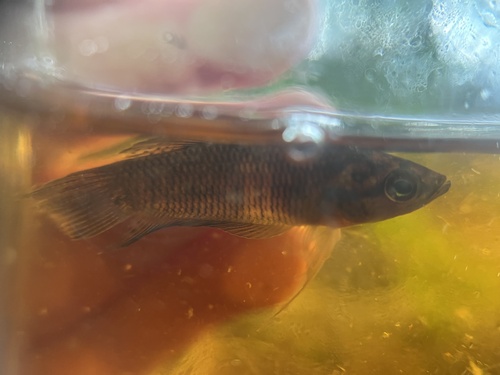
Betta hipposideros
Betta hipposideros
Aquarium hobby

Betta stigmosa
Betta stigmosa
Aquarium hobby

Betta uberis
Betta uberis
Aquarium hobby

Black Dwarf Betta
Betta persephone
Aquarium hobby