Home / Fishes / Killifish and livebearers / Arabian toothcarp
No federal permit to keepArabian toothcarp
Aphaniops dispar
Fishes › Killifish and livebearers (Cyprinodontiformes) › Aphaniidae (Aphanius killifish)
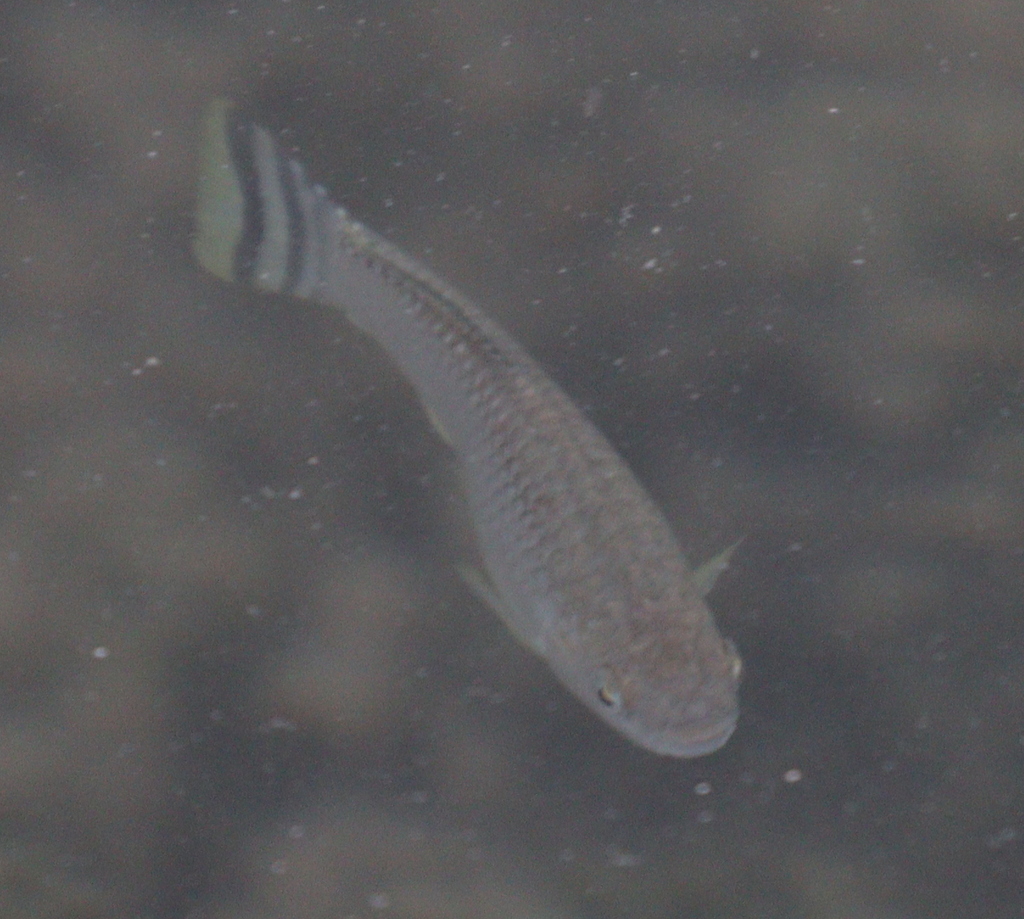
The Arabian toothcarp (Aphaniops dispar), known also as the mother-of-Pearl fish is a species of killifish belonging to the family Aphaniidae.
Care at a glance
Species-specific aquarium care
- Tank: At least 24 in long and 12 in front to back for one adult (adults commonly reach about 2.8 in / 7 cm).
- Water: Freshwater (tolerates brackish).
- Temperature: 61–79°F (range recorded for this species).
- Layout: Uses both the bottom and open water: give open swimming space plus cover near the substrate.
Calculated from this species' own FishBase record: tank size from its typical adult length and swimming zone, water values from its recorded ranges. The group guide below fills in general care.
Care guide
Species care notes
- Tank: a base of at least 47 × 12 in (roughly 29 US gallons); space needed is rated “large tank”.
- Water: hard, alkaline water, 39–86 °F, pH 7.5–9, 15–35 dGH.
- Behaviour: a shoaling fish best kept in a group of six or more.
- Difficulty: Moderate (Seriously Fish rating).
Short excerpts from the species profile:
- Setup: “Even for long-term maintenance a simple set-up will suffice.”
- Diet: “Omnivorous although it displays a marked vegetarian tendency compared to most congeners with a large proportion of the natural diet being composed of algae and other plant material.”
- Tankmates: “Its particular water requirements make A.”
- Breeding: “Captive reproduction is not difficult if the tank or container is properly arranged and maintained (see 'tank set-up').”
From the Seriously Fish profile for this species, which has the full habitat, maintenance, diet, behaviour and breeding write-up 167
Aphanius killifish
Applies to most species in this group. Habitat: These toothcarps occupy vegetated Mediterranean coastal lagoons and inland Anatolian springs, streams and lake margins with locality-dependent salinity (fasciatus, anatoliae). Individual species can differ, so compare with the species numbers above and the linked sources.
Housing & setup
- For fasciatus/anatoliae groups use a footprint of at least 120 × 30 cm; fasciatus pairs/trios can use 60 × 30 cm (fasciatus, anatoliae).
- Fill substantial space with spawning mops or fine-leaved plants to break male sightlines (fasciatus, anatoliae).
- Provide hard alkaline water: fasciatus pH 7.5–9.0, anatoliae 7.0–8.5; both 10–30 dGH (fasciatus, anatoliae).
- Set salinity from collection locality, rather than treating every population as freshwater (fasciatus, anatoliae).
- Use gentle filtration for anatoliae and preserve a seasonal cool winter period (anatoliae).
Diet
- Live or frozen Artemia and Daphnia (fasciatus, anatoliae).
- Bloodworms (fasciatus, anatoliae).
- Spirulina-containing dried food and filamentous algae (fasciatus, anatoliae).
Social life
- Maintain species/locality breeding groups, with two or three females per male for anatoliae and refuges from dominant males (anatoliae).
Health watch
- Ammonia toxicity from inadequate biofiltration (fish_health).
- Parasitic skin and gill infections (fish_health).
- Nutritional deficiencies from unsuitable diets (fish_health).
Understanding the animal
About this animal
About this animal
It can be found from the shores of the Red Sea south to Ethiopia, the Gulf of Aden, the Arabian Sea and along the Persian Gulf east to Pakistan and India. It is also found in the Suez Canal, the northern coast of the Sinai Peninsula, and in one location on the Israeli coast.
Quoted from the Wikipedia article “Arabian toothcarp” (CC BY-SA 4.0) 174
In the wild
In the wild
From this species’ own FishBase record (habitat, bottom type, water and breeding data), not its family. Good care copies these conditions.1
| Where it lives | Lives in freshwater and brackish water and the sea. Uses both the bottom and open water. Occurs in coastal zones, also found in oasis pools with hypersaline to fresh water. |
| Water it lives in | Freshwater / brackish water / marine, 61–79 °F (16–26 °C). |
| Climate | Subtropical climate. |
| Behavior to plan for | Breeding: open water/substratum egg scatterers. |
What this means for care
- Keep water within its wild range, 61–79 °F.
- It tolerates or needs brackish water; check salinity needs before setup.
Native climate (measured)
Native climate (measured)
| Warm-season highs | about 102°F (up to 107°F in the hottest sampled areas) |
| Cool-season lows | about 55°F (down to 48°F in the coldest sampled areas) |
| Average temperature | 74–81°F across sampled records |
| Relative humidity | 45–60% on average (driest month about 43%) |
| Rainfall | about 125 mm a year, with strong wet and dry seasons |
Measured at 116 wild occurrence records sampled against WorldClim 2.1 climate data (1970–2000 averages). Air conditions in the range are ecological context, not enclosure settings: microhabitats such as burrows, leaf litter or basking rocks can be cooler, warmer or more humid.
From the sources
From the sources
Quoted from the matching sections of reputable sources for this exact species. Specialist databases are used first; Wikipedia (community-edited, CC BY-SA 4.0) only fills gaps. Other sources are short credited quotes.
| Overview | The Arabian toothcarp (Aphaniops dispar), known also as the mother-of-Pearl fish is a species of killifish belonging to the family Aphaniidae. It can be found from the shores of the Red Sea south to Ethiopia, the Gulf of Aden, the Arabian Sea and along the Persian Gulf east to Pakistan and India. It is also found in the Suez Canal, the northern coast of the Sinai Peninsula, and in one location on the Israeli coast. The former recognized subspecies: A. d. richardsoni, the Dead Sea toothcarp endemic to the Dead Sea has now been raised to a full species as Aphaniops richardsoni. — Wikipedia (community-edited) |
| Where it lives | Home ranges Population dynamics Growth parameters Max. ages / sizes Length-weight rel. Length-frequencies Mass conversion Recruitment Abundance Life cycle Reproduction Maturity Maturity/Gills rel. — FishBase |
| Wild diet | This fish is an omnivore, feeding on any organic debris such as algae, freshwater crustaceans and small insects. In freshwater habitats, their main source of food is the larvae of mosquitoes, whilst smaller aquatic worms are often targeted by groups of fish. Its prolific feeding on mosquito larvae had led to it being used as a method of pest control in several countries. — Wikipedia (community-edited) |
| Appearance and size | A. dispar is a chubby and robust fish in both sexes with a similar body plan lacking any spines, but here is where their similarities end. This species expresses extreme sexual dimorphism in both appearance and behaviour. The larger males are very brightly coloured with long fins that may reach the end of the tail when lowered. — Wikipedia (community-edited) |
| Biology | Occurs in coastal zones, also found in oasis pools with hypersaline to fresh water. Chiefly a herbivorous species. Spawn in areas where roots of hyacinth or other floating plants abound. — FishBase |
| History and naming | The Arabian toothcarp was reassigned from the genus Aphanius in 2020 in the course of a reclassification of several species in that genus. — Wikipedia (community-edited) |
| Conservation | The Arabian pupfish is listed as a species of least concern by the IUCN with a stable population in 2013. Owing to the outdated status, this fish has faced several threats in recent days especially with freshwater populations. These fish are threatened by water pollution, lack of food, and habitat degradation which led to noticeable declines in population densities throughout their range. — Wikipedia (community-edited) |
Data and studies
The numbers
The numbers
Each bar is what one source reports. Where several sources weigh in, the dashed gold band marks their average.
Adult length
Maximum recorded length. Measured as total length. Fish in home aquariums often stay smaller than wild records.
Water temperature
Range the species tolerates in nature; aim for the middle.
pH
Water hardness
Minimum tank footprint
Seriously Fish recommends a tank base of at least 47 × 12 in (about 29 US gallons).
Sources for this sheet
- FishBase (Froese & Pauly, eds.), version 24.07 Peer-reviewed researchThe global scientific database on fishes, maintained by a consortium of research institutions; every value is referenced.
- Seriously Fish species profiles Experienced keeper or breederLong-running aquarium reference written and peer-checked by experienced fishkeepers and ichthyologists; each profile covers habitat, tank size, water, diet, behaviour and breeding.
- Seriously Fish: Aphanius fasciatus Experienced keeper or breederAdded in the 2026 source-checked care-guide review.
- Seriously Fish: Aphanius anatoliae Experienced keeper or breederAdded in the 2026 source-checked care-guide review.
- Merck Veterinary Manual: Disorders and Diseases of Fish Zoo, university or veterinaryAdded in the 2026 source-checked care-guide review.
- Merck Veterinary Manual: Management of Aquarium Fish Zoo, university or veterinaryAdded in the 2026 source-checked care-guide review.
- Wikipedia (species article) Community referenceFree encyclopedia; useful overviews with their own citations. Intro text is quoted under CC BY-SA 4.0.
More aphanius killifish

Azraq Killifish
Aphaniops sirhani
Aquarium hobby
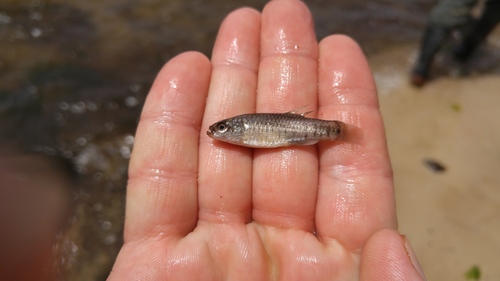
Mediterranean killifish
Aphanius fasciatus
Aquarium hobby
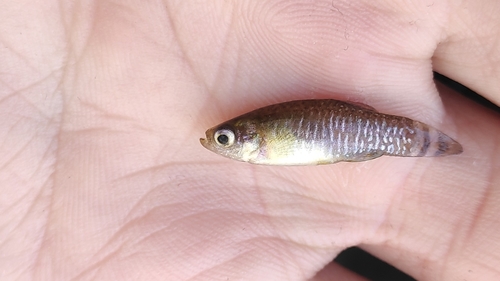
Spanish toothcarp
Apricaphanius iberus
Aquarium hobby
Acipinar killifish
Anatolichthys transgrediens
Aquarium hobby
Anatolian giant killifish
Anatolichthys anatoliae
Aquarium hobby
Footless killifish
Tellia apoda
Aquarium hobby